Common Vinyasa Transition
Not yet reviewed by a qualified teacher · Names and order checked against 3 sources
- Also called
- The Vinyasa, Take a vinyasa, Plank–Chaturanga–Up Dog–Down Dog, Vinyasa flow transition
- Tradition
- Ashtanga vinyasa and modern vinyasa / flow classes
- Order
- Traditional, but varies by school
- Level
- Intermediate
- Approximate duration
- about 2 minutes
- Focus
- Strength
- Audience
- Beginners, Experienced
- Props
- Mat
Traditional, but the order and details vary between schools. This page follows the version named below.
Origin and source
The linking movement through plank to downward dog appears between poses and sides in Ashtanga practice sheets (AshtangaYoga.info); modern vinyasa classes use the same chain as a transition. Entry, exit and holds vary by teacher.
Who it is for
Comfortable in plank and downward dog; shoulder and wrist strength for lowering (or use the knees-down stages).
The steps in order
Version shown: Common class version: plank, chaturanga, upward-facing dog, downward-facing dog
| # | Step | Breath | Hold | Cues and options |
|---|
| 1 | 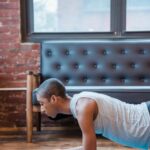 Plank | Inhale | | Transition: Step or jump back; shoulders over the wrists. Easier option: Knees down. |
| 2 | 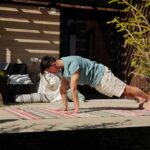 Chaturanga (lower halfway)
Caturaṅga Daṇḍāsana | Exhale | | Transition: Shift forward, elbows back alongside the ribs. Easier option: Knees down; or lower all the way to the floor. |
| 3 | 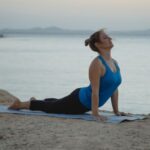 Upward-facing dog
Ūrdhva Mukha Śvānāsana | Inhale | | Transition: Roll over the toes, press the hands down, lift the chest. Easier option: Low cobra with the hips down. |
| 4 | 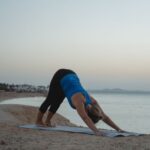 Downward-facing dog
Adho Mukha Śvānāsana | Exhale | often 1-5 breaths
varies by teacher; 5 breaths in Ashtanga sun salutations | Transition: Roll back over the toes, lift the hips. Easier option: Knees bent; child's pose to rest. |
Left and right
Symmetrical. When stepping back instead of jumping, alternate the leading foot.
Repetitions and counting
One pass = one vinyasa. Used as often as a class needs, often between sides and between poses.
Props and adaptations
Four stages: belly-down lowering to low cobra and child's pose; knees-down chaturanga to cobra; full chaturanga to cobra; full vinyasa. Cobra can replace upward dog at any stage.
Precautions
- Shoulders and wrists take repeated load: use knees-down options and skip rounds when tired.
- Lower-back discomfort in upward dog: use cobra.
- Pregnancy: avoid lowering onto the belly; work with a prenatal teacher.
Learn it with a teacher: Have a teacher look at your chaturanga; small changes in elbow position make a big difference over many repetitions.
General information, not medical advice. Poses do not cure illness. If you are pregnant, injured or have a health condition, check with your doctor and tell your teacher before you practise.
Easier alternatives
Beginner Sun Salutation (https://yogavacation.com/practice-plans/beginner-sun-salutation/)
Sources
- Yoga Cikitsa, 1st Series practice sheet: Vinyasa via plank pose or Cakrasana through downward dog between positions and sides, AshtangaYoga.info (Dr. Ronald Steiner, 2015) (accessed October 6, 2026)
- Surya Namaskara: chaturanga (exhale), upward dog (inhale), downward dog (exhale), AshtangaYoga.info (accessed October 6, 2026)
- Vinyasa (meaning of the term in Ashtanga and modern yoga), Wikipedia (accessed October 6, 2026)
https://yogavacation.com/practice-plans/vinyasa-transition/ · printed October 19, 2026