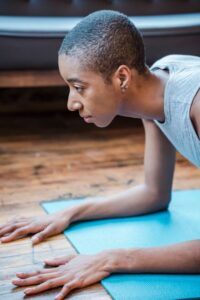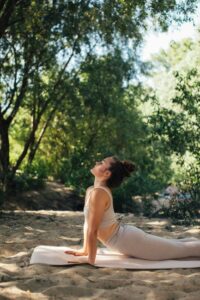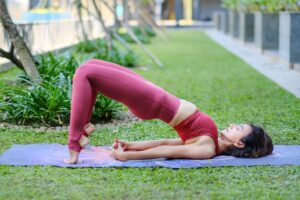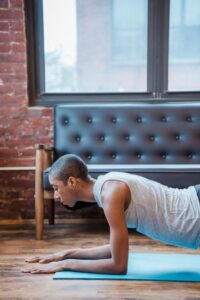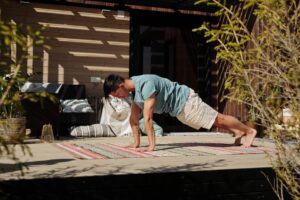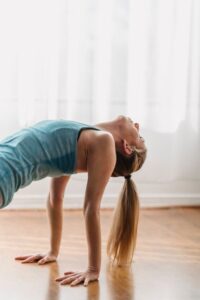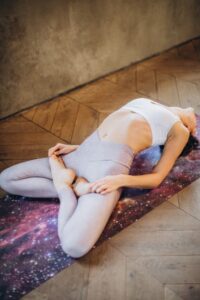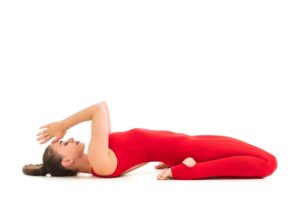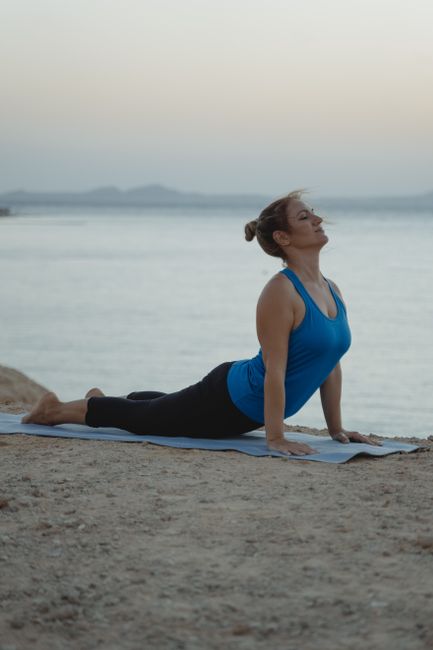
In short: upward-facing dog is a backbend held on straight arms: only the hands and the tops of the feet touch the floor, the thighs and knees lift, and the chest moves forward and up between the arms. It strengthens the arms, shoulders, back and legs and opens the chest. Keep the legs strong and the shoulders away from the ears so the lower back does not take all the bend.
Most people meet “up dog” in the middle of a sun salutation, between chaturanga and downward-facing dog, often many times per class. That repetition is the reason to learn it well. Below we explain the name, how it differs from cobra, the cues that protect the wrists and lower back, the precautions and where it is taught.
The name, and how it differs from cobra
The Sanskrit name is Ūrdhva Mukha Śvānāsana: ūrdhva mukha means with the face upward and śvāna means dog. B.K.S. Iyengar describes a dog stretching with its head up in the air; Yoga Journal gives the same word meanings. It is the partner of downward-facing dog, the dog stretching with its head down.
Up dog and cobra look alike, but they are built differently. In cobra the pelvis and legs rest on the floor and the arms may stay bent. In up dog the arms are straight and the thighs and knees are lifted, so the body hangs between the hands and the tops of the feet. Light on Yoga is explicit: keep the legs straight and do not rest the knees on the floor. If you cannot hold the legs up, cobra or a knees-down version is the better choice.
How to make up dog work
Place the hands beside the lower ribs or waist, wrists under the shoulders once you are up. Yoga Journal’s cue is to press all ten toenails into the floor so the thighs engage, then straighten the arms on an inhalation. Strong legs are what keep the lower back comfortable. Then draw the chest forward and up, as if pulling yourself forward between the arms, and roll the shoulders back. The neck follows the curve of the upper back; do not drop the head back hard.
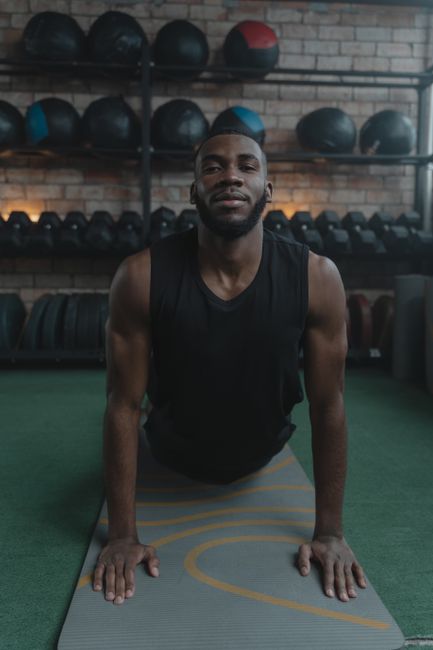
The most common fault is hanging in the shoulders, so they rise toward the ears and the neck shortens. Press the floor away, draw the shoulder blades down the back and broaden the collarbones. Hold times differ by setting: Yoga Journal suggests about five breaths; Light on Yoga half a minute to a minute with deep breathing; in a sun salutation it is usually a single inhalation.
Precautions in plain words
Up dog places your body weight on the wrists and asks for a fair backbend. If the wrists hurt, spread the fingers, press through the knuckles or put the hands on blocks; with a wrist injury, use cobra or sphinx. If the lower back pinches, bend the arms a little, lower the thighs to the floor or change to cobra. With a recent back or shoulder injury, ask a teacher or physiotherapist first. Belly-down entries are usually avoided in pregnancy; ask your midwife or doctor, and use the chair version if appropriate.
Preparation and what comes next
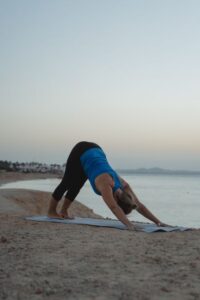
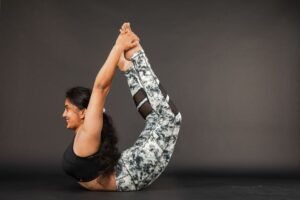
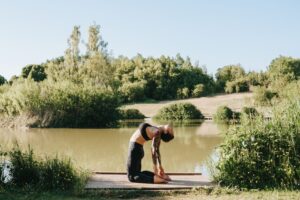
Prepare with sphinx, cobra and bridge, and build the push with plank and chaturanga. From up dog, the usual transition is to lift the hips back to downward-facing dog on an exhalation. Over time up dog prepares for deeper backbends such as bow, camel and wheel.
Where it is taught
Up dog is in Light on Yoga (Iyengar), in Ashtanga‘s Sun Salutation A and B and in every vinyasa between seated postures, and throughout vinyasa and power yoga. Gentler sun salutations, such as the 12-position version, use cobra in its place.