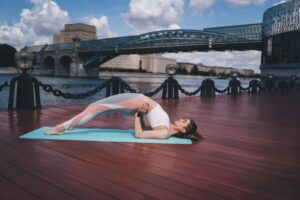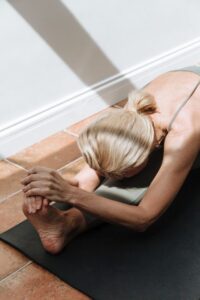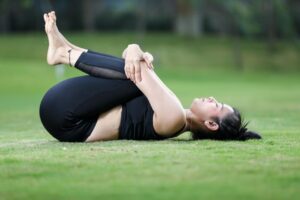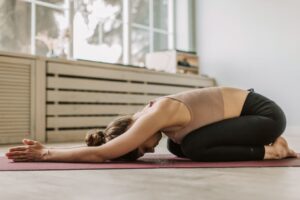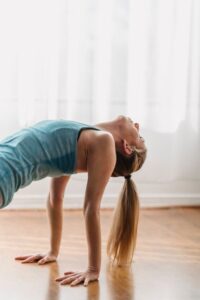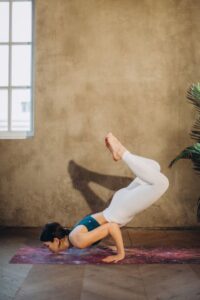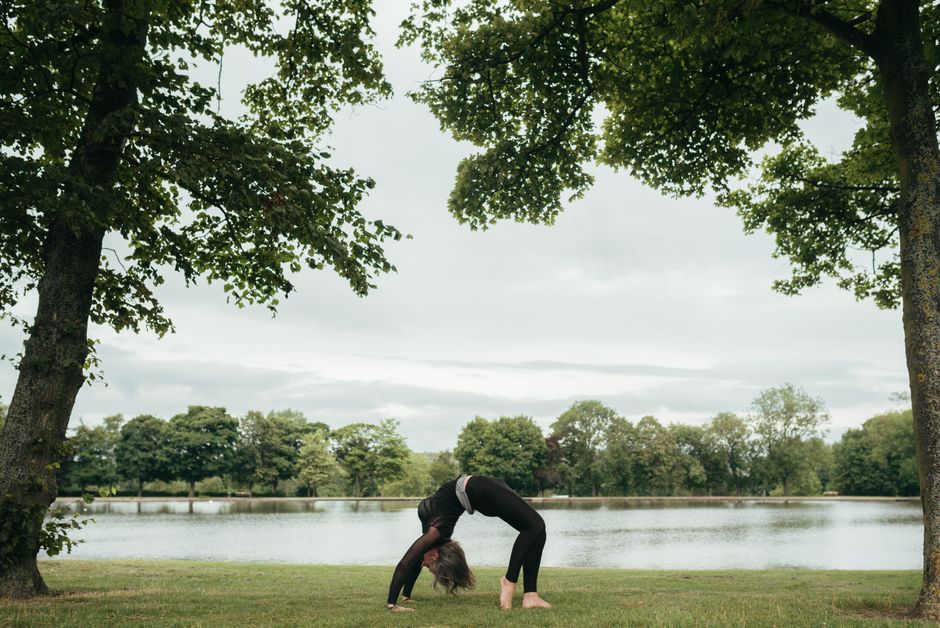
In short: wheel pose, or upward bow, is a full backbend in which you lie on your back, place the hands beside the ears and the feet near the hips, and push up until only the hands and feet touch the floor. It asks for open shoulders and hip flexors, strong arms and legs and a well-warmed spine. It is an advanced pose: build up through bridge and supported versions, and learn it with a teacher if backbends are new to you.
Wheel is the closing backbend of each Ashtanga series and a peak pose in many vinyasa classes. Its other Sanskrit name, Chakrasana, means different things in different schools, so it is worth reading the name section before searching for it elsewhere. Below: the names, the cues, the precautions, one-legged wheel and where the pose is taught.
The name: Urdhva Dhanurasana, and the Chakrasana collision
The Sanskrit name in Light on Yoga, Ashtanga and Yoga Journal is Ūrdhva Dhanurāsana: ūrdhva upward, dhanu bow, so “upward-facing bow”. Many schools also call this shape Chakrāsana, the wheel; the Bihar School’s Asana Pranayama Mudra Bandha teaches it under that name. But in Light on Yoga and in Ashtanga vinyasa, Chakrāsana is a different movement: a backward roll over the head from lying on the back into downward-facing dog or chaturanga. Iyengar also teaches Viparīta Chakrāsana, a flip from wheel over to standing forward bend. If a sequence lists Chakrasana, check whether it means the wheel or the roll.
How to make wheel work
Lie on the back with the knees bent and the feet hip-width and parallel, close to the hips. Place the palms beside the ears, fingers pointing toward the shoulders, no wider than the shoulders. Both Light on Yoga and Yoga Journal use a two-stage lift: press up onto the crown of the head first (with no real weight on it), set the elbows in, then press hands and feet down and straighten the arms. Lifting straight from the floor without that pause tends to splay the elbows.
In the pose, keep the feet parallel and the knees from splaying, which compresses the lower back; a strap around the thighs or a block between the feet helps. Press through the big-toe mounds, lengthen the tailbone toward the backs of the knees and push the chest toward the wall behind your hands so the shoulders open rather than the lower back folding. Breathe; hold half a minute to a minute in Light on Yoga, or five breaths repeated three to five times in Ashtanga. Come down by tucking the chin and lowering the upper back first, not landing on the head.
Precautions in plain words
Wheel is a deep backbend and a partial inversion. Yoga Journal advises modifying or avoiding it with high or low blood pressure, a heart condition, vertigo or dizziness, heartburn, an ear infection or eye conditions such as glaucoma or detached retina, and choosing bridge instead if your shoulders tend to dislocate. The Bihar School adds weak wrists, a weak back, pregnancy, illness and fatigue. Strengthen the wrists first, warm up thoroughly with gentler backbends, and never force the head into the floor. Learn dropping back from standing only with a teacher.
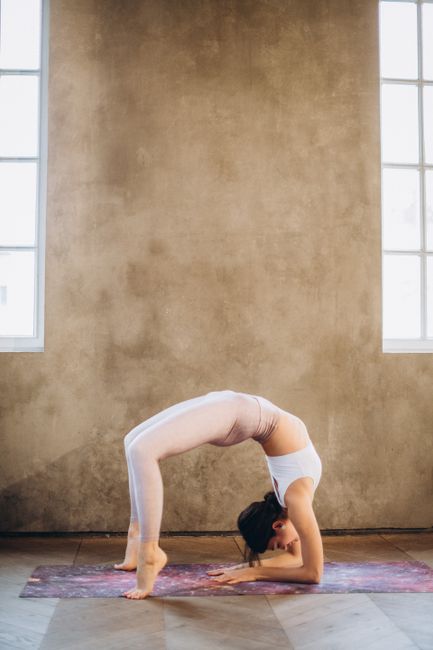
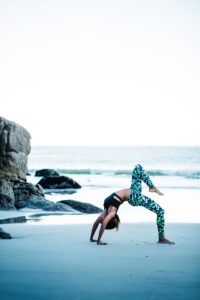
One-legged wheel (Eka Pāda Ūrdhva Dhanurāsana)
In one-legged wheel you lift one leg from a steady wheel. In most classes and in Yoga Journal’s coverage, both hands stay down and one leg extends up toward the ceiling, held for a few breaths before switching sides. Light on Yoga‘s Eka Pāda Ūrdhva Dhanurāsana goes further: the raised leg is held at about 45 degrees and the same-side hand lifts to rest on that thigh, so you balance on one hand and one foot for 10 to 15 seconds. Both are advanced balances on top of an advanced backbend. Try them only when wheel feels stable with straight arms, keep the hips level, and come down with control.
Preparation and what comes next
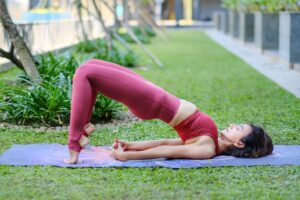
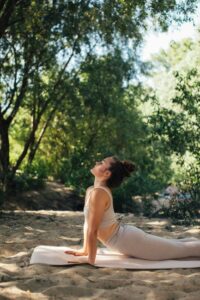
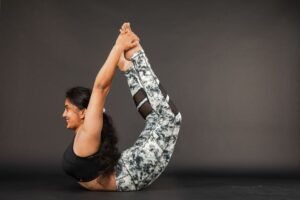
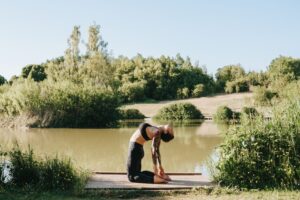
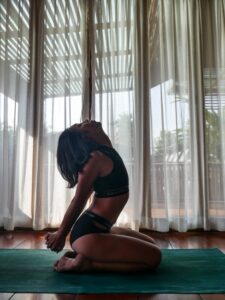
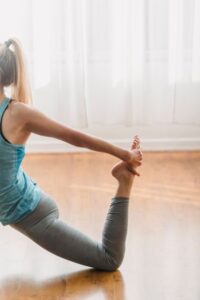
Build toward wheel with bridge, cobra, bow and camel, shoulder openers such as downward-facing dog, and our wheel pose preparation sequence. Yoga Journal suggests practising wheel near the end of class and countering with forward bends; Ashtanga follows it with seated forward bend. The next steps are two-legged inverted staff and, with a teacher, dropping back from standing.
Where it is taught
Wheel is in Light on Yoga (Iyengar), at the end of every Ashtanga series before the finishing sequence, in the Bihar School system as Chakrasana, and as a peak pose in vinyasa and power yoga.