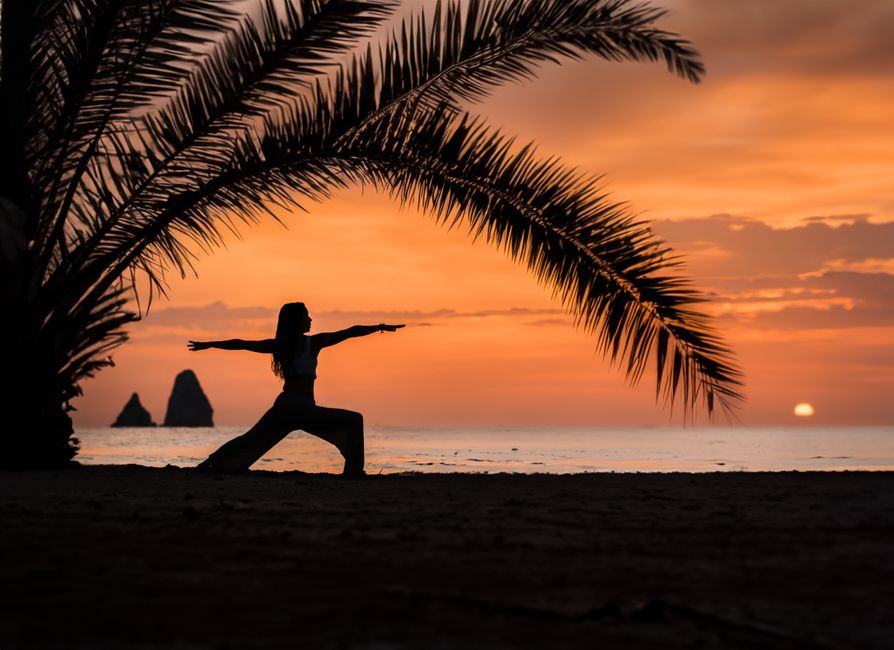
In short: vinyasa yoga is a flowing style in which you move from one pose to the next in time with your breath, usually through sequences built around the sun salutation. It is a modern method that grew out of the teaching of T. Krishnamacharya and his student K. Pattabhi Jois, whose Ashtanga system links every movement to a breath. Unlike Ashtanga, most vinyasa classes change their sequence from class to class. Pace and intensity range from gentle to strong, so read the class description before you go.

“Vinyasa,” “flow” and “vinyasa flow” are among the most common class names on any studio timetable. They describe a way of moving more than a single fixed system, which is why two vinyasa classes can feel quite different. This guide explains what the word means, where the style comes from, how breath and movement fit together, what a typical class looks like and how to choose the right level.
What does vinyasa mean?
Vinyāsa (विन्यास) is a Sanskrit word. The Monier-Williams Sanskrit-English Dictionary gives meanings such as “putting or placing down,” “arrangement, disposition, order” and “movement, position (of limbs).” Yoga Journal sums up the traditional sense as “arranging something in a special way.” In yoga classes the word is used in three related ways:
- The style: a class in which poses are linked by movement and breath, often called “flow.”
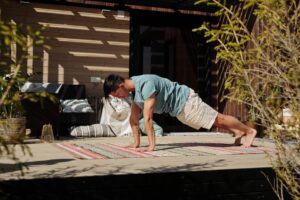
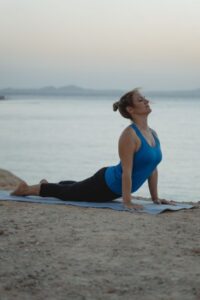
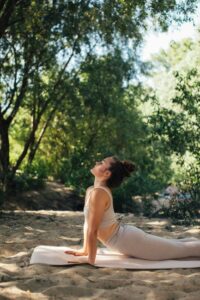
- The linking sequence: “take a vinyasa” usually means moving through plank, chaturanga, upward-facing dog and downward-facing dog between other poses.
- The principle: in the Ashtanga tradition, vinyasa is the system of counting each movement with an inhale or an exhale.
Origins: from Mysore to the modern flow class
Vinyasa yoga is a modern method with a clear line of teachers behind it. The Krishnamacharya Yoga Mandiram in Chennai describes T. Krishnamacharya as the teacher of several of the most influential figures in modern yoga, including Indra Devi, B. K. S. Iyengar, K. Pattabhi Jois and his own son T. K. V. Desikachar, and notes that he taught the King of Mysore. Pattabhi Jois, his direct disciple, taught the Ashtanga system, with its breath-counted sequences, in Mysore (Mysuru); his grandson R. Sharath Jois, who learned from him, directed the Sharath Yoga Centre there until his death in 2024, according to the centre.
From Ashtanga came the flowing classes that spread through studios in the United States and elsewhere. Teachers kept the idea of moving with the breath and the linking vinyasa, but let go of the fixed series, so that each class could be planned around a theme, a peak pose or a level. Power yoga is a stronger, fitness-led branch of the same family. If you want the original fixed series, see our guide to Ashtanga yoga.
For the longer history behind these teachers, from Hatha texts to the twentieth century, read our history of yoga.
Breath and movement
The defining feature of vinyasa is that the breath sets the pace. As a rule of thumb, you inhale on movements that open or lift the body (raising the arms, lifting the chest) and exhale on movements that fold or lower (forward bends, lowering to the floor). When the pace is right, you should be able to breathe slowly through the nose all the way through.
Many vinyasa teachers teach Ujjayi breathing, a soft, audible breath made by slightly narrowing the throat. It helps you hear whether your breath is steady. If Ujjayi feels forced, use plain diaphragmatic breathing instead; our guide to pranayama explains how breathing practices fit into the wider tradition.
What happens in a typical class
Most vinyasa classes last 60 to 75 minutes and follow a shape like this:
- Arriving and centering: a few minutes sitting or lying down, noticing the breath.
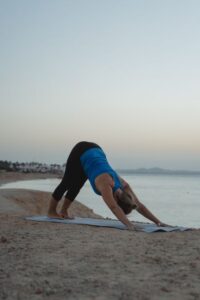
- Warm-up: gentle movements such as cat-cow and a first downward-facing dog.
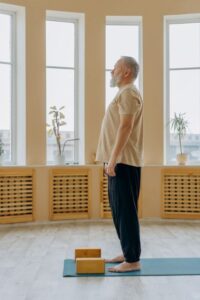
- Sun salutations: several rounds of the sun salutation, starting from mountain pose, to build heat and set the rhythm of breath and movement.
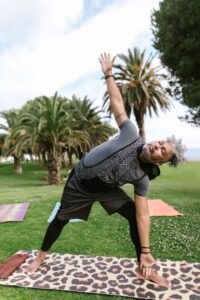
- Standing flow: standing poses such as warriors and triangle, linked by vinyasas, then balances such as tree pose.
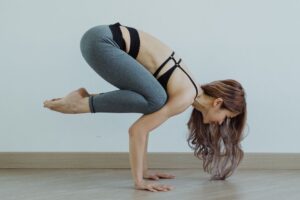
- Peak: some classes build toward a harder pose, perhaps an arm balance like crow or a backbend, with simpler options offered.
- Cool-down: seated stretches, twists and gentle backbends such as bridge.
- Rest: savasana, the corpse pose, for five minutes or more.
Music is common, and teachers usually cue with breath counts (“inhale, reach up; exhale, fold”). Heated vinyasa classes also exist; see our guide to hot yoga before you try one.
Intensity and levels
We class vinyasa as moderate: continuous movement raises your heart rate more than a slow class, but the intensity depends on the teacher and the class level. Look for these labels:
| Class label | What to expect | Good for |
|---|---|---|
| Gentle or slow flow | Fewer vinyasas, longer pauses, more explanation | Beginners, returning after a break |
| Vinyasa or flow (all levels) | Steady pace, options offered for harder poses | Most people after a few classes |
| Vinyasa 2 or power flow | Faster pace, more vinyasas, arm balances | Experienced, fit practitioners |
| Heated flow | Any of the above in a warm room | Healthy people used to the heat |
If you are new, a basic or slow flow class is the best start. Learning the shapes of the sun salutation and downward dog first makes everything else easier; our guide to yoga for beginners explains how to begin.
Who vinyasa suits
Vinyasa tends to suit people who like to keep moving, enjoy music and variety, and want a practice that feels like a workout as well as a time to settle the mind. Runners, cyclists and climbers often enjoy it alongside their sport, and it is a good bridge for anyone moving from gym classes into yoga. It suits you less well if you want long, quiet holds, detailed alignment instruction in each pose or very slow movement; in that case try a modern hatha, Iyengar or yin class.
Practicing vinyasa at home
A short home practice can be as simple as three to five rounds of the sun salutation, a few standing poses and five minutes of rest. Our step-by-step sun salutation plan is a good place to begin, and our practice plans section has short sequences by time and level. Keep these points in mind:
- Go slower than you think. Without a teacher’s count, people tend to rush. Let one breath equal one movement.
- Learn the transitions. Stepping, rather than jumping, between plank and the front of the mat is fine at every level.
- Finish with rest. Even after ten minutes of flow, lie still in savasana for a few minutes before you get up.
Considerations and cautions
Vinyasa is safe for most healthy people when taught well, but repetition is its main risk. You may lower through chaturanga dozens of times in a class, so:
- Protect your shoulders and wrists. Lower with knees down, or skip the vinyasa and wait in downward dog. Our chaturanga guide shows the knees-down version.
- Take cobra instead of upward dog if your lower back complains.
- Rest when you need to. Child’s pose or downward dog is always allowed.
- Check with your doctor first if you are pregnant, have a heart or blood pressure condition, or have joint problems. Our prenatal yoga guide covers pregnancy.
The U.S. National Center for Complementary and Integrative Health notes that yoga is generally safe for healthy people practicing with a qualified instructor, but injuries can happen, and people with health conditions should talk with their health care providers and the instructor about their needs.
Philosophy in a flow class
Some vinyasa teachers include a short reading, a chant or a theme drawn from yoga philosophy. The name Ashtanga (aṣṭāṅga, “having eight parts”) points to Patañjali’s eight limbs of yoga in the Yoga Sutras, in which posture and breath are two steps on the way to concentration and meditation. Even in a fitness-focused class, steady breath and attention to the present moment are the parts of the tradition you are practicing.
Vinyasa vs hatha and other styles
- Vinyasa vs hatha: in today’s studios, “hatha” usually means a slower class where you hold each pose for a few breaths and come out of it before the next, while vinyasa flows continuously. Historically, though, almost all physical yoga belongs to the Hatha tradition. Our hatha yoga guide explains both meanings.
- Vinyasa vs Ashtanga: Ashtanga uses fixed series in a set order; vinyasa varies the sequence.
- Vinyasa vs power: power yoga is a stronger, fitness-led vinyasa.
- Vinyasa vs yin: yin yoga is the slow opposite, with long, still holds; many people pair the two.
What you need
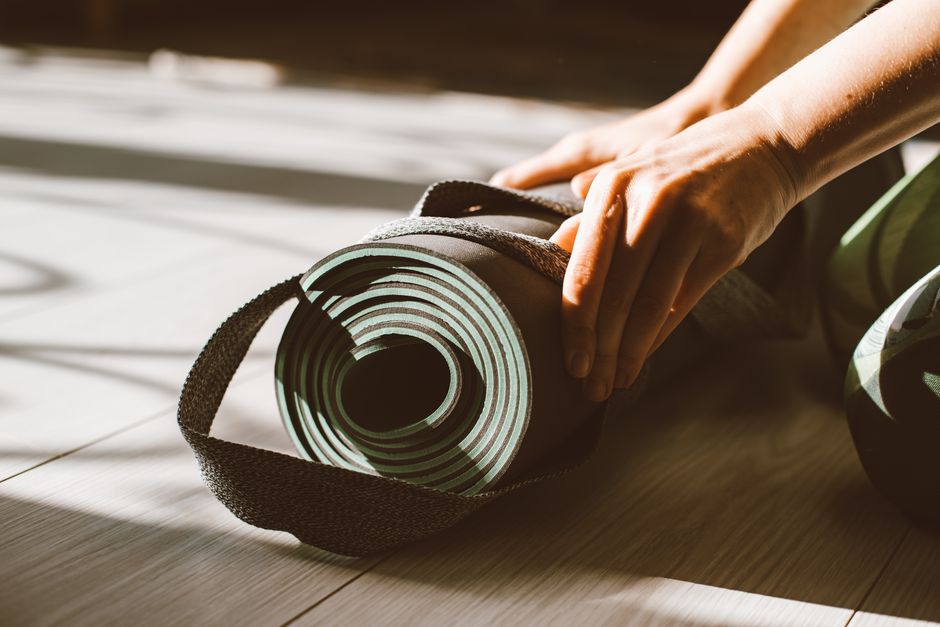
A mat with good grip is the only essential, since hands and feet move constantly and get sweaty; our yoga mat guide explains the choices. Wear clothes you can move in freely. Two blocks help in standing poses and when lowering, and a water bottle is useful.
Vinyasa on retreat
Vinyasa is one of the most common styles on yoga retreats, often as a morning class with a slower practice later in the day. Our guide on how to choose a yoga retreat explains how to read a retreat’s class level, and our destinations pages cover places such as Costa Rica, Bali and India, where flow classes sit alongside traditional schools.