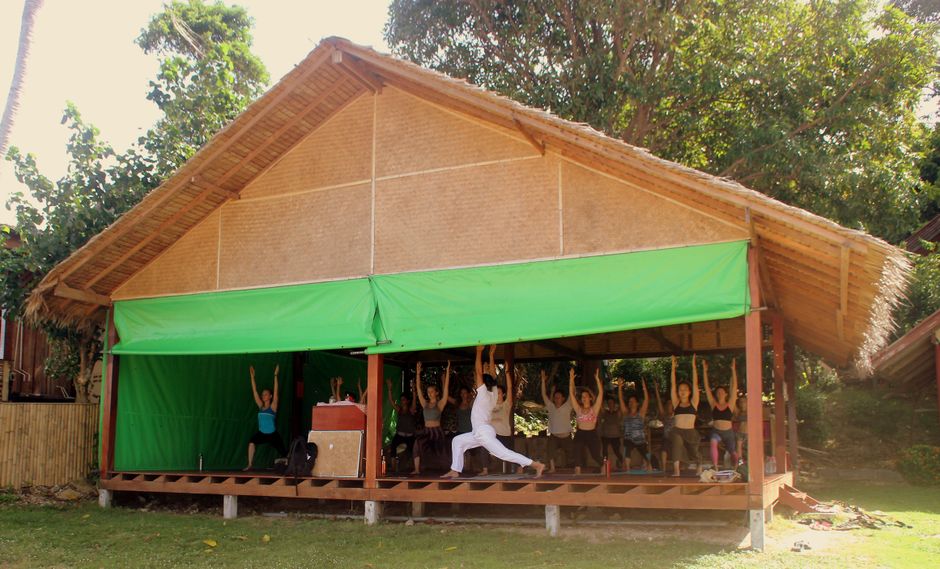
There are many types of yoga, and the names on a studio timetable don’t always tell you much. Some are centuries-old terms, some are methods built by a single teacher in the twentieth century, and some are simply formats, like practicing in a heated room or a fabric hammock. This page compares them side by side, explains where they overlap, and helps you choose one to try first.

In short: for a calm start, try hatha, Iyengar, yin or restorative. For movement and sweat, try vinyasa, Ashtanga or power yoga. Hot yoga and Bikram add heat; aerial and AcroYoga add equipment or a partner; chair yoga adapts poses for support. No style is “best”: the right one is the class you enjoy and can keep coming back to.
Types of yoga compared
Pace and intensity below describe a typical class; individual teachers vary a lot, so read the class description and ask.
| Style | What it is | Pace | Intensity | Heated | Good first class? |
|---|---|---|---|---|---|
| Hatha | Historical term for physical yoga; today often a slower general class | Slow to moderate | Gentle to moderate | No | Yes |
| Vinyasa | Poses linked by breath-paced movement | Flowing | Moderate to strong | Sometimes | Yes, at beginner level |
| Ashtanga | Set series of poses taught by K. Pattabhi Jois | Flowing, fixed order | Strong | No | With a beginner or Mysore-style teacher |
| Iyengar | Precise alignment, props, longer holds (B.K.S. Iyengar) | Slow | Moderate | No | Yes |
| Yin | Long, passive floor holds | Very slow | Gentle but deep | No | Yes |
| Restorative | Fully supported poses for rest | Very slow | Gentle | No | Yes |
| Kundalini | Breath, movement sets (kriyas), mantra and meditation | Varied | Varied, some strong breathing | No | Yes, with an experienced teacher |
| Power | Athletic, fitness-led vinyasa | Fast | Strong | Sometimes | After a few classes |
| Hot | Any yoga in a heated room | Varies | Moderate to strong | Yes | After a few classes |
| Bikram | Fixed 26-posture sequence in a hot, humid room | Set sequence | Strong | Yes | After a few classes; ask your doctor if unsure about heat |
| Integral | Swami Satchidananda’s tradition combining six branches of yoga | Gentle | Gentle | No | Yes |
| Aerial | Poses supported by a fabric hammock | Moderate | Moderate | No | Yes, if no health issues with inversions |
| AcroYoga | Partner practice with lifting and spotting | Varied | Moderate to strong | No | In a beginner workshop |
| Chair | Seated and chair-supported versions of poses | Slow | Gentle | No | Yes |
Traditions, modern methods and formats
Not all of these are the same kind of thing, and mixing them up causes a lot of confusion. We sort them into four groups.
Classical-lineage styles
Hatha yoga is the oldest name here. In Sanskrit texts from about the eleventh century onward it refers to a body of physical techniques (postures, breath control, cleansing practices and seals) used as preparation for meditation. On a modern timetable, “hatha” usually means something much narrower: a slower general class where poses are held for a few breaths. Both meanings are real; they just aren’t the same thing. Sivananda and Integral yoga come from teachers in the lineage of Swami Sivananda and teach postures as part of a wider spiritual practice that includes breathing, relaxation, diet and meditation.
Modern methods
Many of the best-known styles were shaped in the twentieth century. Historians trace much of today’s posture-based practice to Tirumalai Krishnamacharya, who taught in Mysore from the 1930s. His students developed two influential methods: Ashtanga, a set series of poses linked by breath and movement, taught by K. Pattabhi Jois, and Iyengar, named for B.K.S. Iyengar, which emphasizes precision, timing, sequencing and the use of props. Vinyasa and power yoga grew out of the flowing approach. Yin yoga, with its long passive holds, is usually traced to Paulie Zink in the late 1970s and was spread by teachers including Paul Grilley and Sarah Powers. Restorative yoga, popularized by Iyengar’s student Judith Lasater, uses props to support the body completely. Kundalini yoga as most studios teach it was introduced to the United States in 1968 by Yogi Bhajan; the organization he founded has since faced serious allegations about his conduct, which our Kundalini page covers factually.
Formats
Some names describe how or where you practice rather than a method. Hot yoga is any class in a heated room. Bikram is one specific method within it: a fixed sequence of 26 postures and two breathing exercises, traditionally in a room heated to about 105°F (41°C) with around 40 percent humidity. Aerial yoga, developed in 2006, uses a fabric hammock hung from the ceiling. AcroYoga combines yoga with partner balancing.
Adaptations
Chair yoga isn’t really a style. It is a way of adapting poses so they can be done seated or with a chair for support, useful for people with limited mobility, older adults and anyone at a desk. Prenatal yoga is another adaptation; see prenatal yoga.
And the traditional paths?
Raja, bhakti, karma and jnana yoga are paths of meditation, devotion, action and knowledge described in yoga philosophy, not class styles. You’ll find them in the yoga philosophy section, starting with karma yoga and bhakti yoga.
Pairs that are often confused
- Hot yoga vs Bikram. All Bikram classes are hot yoga; most hot yoga classes are not Bikram. A hot vinyasa class can include any poses the teacher chooses.
- Yin vs restorative. Both are slow and floor-based. Yin holds poses that place a gentle, sustained stretch on the body; restorative supports you so fully with props that the aim is rest rather than stretch.
- Vinyasa vs Ashtanga. Ashtanga follows the same series every time; vinyasa teachers create their own sequences.
- Hatha the tradition vs hatha the class. Historical hatha yoga includes breath control, cleansing practices and meditation; a “hatha class” is usually a calm posture class.
Find your style: a quick chooser
Answer three questions and start there:
- Do you want to move and sweat, or slow down? Move: vinyasa, Ashtanga, power. Slow down: yin, restorative, hatha.
- Do you like clear, detailed instructions? Yes: Iyengar. You’d rather follow the flow: vinyasa.
- Do you have an injury, a health condition or limited mobility? Start with Iyengar, chair or restorative, tell the teacher, and check with your doctor. Skip heated classes until you have medical advice.
If you are new to all of this, our guide to yoga for beginners walks through your first month, and what is yoga explains the background behind all of these names.

Safety notes that apply to every style
Yoga is generally considered safe for healthy people under a qualified teacher, but injuries can happen, mostly sprains and strains. The U.S. National Center for Complementary and Integrative Health notes that hot yoga carries particular risks of overheating and dehydration, and that pregnant people, older adults and people with health conditions may need to change or avoid some poses. Strong breathing practices taught in some Kundalini and hatha classes should be learned from an experienced teacher; see our breathing exercises hub for which techniques are gentle and which need guidance.
From style to practice
Each style page lists its key poses, the breathing it emphasizes, its links to philosophy, and retreats and destinations known for it. When you’re ready to practice outside class, try a practice plan such as the sun salutation. If you’d like to learn a style properly, a week away can help: see our yoga retreats guides, or start a career path with teacher training.
Browse every style below.
Frequently asked questions
What are the main types of yoga?
Common styles include hatha, vinyasa, Ashtanga, Iyengar, yin, restorative, Kundalini and power yoga. Hot yoga, Bikram, aerial and AcroYoga are formats, and chair and prenatal yoga are adaptations.
Which type of yoga is best for beginners?
Gentle hatha, Iyengar, yin, restorative or a beginner-level vinyasa class are good places to start. Fast power classes and heated classes are usually better after a few weeks.
What is the difference between hot yoga and Bikram?
Hot yoga is any class in a heated room. Bikram is one method of hot yoga with a fixed sequence of 26 postures and two breathing exercises, traditionally around 105 degrees F and 40 percent humidity.
What is the difference between yin and restorative yoga?
Both are slow and floor-based. Yin holds poses for several minutes to give a gentle, sustained stretch; restorative uses props to support the body completely so the aim is rest.
Is hatha yoga a style or a tradition?
Both. Historically, hatha yoga is a body of physical and breath techniques described in Sanskrit texts from about the eleventh century. In studios today, a hatha class usually means a slower general posture class.
Sources
- Yoga: Effectiveness and Safety, National Center for Complementary and Integrative Health (NIH) (accessed October 6, 2026)
- About Bikram Yoga (26 postures and 2 breathing exercises), Bikram Yoga (accessed October 6, 2026)
- Bikram Yoga (105 F, 40% humidity), Wikipedia (accessed October 6, 2026)
- Hot yoga, Wikipedia (accessed October 6, 2026)
- What Is Iyengar Yoga?, Iyengar Yoga National Association of the United States (accessed October 6, 2026)
- Vinyasa (Krishnamacharya 1930s; Ashtanga, Jois), Wikipedia (accessed October 6, 2026)
- Ashtanga vinyasa yoga, Wikipedia (accessed October 6, 2026)
- Yin Yoga (Paulie Zink, Paul Grilley, Sarah Powers), Wikipedia (accessed October 6, 2026)
- YinYoga.com, Bernie Clark (accessed October 6, 2026)
- Restorative yoga (Judith Lasater), Wikipedia (accessed October 6, 2026)
- Kundalini yoga (Yogi Bhajan, 1968; 3HO; controversies), Wikipedia (accessed October 6, 2026)
- Sivananda yoga, Wikipedia (accessed October 6, 2026)
- Integral Yoga Branches, Integral Yoga Institute New York (accessed October 6, 2026)
- Aerial yoga (Michelle Dortignac, 2006), Wikipedia (accessed October 6, 2026)
- Hatha yoga, Wikipedia (accessed October 6, 2026)
- Modern yoga, Wikipedia (accessed October 6, 2026)
Facts checked on October 6, 2026