In short: yoga in Indonesia mostly means Bali, especially Ubud and the south coast, with quieter options on Lombok and the car-free Gili Islands and cultural side trips to Java. In Java and Bali the dry season usually runs from April to October and the wet season from November to March. Plan around Nyepi, Bali’s Day of Silence in March or April, and around the long Idul Fitri holidays, when the whole country travels.
Indonesia spreads across thousands of islands, and yoga travel here feels like a set of very different trips. On Bali you can practice in an open-air shala above the rice fields, then watch a temple procession pass on the road outside. On the Gili Islands you can walk everywhere barefoot because there are no cars. On Java you can visit Borobudur, which Indonesia’s tourism ministry calls the world’s biggest Buddhist monument. This guide gives you the big picture of yoga in Indonesia: where to go, when, how to get around and how to be a respectful guest. Travel facts were checked on 6 October 2026.
Indonesia at a glance
| Best months (Bali and Java) | April to October, the dry season |
| Wet season | November to March |
| Main gateway for yoga travel | I Gusti Ngurah Rai International Airport, Bali (DPS) |
| Money | Indonesian rupiah (IDR) |
| Bali tourist levy | IDR 150,000 per foreign visitor, paid once per stay |
| Entry and visas | See the Indonesia travel guide on travelercenter.com |
The yoga scene in Indonesia
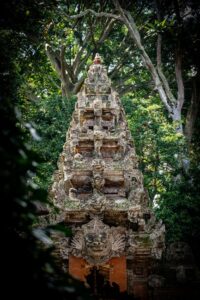
Indonesia’s yoga scene is concentrated on Bali, and it is a modern, international one: studios, retreat centers and teacher trainings run by Indonesian and visiting teachers, offering everything from dynamic vinyasa to slow yin and long meditation sessions. What makes Bali special is the setting. The island’s Hindu temple culture is part of daily life, and many visitors find that the offerings, ceremonies and gamelan music around them deepen the reflective side of practice.
It helps to keep two things apart. Balinese Hinduism is a living religion with its own temples, calendar and rituals; it is not the same thing as the yoga taught in a studio, even though both draw on ideas that traveled from India centuries ago. Indonesia as a whole is a Muslim-majority country that officially recognizes several religions. Being curious and respectful about both is part of practicing here. For the background to yoga’s own traditions, see our yoga philosophy hub.
Bali: the heart of yoga in Indonesia
Most yoga travelers in Indonesia go to Bali, and most choose between three bases. Our full guide to yoga in Bali compares them in detail.
- Ubud, inland in the hills, is the cultural and artistic heart of the island, surrounded by rice terraces such as Tegallalang. The Indonesian tourism ministry suggests starting the day there with yoga and a healthy breakfast, and it is where the densest cluster of studios and retreats is found.
- Canggu, on the southwest coast, mixes a wide black-sand surf beach with rice paddies behind it, about 45 minutes by car from the airport.
- Uluwatu, on the cliffs of the Bukit Peninsula in the far south, has surf breaks, sea views and the clifftop temple where the Kecak dance is performed at sunset.
If you want a certificate rather than a holiday, Bali is one of the busiest places in the world for trainings; see yoga teacher training in Bali. For a more focused town guide, read yoga in Ubud.
Beyond Bali: other islands for yoga travel
Lombok
Bali’s eastern neighbor, across the Lombok Strait, is quieter and less developed. Central Lombok has wide beaches such as Kuta, Tanjung Aan, Mawun and Selong Belanak, popular with surfers. In the north, Mount Rinjani rises to 3,726 meters, one of Indonesia’s highest volcanoes, with a crater lake near the top. The Sasak people are the island’s main ethnic group, and villages such as Sade are known for traditional weaving.
The Gili Islands
Off Lombok’s northwest coast, the three Gili Islands (Trawangan, Meno and Air) ban cars and motorbikes; people get around by bicycle, on foot or by horse-drawn cart (cidomo). Gili Trawangan is the largest and liveliest, Gili Meno the smallest and most secluded, and Gili Air a mix of the two. For a slow yoga week with snorkeling between classes, they are hard to beat. Fast boats run from Bali (Serangan and Padang Bai) and from Lombok.
Java: Yogyakarta and Borobudur
Java is less a retreat destination than a cultural one, but it pairs well with a yoga trip. Borobudur, about an hour’s drive from Yogyakarta, was built between about AD 780 and 840 and is listed by UNESCO as a World Heritage Site. Its relief panels tell stories from the life of the Buddha. Visitors are asked to dress respectfully and not to touch or sit on the monument. The tourism ministry recommends visiting in the April to October dry season.
When to go to Indonesia
Indonesia is tropical and warm all year, so the seasons are about rain, not temperature. According to the Indonesian tourism ministry (checked October 2026):
- In most of the country, including Java and Bali, the dry season is April to October and the wet season November to March. The ministry adds that climate change has made the seasons less predictable.
- Temperatures barely change through the year: coastal plains average about 28 °C (82 °F) and inland and mountain areas about 26 °C (79 °F), dropping roughly 1 °C for every 90 meters you climb. Humidity is usually 70 to 90%.
- Holidays matter as much as weather. Indonesia is a Muslim-majority country, and the Idul Fitri holiday at the end of Ramadan is often extended to around 7 to 10 days of collective leave, when families travel and transport and hotels fill up. Its date follows the Islamic calendar and moves earlier each year.
- Nyepi in Bali. On Bali’s Day of Silence, which falls in March or April, the whole island stops for a day and the airport closes for 24 hours. Check the date before booking flights.
Getting there and getting around
Most yoga travelers fly straight into Bali’s I Gusti Ngurah Rai International Airport (DPS), which handles international and domestic flights around the clock except on Nyepi. Lombok International Airport (LOP) and Yogyakarta International Airport (YIA) are useful for the other islands. Bali is also linked by ferry to Java (from Banyuwangi) and to Lombok.
- On Bali, the tourism ministry suggests hiring a car with a driver, using prepaid taxis or regular taxis, or joining tours; buses run too. Roads in busy areas can be congested, and temple processions sometimes fill the road, so allow extra time.
- Driving yourself: Bali’s provincial rules for foreign tourists require following traffic laws and using only licensed rental and transport services.
- Between islands, use licensed fast boats and ferries, and check sea conditions in the wet season.
Where to stay
Accommodation ranges from family-run homestays to villas and resorts. Bali’s rules for foreign tourists ask visitors to stay only in licensed accommodation, so check that your guesthouse, villa or retreat is registered. If you want a quiet stay in Ubud, the tourism ministry suggests looking just outside the center among the rice fields; the center is better if you want to walk to studios and cafes.
Costs
Indonesia can be done on many budgets, from simple homestays to luxury retreats. We do not list retreat prices on this page because they change with each program; verified prices appear on individual listings with the date we checked them. Two official costs to plan for (checked October 2026):
- Bali tourist levy: IDR 150,000 per foreign tourist, paid once per stay, online through the provincial Love Bali system or by card at counters at the airport and Benoa port. The province says the money supports Balinese culture and the environment.
- Money changing: Bali’s rules ask visitors to exchange money only at authorized money changers displaying an official Bank Indonesia QR code.
Culture and etiquette
In March 2025 the Governor of Bali issued Circular Letter No. 7 of 2025 setting out what foreign tourists should and should not do. The main points for yoga travelers:
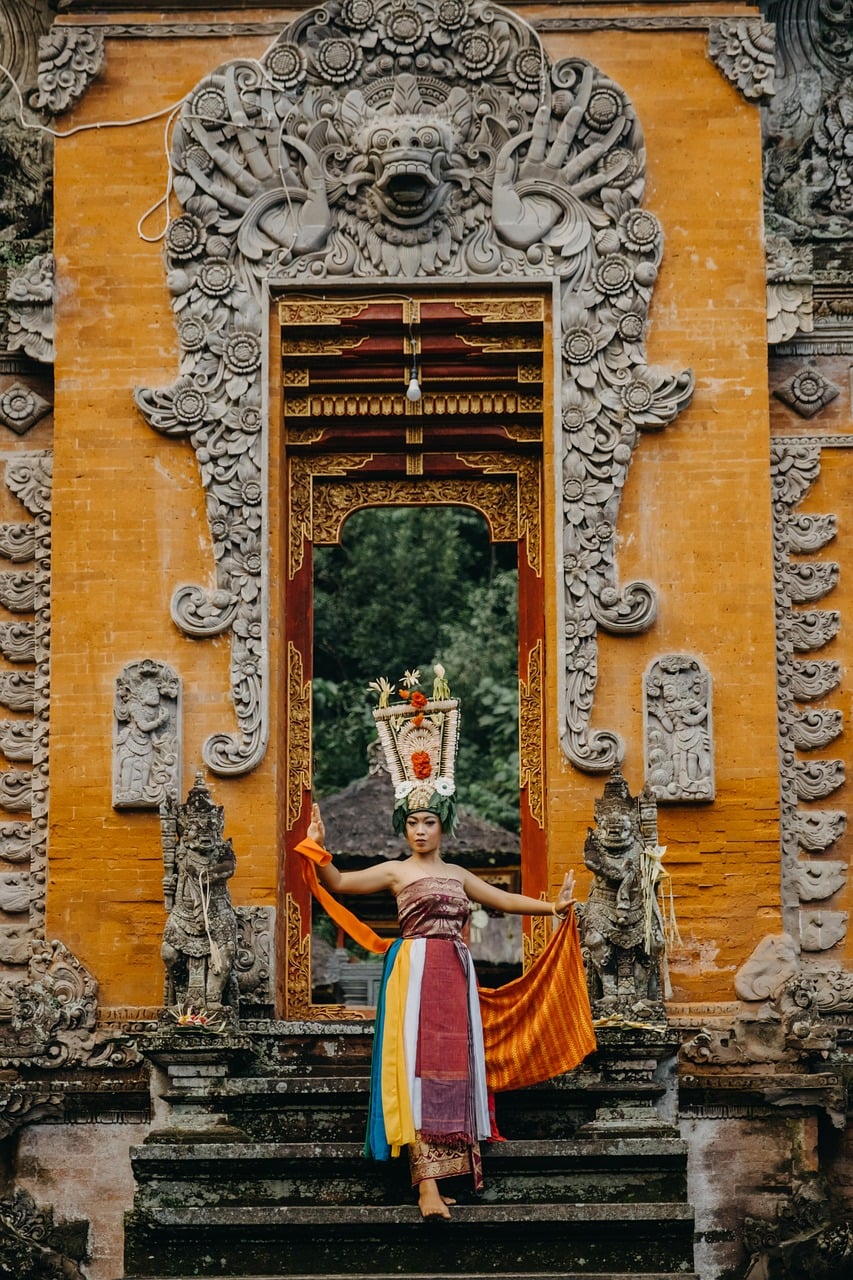
- Respect temples and sacred objects, and honor customs, especially during ceremonies.
- Dress modestly at temples, tourist attractions and in public places.
- Do not enter the inner sacred areas of a temple unless you are there to pray and wearing traditional Balinese dress; menstruating women are asked not to enter.
- Do not climb sacred trees or monuments or take inappropriate photos at religious sites. That includes posing in yoga poses on shrines.
- Use a licensed guide when visiting cultural and natural sites.
- Avoid single-use plastics, which the circular lists as banned (plastic bags, straws, styrofoam and plastic-packaged drinks).
Outside Bali, most communities are Muslim; dress modestly away from the beach, and be considerate during Ramadan. Our retreat checklist includes questions about how a retreat works with its local community.
Accessibility
Many retreats on Bali are built on hillsides or above river valleys, with steep steps and uneven paths, and the Gili Islands have sandy tracks and no motor vehicles. If mobility is a concern, ask each retreat about step-free routes, room locations and how far the shala is from your room before you book.
Activities to combine with yoga
- Surfing: Canggu and Uluwatu on Bali, and the south coast of Lombok. See surf and yoga retreats.
- Diving and snorkeling: the Gili Islands, and Menjangan Island in West Bali.
- Volcano treks: Mount Batur on Bali, Mount Rinjani on Lombok.
- Culture: dance performances, art museums and markets in Ubud; Borobudur on Java.
- Wellness: Balinese spa treatments. If a retreat promises health results, read our guide to judging wellness retreat claims.
What to pack
Light, breathable clothing, a sarong or scarf and a top that covers your shoulders for temple visits, a rain jacket for the wet season, reef-safe sunscreen, insect repellent and a refillable bottle (single-use plastic is banned on Bali). Most retreats provide mats; if you plan to drop in at studios, see our guide to yoga mats for a light travel option.
Practical information
- Visas and entry: rules depend on your passport and change often. Read the Indonesia guide on travelercenter.com and confirm with official sources before you travel.
- Working on a tourist stay: Bali’s rules prohibit working or running a business without the proper Indonesian permits, which matters if you hope to teach yoga while you travel.
- Levy proof: keep your Bali levy receipt; the province says visitors who have not paid can be refused entry to attractions.
Related destinations
Start with our yoga in Bali guide. For another Southeast Asian option, look at yoga in Thailand; for a similar surf-and-yoga mix on the other side of the world, compare yoga in Costa Rica. To go to the roots of yoga’s traditions, see yoga in India. Browse all guides on the yoga destinations hub.