Chaturanga: alignment, modifications and build-up drills

How to do chaturanga with safe shoulder alignment: step-by-step instructions, the knees-down version, strap and wall drills, mistakes and cautions.

Not yet reviewed by a qualified teacher Names and shape checked against 6 sources

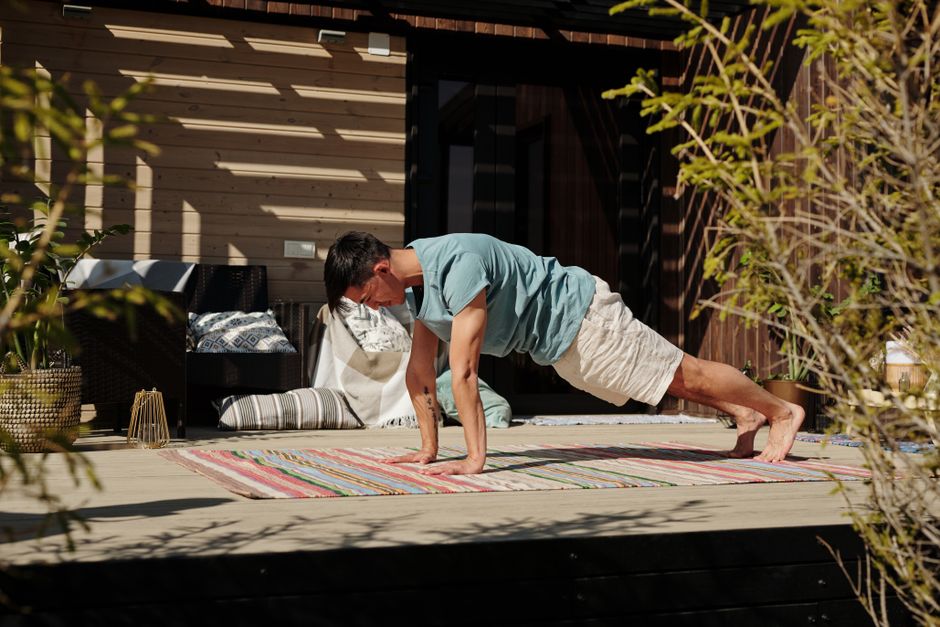
Adult man doing a plank exercise on a colorful yoga mat outdoors, promoting fitness and healthy living.
Sanskrit name
Caturaṅga Daṇḍāsana चतुरङ्ग दण्डासन (source)
Also called
Four-limbed staff pose, Low plank, Chaturanga
Other spellings
Chaturanga Dandasana
Pose family
Prone
Movement
Strength hold
Taught in
Hot Yoga: What It Is, Room Temperatures and Who It Suits, Vinyasa Yoga: Flow, Breath and What to Expect
Difficulty
Intermediate
Body areas
Arms and wrists, Chest, Core, Shoulders
Props
Blanket, Block, Mat, Strap, Wall
Practised
Solo

Step by step

  1. Start in plank: hands under or slightly behind the shoulders, fingers spread, body in one straight line, on the balls of the feet.
  2. Shift forward a little so the shoulders are slightly ahead of the wrists. Press back through the heels so the legs are active.
  3. Firm the belly and lengthen the tailbone toward the heels so the hips neither sag nor pike up.
  4. On an exhale, bend the elbows straight back, keeping them in against the sides of the ribs, and lower the whole body as one piece.
  5. Stop when the elbows reach about 90 degrees and the shoulders are level with the elbows. Keep the chest broad and the gaze on the floor a few inches ahead.
  6. Hold for a breath or two while you learn, then either lower all the way to the floor or press back up to plank.

Alignment cues

  • Shoulders no lower than the elbows. Yoga Journal's guidance is not to bring the shoulders below the elbows or bend the elbows past 90 degrees. Going lower shifts the load onto the front of the shoulder.
  • Elbows over the wrists, hugging the ribs. Flaring elbows turn the pose into a wide push-up.
  • Chest broad, shoulders away from the ears. Do not let the chest collapse between the shoulder blades.
  • One straight line. No sagging belly, no hips in the air. Reaching through the heels helps the legs stay strong.
  • Lower only as far as you can control. Halfway with good form is better than all the way down with the shoulders dipping.

Common alignment errors

  • Dipping the shoulders below the elbows.
  • Elbows flaring out to the sides.
  • Sagging hips or a belly that touches down first.
  • Hips piked up while the chest drops.
  • Shifting sideways or lowering unevenly.
  • Rushing it in every round instead of using the knees-down version when tired.

Modifications and props

  • Knees down: from plank, lower the knees to the mat, keep the body in a line from knees to head and bend the elbows back. This is the version to learn first. none
  • Half-way hover: lower only a few inches, hold, then press back up. none
  • Wall chaturanga: stand facing a wall, hands on it just below shoulder height, and practice drawing the elbows back along the ribs as you lean in. No floor load at all. wall
  • Strap: loop a strap around the arms just above the elbows, shoulder-width. As you lower, it stops the elbows from flaring and catches the ribs. A block or rolled blanket under the chest gives a similar landing point. strap
  • Wrists: spread the fingers and press through the knuckles; if wrists still ache, practice the wall version. wall

Precautions

  • Rotator cuff injury, shoulder weakness, shoulder arthritis or other shoulder injury: avoid or modify.
  • Wrist arthritis, wrist pain or carpal tunnel syndrome: avoid or use the wall version.
  • Pregnancy: ask your health care provider first.

General information, not medical advice. Poses do not cure illness. If you are pregnant, injured or have a health condition, check with your doctor and tell your teacher before you practise.

This article contains affiliate links: if you buy through them we may earn a commission, at no extra cost to you. Read our affiliate disclosure.

In short: chaturanga (four-limbed staff pose) is a low plank: from plank you lower your straight body until the elbows bend to about 90 degrees, elbows hugging the ribs and shoulders level with the elbows, not below them. It is a strength pose that appears many times in flowing classes, so learn it with the knees down first and build up.

Chaturanga goes by quickly in a vinyasa class, often on a single exhale, and that speed is the problem: repeated many times with the shoulders dipping and the elbows flaring, it can load the front of the shoulders more than it should. The good news is that it is easy to scale. Lowering with the knees down, lowering halfway, or practicing against a wall all teach the same action. This guide covers the setup, the cues that protect the shoulders, the build-up drills and where the pose fits in a sun salutation.

What the name means

Catur means four, aṅga limb, daṇḍa staff or stick and āsana posture (see asana): a staff supported on four limbs. Yoga Journal describes the staff as the spine, the central support of the body, which is a good image for the pose: one long, firm line from head to heels. Chaturanga is a modern pose. It is not among the 15 postures of the 15th-century Hatha Yoga Pradipika, and it became central to practice through the flowing styles of the 20th century, including Ashtanga, vinyasa and power yoga.

Protecting your shoulders in chaturanga

The one rule that matters most is depth. Yoga Journal’s guidance is not to bring the shoulders below the elbows or bend the elbows past 90 degrees; going lower shifts the load onto the front of the shoulder. Most people lower too far because they are trying to look like the photo, or because their strength runs out halfway and the body drops. Stopping higher, with the elbows pulled in along the ribs and the chest broad, is the better pose. If you cannot stop there with control yet, lower with the knees down, or lower only partway and press back up. Yoga Journal also suggests a strap looped around the arms just above the elbows, shoulder-width apart: it stops the elbows from flaring and catches the ribs at the right height.

A yoga strap is useful well beyond chaturanga, for stretches and seated forward bends. Two common straps are below, both with the length to loop around the arms.

Cotton, 8 ft

Manduka Align Yoga Strap

  • 1.75 in x 8 ft
  • Unbleached cotton webbing, interlocking metal buckle
  • About $19, seen October 2026
Check price on Amazon
Budget pick, 6 ft

Gaiam Yoga Strap

  • 1.5 in x 6 ft
  • Polyester blend, metal D-ring buckle
  • About $10, seen October 2026
Check price on Amazon

Chaturanga build-up drills

  • Plank holds: build to 30 seconds with a straight line and steady breathing.
  • Slow knees-down lowers: three to five lowers to the floor, taking three to five seconds each.
  • Hover and press: lower halfway on the knees, pause, press back up.
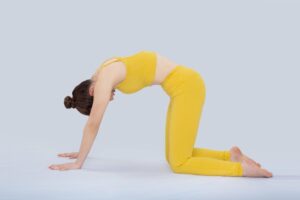
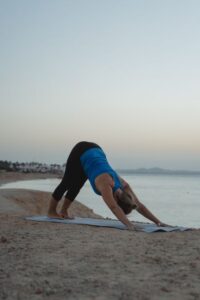
  • Warm-ups: cat-cow and downward dog prepare the wrists and shoulders.

Who should modify chaturanga

Yoga Journal advises avoiding or modifying chaturanga if you have a rotator cuff injury, shoulder weakness, shoulder arthritis or another shoulder injury, and also with wrist arthritis, wrist pain or carpal tunnel syndrome. In those cases the wall version, or simply lowering from the knees to the floor, is a good substitute. In pregnancy, ask your health care provider before including it and read our guide to prenatal yoga. If you have any health condition, check with your doctor before practicing. This page is general information, not individual advice.

Chaturanga in the sun salutation

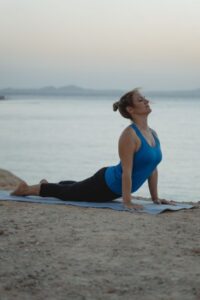
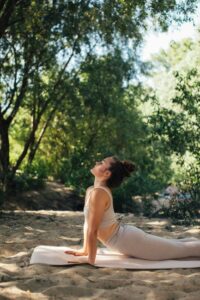
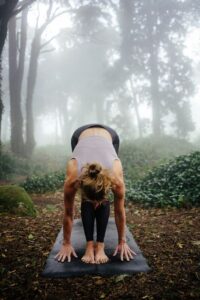
Many sequences use chaturanga to move from a standing forward fold to upward-facing dog in Sun Salutation A, and in vinyasa flows. A typical link is plank, chaturanga on an exhale, upward-facing dog or cobra pose on an inhale, then downward dog. Our step-by-step sun salutation shows the whole sequence with options for each step. Steady breathing matters here; many teachers use ujjayi breathing to set the pace.

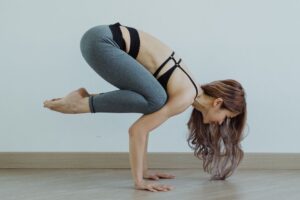
Strength from chaturanga carries straight into arm balances such as crow pose. Browse more in the pose directory.
Preparatory poses

Follow-up poses and transitions

Counterposes

Styles that use this pose

More prone poses

Frequently asked questions

How low should I go in chaturanga?

Until the elbows are at about 90 degrees and the shoulders are level with the elbows, no lower. If you cannot stop there with control, lower only halfway or use the knees-down version.

Is chaturanga the same as a push-up?

They are related, but chaturanga keeps the elbows pulled in along the ribs and is usually a controlled lowering into a hold or a transition, not repeated pressing. Yoga Journal stresses that it is not merely a push-up.

Why does chaturanga hurt my shoulders?

Usually because the shoulders dip below the elbows or the elbows flare, which loads the front of the shoulder. Lower less, keep the elbows in, try a strap above the elbows or practice with the knees down. If pain continues, stop and see a health professional.

Can beginners do chaturanga?

Yes, with the knees on the floor. Build strength with plank holds and slow knees-down lowers before trying the full version, and use the knees-down option whenever you are tired.

What does Chaturanga Dandasana mean?

Four-limbed staff pose: catur, four; aṅga, limb; daṇḍa, staff; āsana, posture. In IAST it is Caturaṅga Daṇḍāsana, in Devanagari चतुरङ्ग दण्डासन.

Sources

  1. Chaturanga Dandasana: How to Practice Four-Limbed Staff Pose, Yoga Journal (accessed October 6, 2026)
  2. Monier-Williams Sanskrit-English Dictionary: catur (p. 384), aṅga, daṇḍa (p. 466), āsana, Cologne Digital Sanskrit Dictionaries, University of Cologne (accessed October 6, 2026)
  3. Chaturanga Dandasana (Devanagari and IAST spelling), Wikipedia (accessed October 6, 2026)
  4. Hatha Yoga Pradipika, translated by Pancham Sinh (1914), chapter 1 on asanas, Internet Archive (accessed October 6, 2026)
  5. Manduka Align Yoga Strap product page, Amazon (accessed October 6, 2026)
  6. Gaiam Yoga Strap product page, Amazon (accessed October 6, 2026)

Facts checked on October 6, 2026