In short: frog pose, Bhekasana, is a backbend done lying on the belly: both knees bend, the hands hold the tops of the feet with the fingers pointing forward, and the hands press the feet down beside the hips while the chest and head lift. It strongly stretches the fronts of the thighs and the ankles and opens the chest. Learn the one-sided half frog first; the full pose is advanced and demanding on the knees.
“Frog” is one of the most confusing names in yoga. In many classes today it means a wide-knee hip opener on all fours, and in yin yoga the same name is used for a long-held version of that hip opener. This page is about the older, traditional frog: the prone backbend described in Light on Yoga and practised in the Ashtanga intermediate series. The section below explains which frog is which.
The name, and three different frogs
Bheka means frog. Light on Yoga describes Bhekāsana as a frog-like action and notes that it is also called Maṇḍūkāsana (maṇḍūka is another word for frog). AshtangaYoga.info gives Bhekāsana as the prone backbend in the intermediate series, entered and left through chaturanga, and Yoga Journal teaches it the same way. So:
- Frog (Bhekasana): the prone backbend on this page.
- Wide-knee frog: a modern hip opener on the forearms with the knees wide and the shins parallel. Some classes call it Mandukasana; that name is not established for it.
- Yin frog: a similar wide-knee shape held passively for several minutes in yin yoga.
Other Indian schools use Maṇḍūkāsana-based names for kneeling postures as well; the Common Yoga Protocol of India’s Ministry of AYUSH, for example, has an Uttāna Maṇḍūkāsana in which you kneel with the knees wide and the arms folded behind the head. If a teacher says “frog”, it is worth asking which one they mean.
How to make it work
The whole pose depends on how the feet are held and where they go. Turn the hands so the palms rest on the tops of the feet and the fingers point the same way as the toes, with the forearms close to vertical; then press the feet down beside the hips, not on top of the buttocks. Yoga Journal stresses keeping the tops of the feet square to the ceiling and the heels pointing straight down, the same alignment as in reclining hero pose, which protects the ligaments at the sides of the knees. AshtangaYoga.info adds that the knees should be about shoulder-width apart, so the shins can fold forward without hitting the pelvis. Lift the chest with the arms, keep the lower back long, and stay 15 to 30 seconds (Light on Yoga) or five breaths (Ashtanga).
Precautions in plain words
Frog puts the knees into full flexion under pressure from the hands. Skip it with knee injuries, after knee surgery or if hero pose is uncomfortable for you; stop at once at any knee pain. Lower-back, shoulder or wrist problems are also reasons to stay with half frog or to leave it out. Lying on the belly is not appropriate in pregnancy. This is an advanced pose to learn with a teacher. This page is general information, not individual advice.
Half Frog Pose (Ardha Bhekasana)
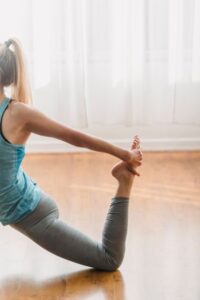
Half frog works one leg at a time and is the usual way to learn the full pose. Yoga Journal starts from sphinx: lift onto one forearm, placed diagonally in front of the shoulder, and bend the other knee; take that foot with the same-side hand, fingers pointing forward, and press the heel down toward the outside of the hip while the chest lifts. Keep the knee in line with the hip and both front hip bones on the floor, since the common error is rolling toward the straight leg. Hold 5 to 10 breaths and switch sides. A strap around the foot helps if you cannot reach it, and the same thigh stretch can be done standing at a wall or seated sideways on a chair. Yoga Journal also calls the one-legged form Eka Pada Bhekasana. Level: intermediate; the knee caution above applies.
Preparation, counterposes and where it is taught
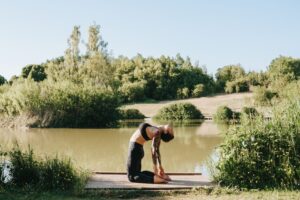
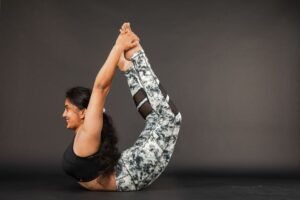
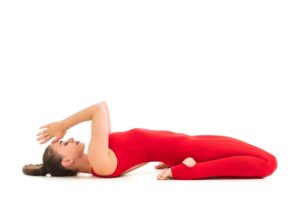
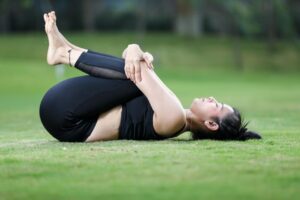
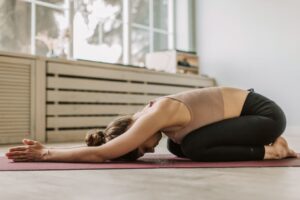
Yoga Journal’s preparation sequence for frog is reclining hero, camel, bow and half frog. Afterward, hug the knees to the chest in wind-relieving pose or rest in child’s pose. Full frog belongs to the Ashtanga intermediate series and to Iyengar practice; half frog appears widely in vinyasa classes.