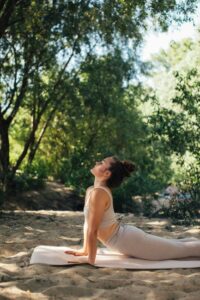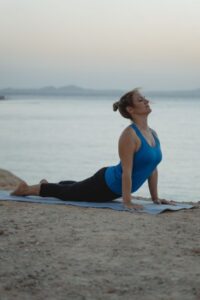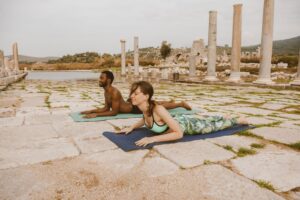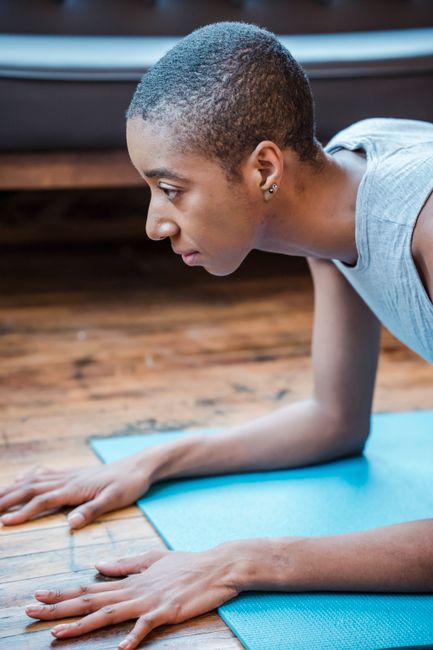
In short: sphinx pose is a mild backbend on the belly with the forearms on the floor and the elbows under the shoulders, so the chest lifts while the arms take part of the weight. It gently works the back muscles and opens the chest and belly. It is one of the easiest ways to learn backbending and a common alternative when cobra pinches the lower back.
Sphinx looks like the Egyptian statue: lower body long on the ground, upper body propped on the forearms, head up. This page covers the active sphinx used in hatha and vinyasa classes. The long, passive hold of yin yoga has its own page, yin sphinx, because the intention and timing are different.
The name: a modern English name with two Sanskrit labels
“Sphinx” is a modern descriptive name, and schools do not agree on a Sanskrit one. Yoga Journal lists it as Salamba Bhujangasana, “supported cobra”. The Bihar School’s Asana Pranayama Mudra Bandha teaches the same forearm shape as Saral Bhujangasana, “easy cobra”, and adds that it is also known as sphinx. Because the two credible sources give different Sanskrit names, we treat both as modern usage and keep sphinx as the main name. Neither name appears in Light on Yoga.
How to make sphinx work
Set the elbows under the shoulders and the forearms parallel, then lift the head and chest so the upper arms become roughly vertical. The Bihar School version starts with the forearms beside the head and walks the upper arms up to vertical; Yoga Journal starts with the elbows under the shoulders. Either way, the forearms press down and the chest moves forward and up between the arms, with the shoulders drawing away from the ears.
Keep the legs long and lightly active and lengthen the tailbone toward the heels so the lower back feels broad. Yoga Journal adds a subtle cue: draw the lower belly gently away from the floor, without hardening it, to spread the bend along the spine instead of pressing it into the lower back. Hold for five to ten breaths, lower, rest with the head to one side, and repeat once or twice. The Bihar School allows a longer static hold of a few minutes, which brings it closer to the yin version.
Sphinx is also a useful check-in pose. Because the forearms hold you steady, you can feel where the bend is happening: ideally a gentle, even curve through the upper and middle back, with the lower back quiet. If all the sensation gathers in one spot of the lower back, that is a sign to lengthen the tailbone, lift the belly softly or lower the chest. Many teachers use two or three short rounds of sphinx early in class, before cobra or upward-facing dog, so the back warms up gradually.
Precautions in plain words
Sphinx should feel like a gentle stretch, not a pinch. If the lower back aches, slide the elbows a little further forward to lower the chest, or place a folded blanket under the hips. With a back injury or a headache, Yoga Journal suggests offering an alternative; ask a teacher or physiotherapist. Belly-down poses are usually avoided in pregnancy, where the standing wall version is kinder. If your shoulders feel jammed, widen the elbows slightly.
Preparation and what comes next
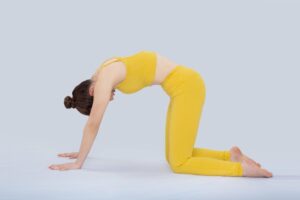
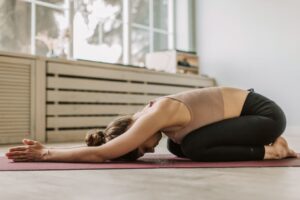
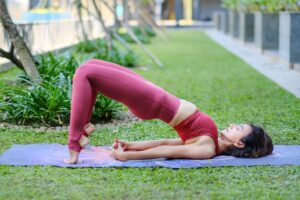
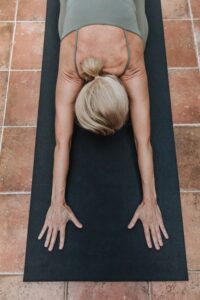
Sphinx itself is a preparation. Warm up with cat-cow or a few breaths in child’s pose, then use sphinx to prepare for cobra, upward-facing dog and bridge. Afterwards, push back to child’s pose to release the lower back.
Where it is taught
You will meet sphinx in hatha and vinyasa classes as a warm-up backbend, in the Bihar School system as easy cobra before full cobra, and, held passively for minutes, in yin yoga (see yin sphinx).