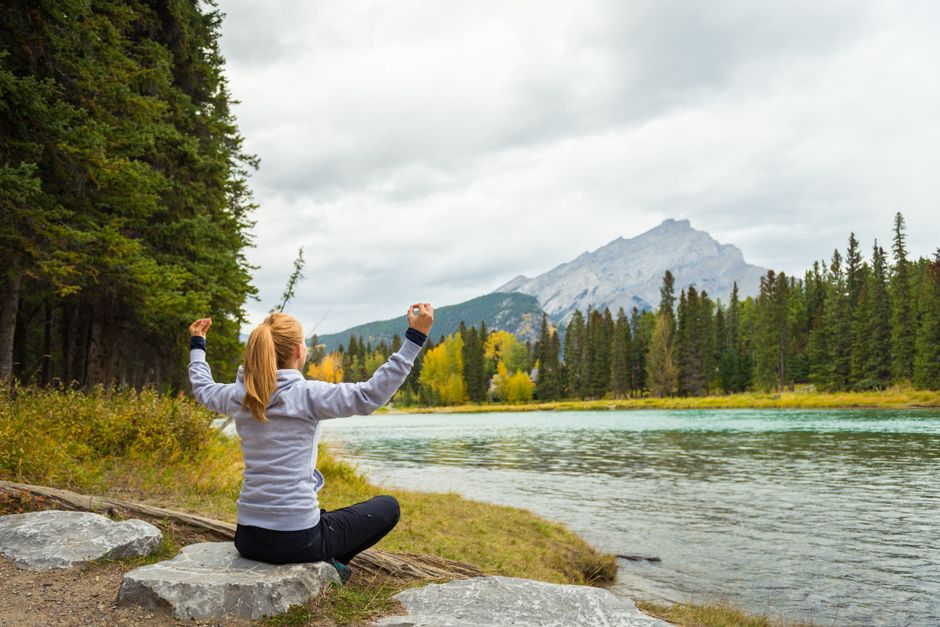
In short: mindfulness meditation means paying attention to what is happening right now (your breath, body, sounds, thoughts and feelings) without judging it. You sit, rest your attention on the breath, notice when the mind wanders, and gently come back. It grew out of Buddhist meditation teachings and today is also taught in secular programs; the research is encouraging for anxiety, depression and stress, with important limits.

Mindfulness meditation is taught today both in Buddhist settings and in secular health programs. You do not need to believe anything, sit in a special posture or empty your mind. You simply practice noticing. This guide explains what mindfulness is, where it comes from, how to practice it step by step, what to do with the common difficulties and what the scientific evidence really shows.
What mindfulness meditation is
The US National Center for Complementary and Integrative Health (NCCIH) describes mindfulness as maintaining attention or awareness on the present moment without making judgments. Mindfulness meditation is the formal practice of that skill: you set aside time, choose something to pay attention to, usually the breath, and keep returning to it.
Two things are worth knowing from the start:
- It is not about stopping thoughts. Thoughts will come. The practice is noticing them and returning to your anchor, again and again. Each return is a repetition, like a single lift in a gym.
- It is both a practice and a quality. Formal sitting trains attention; the same quality of attention can then be brought to everyday life, such as eating, walking or listening to someone.
Mindfulness is one of several meditation methods. Others focus on a single object such as a mantra, or deliberately cultivate qualities such as loving-kindness. Our meditation hub compares them.
Buddhist roots
Mindfulness practice has deep roots in Buddhist teaching. One of its classic sources is the Satipatthana Sutta, a discourse in the Pali Canon translated by Thanissaro Bhikkhu as “Frames of Reference.” It describes four areas in which to establish mindfulness: the body, feelings, the mind and mental qualities.
The practice begins with the breath. The text describes sitting down, setting mindfulness to the fore, and simply discerning the breath as it is, long or short, rather than controlling it. It goes on to apply the same awareness to posture and movement (walking, standing, sitting and lying down) and to everyday activities such as eating and talking. Within Buddhism, this practice belongs to a larger path aimed at insight and liberation from suffering. That spiritual purpose is part of the tradition’s teaching, and it is worth respecting even if you practice for everyday reasons.
Secular programs: MBSR and MBCT
One early landmark in bringing mindfulness into Western medicine was a 1982 paper by Jon Kabat-Zinn describing a 10-week Stress Reduction and Relaxation Program for chronic pain patients based on mindfulness meditation. The study followed 51 patients whose pain had not improved with usual medical care; most reported less pain and less mood disturbance. It had no control group, a limitation Kabat-Zinn discussed himself, but it helped open the way for later research.
Two well-known secular programs today, as NCCIH describes them:
- Mindfulness-based stress reduction (MBSR) teaches mindfulness meditation along with discussion sessions and strategies for applying it to stressful experiences.
- Mindfulness-based cognitive therapy (MBCT) combines mindfulness practice with elements of cognitive behavioral therapy.
These are structured courses with a teacher and group sessions, quite different from a meditation app or a drop-in class, which is worth remembering when you read about research results.
How to practice mindfulness meditation
This is a simple 10-minute version. Read it through once, then try it.
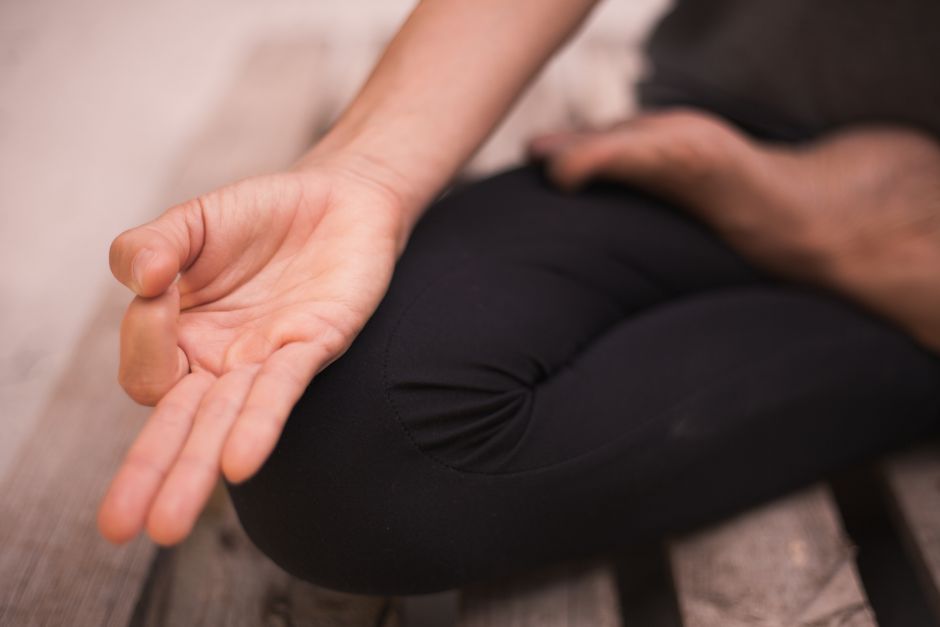
- Sit comfortably. A chair is fine: feet on the floor, back upright but not stiff, hands resting on your thighs. You can also sit on a cushion or kneel on a bench. Close your eyes or let your gaze rest softly on the floor.
- Set a timer for 10 minutes (or five if you are new).
- Arrive. Take a moment to feel your body sitting: the weight on the seat, your feet, your hands.
- Find the breath. Notice where you feel it most clearly: the nostrils, the chest or the belly. Don’t change it. Just feel each inhale and each exhale.
- Notice when you wander. At some point you will realize you are thinking about something else. That moment of noticing is mindfulness. You can silently label it, “thinking,” and then return to the breath.
- Widen your attention (optional). After a few minutes, let awareness open to include sounds, body sensations and passing thoughts, noticing each one come and go without following it.
- Finish gently. When the timer sounds, take a breath or two, notice how you feel, and open your eyes.
Once you are comfortable, you can add informal practice: eat the first few bites of a meal with full attention, or notice the feel of each step as you walk to the car.
Common difficulties and what to do
- “My mind won’t stop.” No one’s does. Count the returns, not the minutes of calm. Shorter sessions and a guided recording can help in the early weeks; see guided meditation.
- Sleepiness. Sit more upright, open your eyes a little, or practice at a different time of day. If you are exhausted, rest may be what you need.
- Restlessness or physical discomfort. Change position mindfully; there is no prize for sitting through pain. A body scan or walking meditation can suit a restless body better.
- Judging yourself. Notice the judgment (“I’m bad at this”) as just another thought, and return to the breath.
- Strong emotions or memories. These sometimes surface. You can open your eyes, shift your attention to your feet on the floor or to sounds in the room, or stop. If difficult experiences keep coming up, talk to a qualified teacher or a mental health professional.
- Breathing gets tight. Paying attention to the breath can make some people self-conscious about it. Rest attention on sounds or on your hands instead, or practice some gentle diaphragmatic breathing first.

What the evidence says, and its limits
Mindfulness has been studied a great deal, and NCCIH cautions that much of the research has been preliminary or not rigorous, and that results may have been interpreted too optimistically. With that in mind, here is what stronger reviews have found, as summarized by NCCIH:
| Area | What reviews found | Main limits |
|---|---|---|
| Anxiety and depression | A 2018 analysis (more than 12,000 participants with diagnosed conditions) found mindfulness approaches better than no treatment and comparable to established treatments | A 2021 review on anxiety disorders found mixed short-term results, unclear risk of bias and no long-term effect beyond 2 months in the few studies that checked |
| Stress and well-being | A 2014 review of 47 trials found moderate evidence for small improvements in anxiety, depression and pain, and low evidence for stress | No evidence that meditation beat active treatments such as drugs, exercise or other behavioral therapies |
| Sleep | A 2019 analysis of 18 studies found mindfulness improved sleep quality more than education-based approaches | No better than evidence-based treatments such as cognitive behavioral therapy or exercise |
| Pain | Results are mixed; a 2020 government report linked MBSR to short-term improvement in low-back pain but not fibromyalgia | Many studies were small or low quality |
| Blood pressure | A 2020 review found MBSR was linked to lower blood pressure in people with conditions such as hypertension or diabetes | The American Heart Association says specific effects on blood pressure are not established |
Research on brain changes gets a lot of attention, but NCCIH describes those results as difficult to interpret, with unclear practical implications.
Safety. Mindfulness is generally considered low-risk, but not risk-free. A 2020 systematic review of 83 meditation studies found that about 8 percent of participants reported an unwanted effect, most often anxiety or depression; rates were lower in experimental studies (about 4 percent) and higher in observational ones. NCCIH also reports an analysis of three MBSR studies (521 participants) that found the program was not more harmful than no treatment. Don’t use mindfulness to replace care from a health professional, and ask about a teacher’s training and experience before signing up for a course.
Where mindfulness fits in yoga
Yoga and Buddhism are distinct traditions, but they share an interest in training attention. In the Yoga Sutras, concentration and meditation are the sixth and seventh of the eight limbs of yoga, and many yoga teachers bring a mindful quality of attention to postures and breathing. If you practice asana, try noticing your breath and body in each pose the way you would on the cushion. Our guide to the Yoga Sutras explores the yogic view of the mind.
Where to go next
- How to meditate: posture, the first five minutes and building a habit
- Body scan meditation: mindfulness of the body, part by part
- Breathing exercises: gentle practices that pair well with sitting
- Meditation retreats: several days of guided practice, often including mindfulness; silent retreats add the challenge of keeping silence. For a trip built around practice, see yoga and meditation in Thailand
This guide is general information, not medical or psychological advice. If you are living with depression, anxiety, trauma or another mental health condition, talk to your health care provider about whether and how to practice.
Frequently asked questions
What is mindfulness meditation in simple terms?
It is the practice of paying attention to the present moment, such as your breath, body, sounds and thoughts, without judging it. When your mind wanders, you notice and gently come back.
Is mindfulness meditation religious?
It has roots in Buddhist teaching, where it belongs to a spiritual path, but secular programs such as mindfulness-based stress reduction teach it without religious content. You can practice it either way.
How long does it take for mindfulness to work?
There is no fixed timeline. Much of the research measures results after structured courses lasting several weeks (the program in Kabat-Zinn's 1982 study ran for 10 weeks). Regular short practice is more important than long occasional sessions.
What is the difference between MBSR and MBCT?
Mindfulness-based stress reduction (MBSR) teaches mindfulness meditation with discussion and strategies for stressful situations. Mindfulness-based cognitive therapy (MBCT) combines mindfulness with elements of cognitive behavioral therapy.
Can mindfulness meditation make anxiety worse?
Sometimes. A 2020 review found unwanted effects in about 8 percent of participants, most commonly anxiety or depression. If practice regularly leaves you more anxious, shorten it, shift your focus away from the breath, or stop and talk to a qualified teacher or health professional.
Sources
- Meditation and Mindfulness: Effectiveness and Safety, National Center for Complementary and Integrative Health (NIH) (accessed October 6, 2026)
- Satipatthana Sutta: Frames of Reference (MN 10), translated by Thanissaro Bhikkhu, Access to Insight (accessed October 6, 2026)
- An outpatient program in behavioral medicine for chronic pain patients based on the practice of mindfulness meditation (Kabat-Zinn, 1982), General Hospital Psychiatry / PubMed (accessed October 6, 2026)
- Meditation programs for psychological stress and well-being: a systematic review and meta-analysis (Goyal et al., 2014), JAMA Internal Medicine / PubMed (accessed October 6, 2026)
- Adverse events in meditation practices and meditation-based therapies: a systematic review (Farias et al., 2020), Acta Psychiatrica Scandinavica / PubMed (accessed October 6, 2026)
- Yoga (Yoga Sutras of Patanjali), by Edwin Bryant, Internet Encyclopedia of Philosophy (accessed October 6, 2026)
Facts checked on October 6, 2026