This article contains affiliate links: if you buy through them we may earn a commission, at no extra cost to you. Read our affiliate disclosure.
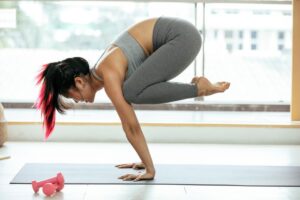
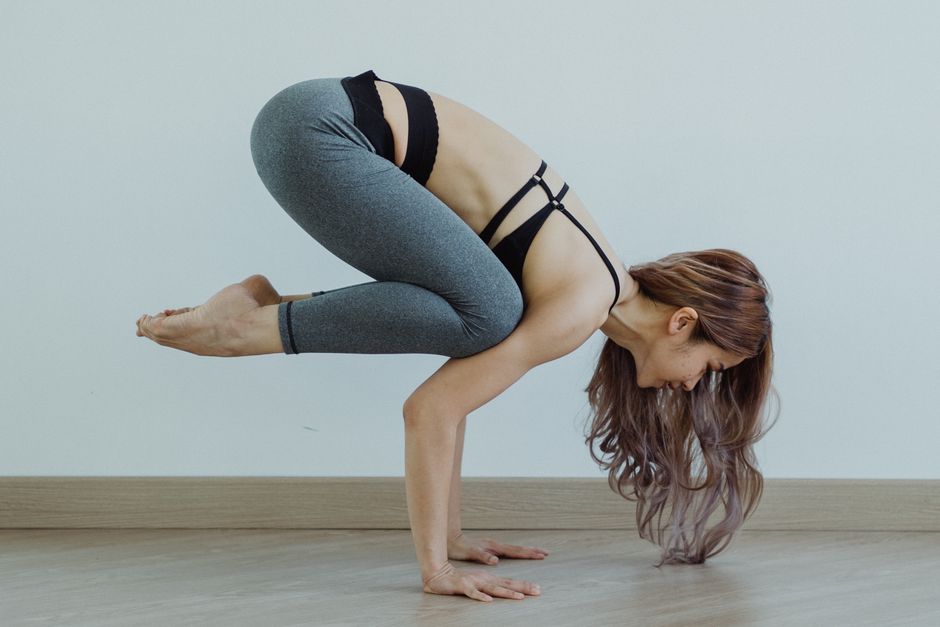
In short: crow pose is a beginner’s arm balance: you squat, place your hands on the floor, rest your knees on the backs of your upper arms and lean forward until your feet lift. It depends more on core strength, leaning and patience than on big arms. Build it in stages, with a block under your feet and a cushion in front of your face.
Crow pose is often the first arm balance people try, and the first attempts rarely look like the photos. That is normal. The pose asks you to trust your hands, round your back, squeeze your legs in and shift your weight forward past the point that feels safe. Each of those can be practiced on its own, which is how this guide approaches it: drills first, then the full pose, then the next steps.
Crow or crane? The Sanskrit names
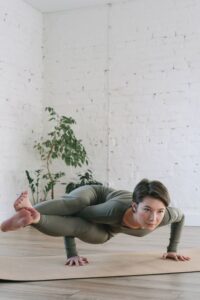
Two names are used for this family of poses, and they are often mixed up. Kāka is the Sanskrit word for crow (the Monier-Williams dictionary notes it imitates the bird’s cawing) and baka means crane or heron; āsana means posture (see asana). Yoga Journal draws the distinction this way: in crow pose (Kakasana) the arms are bent and the knees rest on the backs of the upper arms; in crane pose (Bakasana) the arms are straight and the knees are tucked higher, closer to the armpits. Many classes call both “crow,” and many English sources translate Bakasana as crow pose, so ask your teacher which version they mean. Neither appears among the 15 postures of the 15th-century Hatha Yoga Pradipika; both belong to the arm balances of modern practice. To move from crow toward crane, start the same way, tuck the knees closer to the armpits and gradually straighten the arms.
Build-up drills for crow pose
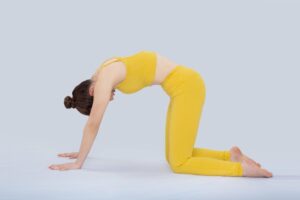
- Wrist warm-up: circle the wrists, make and release fists, and spend a minute on hands and knees in cat-cow, shifting your weight gently forward over the hands.
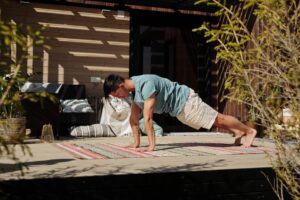
- Plank to chaturanga: lowering slowly from plank with the elbows hugging the ribs builds the same arm and shoulder action crow needs. See chaturanga.
- Crow on your back: lie down, bring your shins to the outside of your upper arms and press arms and legs into each other. You learn the shape and the squeeze with no balance involved.
- Squat on a block: stand on a block so your feet start a few inches higher. This brings the knees higher up the arms, which helps a lot with tight hips.
- One foot at a time: in the pose, lift one foot, lower it, then the other, before trying both.
- Chair version: feet on the seat of a stable chair, hands on the floor below the shoulders, knees on the upper arms. You feel the shape without bearing your full weight.
Through all of these, keep your gaze on the floor slightly ahead of your hands rather than straight down; our glossary entry on drishti explains why teachers give the eyes a fixed point. Blocks make two of the drills possible; our guide to yoga blocks explains foam versus cork. Two firm blocks that suit this work:
Manduka Recycled Foam Yoga Block
- 9 x 6 x 4 in, about 0.9 lb
- 50 to 75 percent recycled EVA foam (maker)
- About $22, seen October 2026
Manduka Cork Yoga Block
- 4 x 6 x 9 in
- Fine-grain cork, textured grip
- About $26, seen October 2026
Who should take care with crow pose
Yoga Journal advises avoiding crow and crane, or practicing with caution, if you have vertigo, dizziness or certain eye conditions; wrist arthritis, wrist pain or carpal tunnel problems; back pain or back injuries, including surgery, osteoporosis, disc problems or arthritis; or a hip replacement or hip pain in the pose. If your wrists ache, curling the fingers slightly can take some pressure off; if pain continues, stop. Arm balances also carry a risk of falling forward, so in pregnancy, ask your health care provider before trying them and see our guide to prenatal yoga. If you have a health condition, check with your doctor first. This page is general information, not individual advice.
Counterposes and what comes next
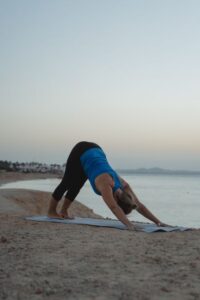
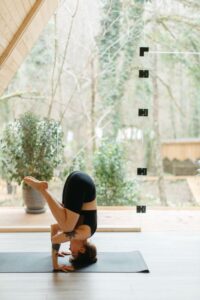
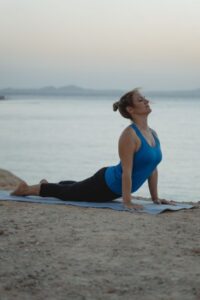
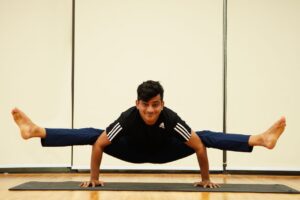
After crow, open the front of the body and stretch the wrists the other way: upward-facing dog or a few breaths in downward dog work well. Once crow is steady, the same core and shoulder strength helps with other arm balances and with inversions such as headstand, which has its own careful build-up. Arm balances are a regular feature of power yoga and vinyasa classes.
Keep the breath slow and even while you practice; our guide to ujjayi breathing describes the steady breath many teachers use in flowing classes. Find more balances in the pose directory.