Flying Pigeon (Eka Pada Galavasana): steps, names and precautions

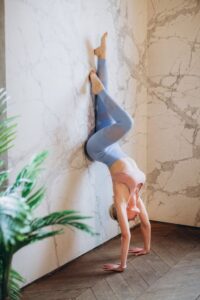
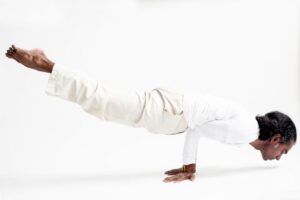
Flying pigeon (Eka Pada Galavasana) is an arm balance with one shin across the upper arms and the other leg extended back. Also called flying crow in some classes; an advanced pose.

Not yet reviewed by a qualified teacher Names and shape checked against 4 sources

Sanskrit name
Eka Pāda Gālavāsana एक पाद गालवासन (source)
Also called
Flying Pigeon Pose, Flying Crow
Other spellings
Eka Pada Galavasana, Galavasana
Pose family
Arm balance, Hip opener and leg extension
Starting position
Hands-supported
Movement
Balance, Hip external rotation
Taught in
Vinyasa Yoga: Flow, Breath and What to Expect
Difficulty
Advanced
Prerequisite skills
A steady crow, a comfortable standing figure four with the shin able to rest horizontally, and wrists that tolerate full weight.
Body areas
Arms and wrists, Core, Hips, Shoulders
Props
Block, Mat
Practised
Solo

Names in different traditions

TraditionName usedNote
Iyengar (Light on Yoga)Eka Pāda GālavāsanaPlates 431 and 433; Gālavāsana pl. 427–428 (Iyengar Yoga UK I8 Teaching Syllabi).
Ashtanga vinyasa (Pattabhi Jois lineage)GālavāsanaThird series; from tripod headstand, one shin across the upper arms, other leg and torso diagonally up; a horizontal variation on the elbows also exists (AshtangaYoga.info).
Modern vinyasa classesFlying Pigeon (sometimes Flying Crow)Entered from one-legged chair (Yoga Journal; Yoga International).

Step by step

Coming into the pose

  1. From chair pose, palms together at the chest, lift the left foot and place the left outer ankle on top of the right knee. Flex the left foot.
  2. Fold forward and place the fingertips on the floor or on blocks in front of the shoulders. Lower the hips and draw the chest forward to feel the outer left hip.
  3. Lean forward slightly and wrap the left foot around the outside of the right upper arm, the left shin across the backs of both upper arms. If you cannot wrap the foot, stop here for today.

In the pose

  1. Bring the palms to the floor, bend the elbows toward 90 degrees and shift the chest forward until the right foot lifts. Squeeze the right heel toward the seat.
  2. Extend the right leg back and up, parallel to the floor, engaging the hamstrings and glutes. Draw the navel in, gaze slightly forward. Hold two to four breaths (Yoga Journal).

Coming out

  1. Bend the right knee, lower the right foot, come back up to fingertips and to the one-legged chair, then stand and repeat on the other side.

Breathing

Breathe slowly in the folded chair shape; exhale as you shift forward and lift. Keep the breath moving during the short hold.

Alignment cues

  • Flex the foot of the folded leg so it grips the outer upper arm.
  • Shin as high on the upper arms as possible.
  • Elbows bent and hugging in to make a shelf.
  • Draw the lifted leg’s side of the belly in so the pelvis stays level.

Common alignment errors

  • Forcing the hip and knee when the foot cannot wrap the arm.
  • Kicking the back leg up before the weight has moved forward.
  • Letting the pelvis roll open toward the lifted leg.

Modifications and easier variations

  • Stay in one-legged chair or the forward fold over the folded leg. none
  • Come up onto the back toes and practise shifting weight to the hands without lifting the foot. none

Advanced variations

Props and chair adaptations

  • Hands on blocks while you explore the hip stretch. block
  • Ball of the back foot on a block to feel the lift (Yoga International). block

Precautions

  • Shoulder or knee pain in the pose: return to the preparation stages (Yoga Journal).
  • Knee, hip, wrist or shoulder injury: avoid.
  • Pregnancy: ask your health care provider before arm balances.

Learn it with a teacher: Work with a teacher if your knee complains in the figure-four position, and for the Ashtanga entry from headstand.

General information, not medical advice. Poses do not cure illness. If you are pregnant, injured or have a health condition, check with your doctor and tell your teacher before you practise.

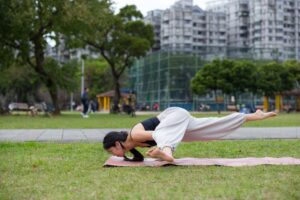
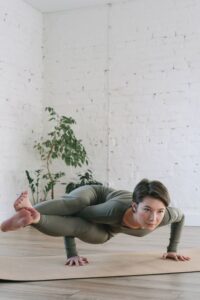
In short: flying pigeon is an arm balance with one leg folded as in a figure four: the shin lies across the backs of the upper arms with the foot hooked around one arm, the elbows bend into a shelf and the other leg extends straight back in the air. It combines a deep outer-hip stretch with a crow-like lean, so it is an advanced pose.

The shape looks like an airborne pigeon pose, which is where the English name comes from. In some classes you will also hear it called flying crow; on this site both names lead here.

The name

Eka pāda means one leg, and the pose is dedicated to the sage Gālava, who in the Mahābhārata was a disciple of Viśvāmitra (AshtangaYoga.info retells the story). The Iyengar Yoga (UK) syllabus lists Eka Pāda Gālavāsana at plates 431 and 433 of Light on Yoga, with the related Gālavāsana at plates 427 to 428. Yoga Journal and Yoga International both teach Eka Pada Galavasana as flying pigeon, entered from a one-legged chair pose.

The Ashtanga third series has a Gālavāsana entered from a tripod headstand, in which one shin rests across the upper arms near the armpits and the other leg and the torso point diagonally up into the air; AshtangaYoga.info notes a variation that rests the upper body on the elbows and balances horizontally, which is the flying pigeon shape shown here. Follow the version your teacher uses.

Making the pose work

The hips decide whether this pose is possible today. Yoga Journal’s step-by-step version gives a clear test: if you cannot wrap the top of the folded leg’s foot around the outside of the opposite upper arm, the hips need more range before you go further. Flex that foot strongly so it grips the arm. Then the action is the same as crow: round the low back, bend the elbows toward 90 degrees, shift the chest forward and look slightly ahead. Yoga International suggests squeezing the back heel toward the seat first, which keeps lift-off compact, before extending the leg back and up. Engage the hamstrings and glutes of the lifted leg and draw the navel in so the pelvis does not roll open.

Yoga Journal suggests two to four breaths before releasing and repeating on the other side.

Precautions in plain words

The pose loads the shoulders and wrists and puts strong rotation into the hip and knee of the folded leg. Yoga Journal’s advice is direct: if you feel shoulder or knee pain, your body needs more time and preparation, so step back to the earlier stages. Avoid it with knee, hip, wrist or shoulder injuries. In pregnancy, ask your health care provider before arm balances. This page is general information, not individual advice.

Preparation and what comes next

Prepare with standing figure four, reclining figure four, pigeon pose, cat-cow, plank, chaturanga and crow. Blocks under the hands, or under the standing foot, help you feel the lift. Afterwards, Yoga International likes a gentle backbend such as bridge to undo the rounded shape. Related arm balances are Sage Koundinya’s pose II and Sage Visvamitra’s pose.

A simple way to practise it. Build flying pigeon over several weeks. Spend time first in one-legged chair, balancing for several breaths on each side. Then fold forward over the crossed leg with the hands on blocks, working on the foot wrap. When the wrap is easy, practise shifting forward onto the hands with the back toes still down. Only then lift the back foot, keep the heel close to the seat, and extend the leg for a breath or two. Practise both sides and come back to the earlier stages whenever the knee or shoulder complains.

Flying pigeon is a favourite peak pose in vinyasa and power yoga, and appears in Iyengar and Ashtanga (third series) practice.
Preparatory poses

Follow-up poses and transitions

Counterposes

Related poses

More arm balance poses

Frequently asked questions

Is flying crow the same as flying pigeon?

In most classes, yes: both names describe Eka Pada Galavasana, with one shin across the arms and the other leg extended back. If a teacher uses "flying crow" for something else, ask them to show the shape.

Why can I not wrap my foot around my arm?

The outer hip needs more range. Keep practising figure four and pigeon; Yoga Journal treats the wrap as the signal that you are ready for the next stage.

Do I need crow pose first?

It helps a lot: the lean forward, rounded back and bent-elbow shelf are the same.

Sources

  1. Challenge Pose: Flying Pigeon (Eka Pada Galavasana), Yoga Journal (Jason Crandell) (accessed October 6, 2026)
  2. Eka Pada Galavasana (Flying Pigeon) Step-by-Step, Yoga International (accessed October 6, 2026)
  3. Gālavāsana: Pose dedicated to Gālava, AshtangaYoga.info (Dr. Ronald Steiner) (accessed October 6, 2026)
  4. I8 Teaching Syllabi (asanas with Light on Yoga plate numbers), Iyengar Yoga (UK) (accessed October 6, 2026)

Facts checked on October 6, 2026