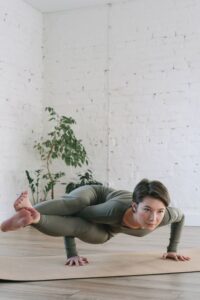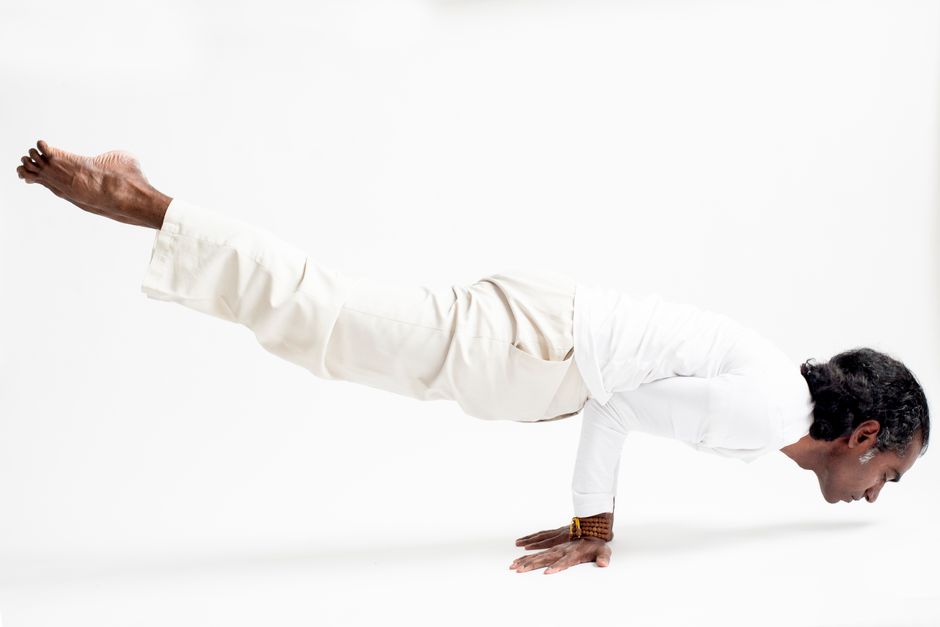
In short: in peacock pose the hands are on the floor with the fingers pointing back toward the feet, the elbows press into the belly near the navel, and the whole body balances horizontally on the bent arms, straight as a stick. It is one of the oldest named postures and one of the hardest on the wrists, so treat it as an advanced pose and build up to it.
Unlike most arm balances, peacock does not rest the legs on the arms. The forearms become the peacock’s legs and the body its long tail, which is why the balance depends so much on leaning the chest forward far enough to lift the legs behind.
The name and an old text
Mayūra means peacock. Mayūrāsana is one of the fifteen postures described in the Hatha Yoga Pradipika, the 15th-century hatha manual. In Pancham Sinh’s 1914 translation, the palms are placed on the ground, the navel rests on the elbows and the body is stretched back like a stick. The same verses make sweeping claims: that the pose destroys all diseases, digests unwholesome food and even the deadliest poison. Those are the text’s claims, from a very different medical world, not findings you should rely on today. Swami Sivananda describes the same shape, adds that the legs may be straight or crossed in lotus, and suggests using the edge of a table at first. In the Sivananda Yoga Vedanta Centres’ 12 basic asanas, peacock is the alternative to crow at position ten.
The Iyengar Yoga (UK) syllabus lists Mayūrāsana at plate 354 of Light on Yoga, and in Ashtanga it sits near the end of the intermediate series, entered from standing by folding forward, placing the hands between the feet with the fingers pointing back and jumping the legs back.
Making the pose work
Think of a see-saw. Yoga Journal describes the full pose as leaning the chest forward and down so the legs can lift back and up, with the gaze toward the wall in front rather than the floor. Keep the hands close together, little fingers touching or nearly so, so the elbows can sit together against the belly; AshtangaYoga.info notes that elbows placed a little closer together on the belly stay put instead of sliding outward. Before lifting, the head can rest on the floor while you find the place where the weight in front of the hands equals the weight behind them. Then lift legs and head together and stretch from the crown to the toes.
Many people find the legs too heavy at first. Lifting one leg at a time, or resting the feet on blocks, lets you get used to the weight on the hands. Yoga Journal and Yoga International both note that folding the legs into lotus or bending the knees out to the sides brings the weight closer to the elbows and makes the balance easier.
Precautions in plain words
The wrists bend back under full body weight and the elbows press into the abdomen. Avoid the pose with wrist, elbow or shoulder injuries, after recent abdominal surgery, with a hernia, during pregnancy and soon after giving birth, and with high blood pressure. Practise on an empty stomach and put a folded blanket under the face; falling forward onto the chin is a real risk. This page is general information, not individual advice.
Lotus Peacock (Padma Mayurasana)
In lotus peacock the legs are crossed in lotus while the body balances on the bent arms in the same way. The Iyengar Yoga (UK) syllabus lists Padma Mayūrāsana at plate 355 of Light on Yoga, directly after Mayūrāsana, and Swami Sivananda’s description of peacock already allows the legs to be crossed in lotus. Because the folded legs are lighter and closer to the elbows, some find it easier to lift; the condition is a comfortable lotus, so do not force the knees. Practise it only with a teacher if lotus is new to you.
Preparation and what comes next
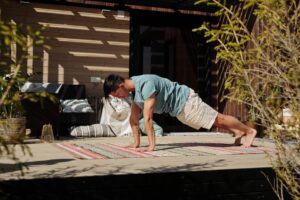
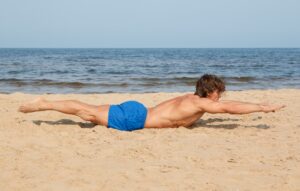
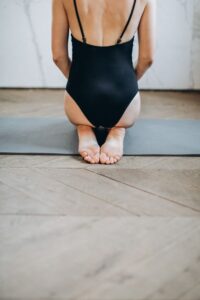
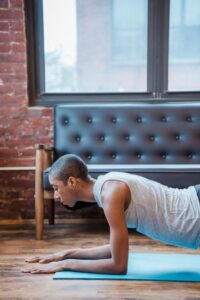
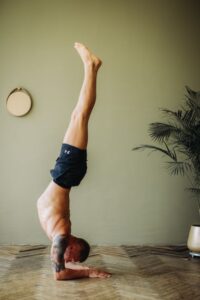
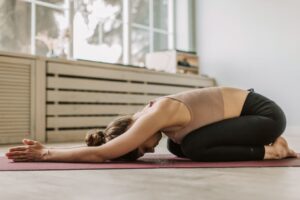
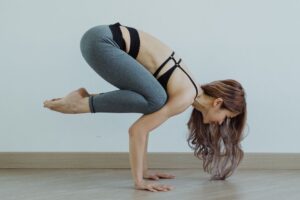
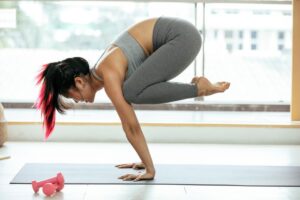
Prepare the wrists by kneeling with the palms down and fingers pointing back toward you, leaning gently back. Yoga International suggests scale pose and locust to train the lift of the pelvis and legs, and kneeling with the elbows in the belly and the head on the floor before lifting the legs. Plank and chaturanga build arm strength. Afterwards, stretch the wrists the other way and rest in child’s pose. Related poses are crow, its partner in the Sivananda sequence, and forearm stand (Piñcha Mayūrāsana, the feathered peacock), which shares only the name.
You will find peacock in Sivananda, hatha, Iyengar and Ashtanga (intermediate series) practice.