Scale Pose (Tolasana) or Lifted Lotus: steps, names and precautions

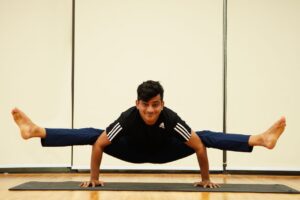
Scale pose (Tolasana), also called lifted lotus or Utpluti in Ashtanga, lifts the lotus seat off the floor on the hands. A short, strong, advanced hold; crossed shins and blocks make it easier.

Not yet reviewed by a qualified teacher Names and shape checked against 6 sources

Sanskrit name
Tolāsana तोलासन (source) (varies by tradition, see below)
Pronunciation
toe-LAHS-ah-nah (source)
Also called
Lifted Lotus, Scales, Utthita Padmasana
Other spellings
Tolasana, Utpluti, Utpluthih
Pose family
Arm balance, Seated
Starting position
Seated
Movement
Balance, Strength hold
Taught in
Hatha Yoga: The Historical Term and the Modern Class
Difficulty
Advanced
Prerequisite skills
A comfortable lotus (or crossed shins for the easier version), and wrists that tolerate full body weight.
Body areas
Arms and wrists, Core, Hips, Shoulders
Props
Block, Chair, Mat
Practised
Solo

Names in different traditions

TraditionName usedNote
Iyengar (Light on Yoga)TolāsanaPlate 108 (Iyengar Yoga UK I8 Teaching Syllabi).
Ashtanga vinyasa (Pattabhi Jois lineage)UtplutiḥFinishing sequence, after Padmasana and before Savasana: the lotus lifted by the arms (AshtangaYoga.info).
Sivananda (Swami Sivananda, Hatha Yoga)Utthita PadmasanaListed in the book’s contents after Padmasana; description not checked, so the match is not confirmed.

Step by step

Coming into the pose

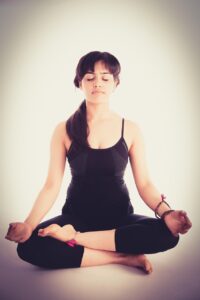
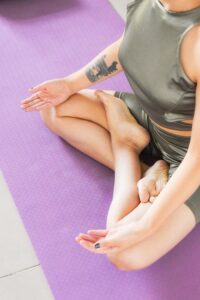
  1. Sit in lotus. Place the palms on the floor beside the hips, or on blocks.
  2. Exhale completely and draw the belly in.

In the pose

  1. Press the hands down, contract the abdomen and lift the legs and buttocks off the floor. Draw the inner groins up toward the spine; keep the torso fairly upright.
  2. Hold suspended for 10 to 15 seconds (Yoga Journal).

Coming out

  1. Lower on an exhale, change the cross of the legs and repeat for the same length of time.

Breathing

Exhale fully before lifting and keep the breath short and steady while suspended. Come down rather than hold the breath.

Alignment cues

  • Lift from the belly and pelvis, not only the arms.
  • Inner groins draw up toward the spine.
  • Shoulders down and wide; arms straight.
  • Torso fairly upright.

Common alignment errors

  • Forcing the legs into lotus to attempt the pose.
  • Hunching the shoulders up to the ears.
  • Holding the breath.

Modifications and easier variations

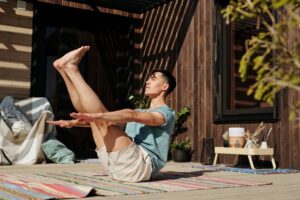
  • Crossed shins (easy pose) instead of lotus; hold the shins together and lift. none
  • Half lotus: the buttocks lift, the lower leg’s outer calf and foot stay down. none

Advanced variations

Props and chair adaptations

  • A block under each hand to lengthen the arms. block
  • Seated on a chair, ankles crossed, hold the sides of the seat and lift your body off it. chair

Precautions

  • Shoulder or wrist injury: avoid (Yoga Journal).
  • Knee or ankle injury: avoid the lotus version; never force lotus.

Learn it with a teacher: If lotus is new to you, learn it with a teacher before adding the lift.

General information, not medical advice. Poses do not cure illness. If you are pregnant, injured or have a health condition, check with your doctor and tell your teacher before you practise.

In short: in scale pose you sit in lotus, place the palms on the floor beside the hips and press down to lift the crossed legs and the buttocks off the floor, holding the body suspended on straight arms. It is brief and strong, depends on a comfortable lotus, and puts the whole body weight on the wrists, so it is an advanced pose.

Scale and lifted lotus are two names for the same shape, so they share this page. Which name you hear depends on the school.

The names: Tolasana, Utpluti and lifted lotus

Yoga Journal explains tolā as poising oneself, usually rendered as balance or scale, the image being a pair of scales lifted by its handle. The Iyengar Yoga (UK) syllabus lists Tolāsana at plate 108 of Light on Yoga. In the Ashtanga finishing sequence the same lift, held after lotus and just before final relaxation, is called Utpluti, which AshtangaYoga.info describes as less a posture than a lotus seat lifted by the strength of the arms. In English many classes simply say lifted lotus or scale. Swami Sivananda’s book Hatha Yoga lists an Utthita Padmasana (raised lotus) next to lotus in its contents; we have not been able to check that description, so treat that name as a likely, not confirmed, synonym.

Making the pose work

Lift with the belly as much as with the arms. Yoga Journal’s tip is to draw the inner groins up into the core along the front of the spine; Yoga International adds to lift strongly through the pelvis and legs so the arms and shoulders are not doing all the work. Exhale fully, press the hands down and lift on the effort. Blocks under the hands lengthen the arms and make a real difference for many bodies. Keep the torso fairly upright: this is what separates scale from pendant pose, where the back rounds completely.

Yoga Journal suggests holding for 10 to 15 seconds, then lowering, changing the cross of the legs and repeating for the same time. In Ashtanga, Utpluti is traditionally held for a count of breaths at the end of practice, as the teacher directs.

Precautions in plain words

Yoga Journal advises avoiding the pose with shoulder or wrist injuries, and notes that it shares lotus’s contraindications: knee and ankle injuries in particular. Never force the legs into lotus to do this pose; use crossed shins or half lotus instead. This page is general information, not individual advice.

Easier versions and props

If lotus is not comfortable, sit with the shins crossed as in easy pose and lift from there, or use half lotus: the buttocks lift but the lower leg’s outer calf and foot stay down. Yoga Journal also offers a chair version: cross the ankles, hold the sides of the seat and lift your body off it.

Preparation and what comes next

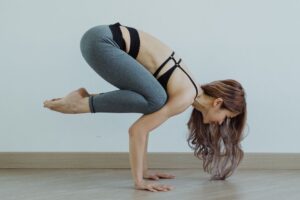
Prepare with lotus or half lotus, boat pose and an arm balance such as crow to warm the core and arms. Afterwards, release the legs and rest the wrists. Scale is a step toward rooster pose, where the arms slide through the lotus before lifting, and toward peacock.

A simple way to practise it. To build the pose, start with the shins crossed and blocks under the hands, lifting the seat for a few breaths; repeat with the other shin in front. Next, move to half lotus on each side, then to full lotus only if your knees are comfortable there. Exhale before each lift and let the belly do as much work as the arms. Keep holds short and repeat them rather than holding one long, shaky lift, and finish by stretching out the legs in staff pose.

You will meet the pose in Ashtanga (finishing sequence), Iyengar and hatha classes.
Preparatory poses

Follow-up poses and transitions

Counterposes

Related poses

More arm balance poses

Frequently asked questions

Is lifted lotus the same as scale pose?

Yes. Tolasana (scale), lifted lotus and the Ashtanga Utpluti are names for the same lift of the lotus seat on the hands.

Can I do scale pose without lotus?

Yes: lift from crossed shins or half lotus, with blocks under the hands if needed. Never force your knees into lotus.

How long should I hold scale pose?

Yoga Journal suggests 10 to 15 seconds on each cross of the legs. It is a short, strong hold.

Sources

  1. Scale Pose (Tolasana), Yoga Journal (accessed October 6, 2026)
  2. Peacock Pose (preparation: tolasana), Yoga International (accessed October 6, 2026)
  3. Pose Breakdown: Tolasana (Scale Pose), Yoga International (accessed October 6, 2026)
  4. Finishing: the closing postures of Ashtanga practice (Utplutiḥ), AshtangaYoga.info (Dr. Ronald Steiner) (accessed October 6, 2026)
  5. I8 Teaching Syllabi (asanas with Light on Yoga plate numbers), Iyengar Yoga (UK) (accessed October 6, 2026)
  6. Hatha Yoga (Swami Sivananda): table of contents, The Divine Life Society (accessed October 6, 2026)

Facts checked on October 6, 2026