Corpse Pose (Savasana): how to rest well at the end of practice

Corpse pose (Savasana) is the lying-down resting pose that ends most yoga classes. How to set up, how long to stay, side-lying rest for pregnancy and comfort, and how it differs from Yoga Nidra.

Not yet reviewed by a qualified teacher Names and shape checked against 8 sources

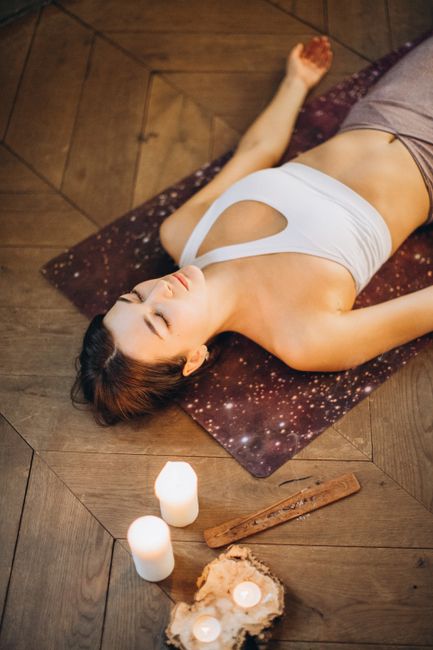
Woman practicing relaxation yoga with candles set for a calming atmosphere.
Sanskrit name
Śavāsana शवासन (source)
Pronunciation
shah-VAHS-anna (source)
Also called
Final Relaxation, Relaxation Pose, Side-Lying Rest, Side-Lying Savasana, Lateral Rest
Other spellings
Savasana, Shavasana, Mrtasana, Mritasana
Pose family
Resting and restorative, Supine
Starting position
Reclining (on the back)
Movement
Neutral rest
Taught in
Hatha Yoga: The Historical Term and the Modern Class, Vinyasa Yoga: Flow, Breath and What to Expect, What Is Yin Yoga? Long Holds, Slow Pace and a Typical Class, Aerial Yoga: How Hammock Yoga Works and Who It Suits, Bikram Yoga: The Fixed Hot Sequence Explained, Hot Yoga: What It Is, Room Temperatures and Who It Suits, Kundalini Yoga: Practices, Origins and What a Class Involves
Difficulty
Beginner
Prerequisite skills
None beyond lying comfortably on the floor; use props under the knees or head, or side-lying rest, as needed.
Body areas
Neck, Shoulders, Spine
Props
Blanket, Bolster, Mat
Practised
Solo

Names in different traditions

TraditionName usedNote
Hatha Yoga Pradipika (15th century)ŚavāsanaHYP 1.32: lying supine at full length like a corpse; the text says it removes fatigue and calms the mind (quoted in Light on Yoga; Pancham Sinh translation).
Gheranda SamhitaMṛtāsanaGS 2.11, as quoted in Light on Yoga.
Iyengar (Light on Yoga)Śavāsana (also Mṛtāsana)Asana 200, plate 592: palms up, heels together, toes apart, fine slow exhalations; 15 to 20 minutes.
Sivananda Yoga Vedanta CentresCorpse Pose (Savasana)Feet about 18 in apart, arms about 6 in from the body; before the session, between asanas and in final relaxation (Sivananda London).
Bihar School of YogaShavasana (the corpse pose)Asana Pranayama Mudra Bandha: breath counting; a minute or two during asana practice.

Step by step

Coming into the pose

  1. Sit with the knees bent, lean back onto the forearms and lower the back to the floor. Stretch the legs out.
  2. Line the body up: head, spine and legs in one straight line. Let the feet fall open, about hip-width or a little wider.
  3. Rest the arms a little away from the sides, palms up. Let the shoulder blades settle and the chest broaden.

In the pose

  1. Close the eyes or soften the gaze. Release the jaw, tongue and face.
  2. Let the breath become natural and slow. Count the breaths or scan the body from feet to head; when the mind wanders, come back to the breath.
  3. Stay at least five minutes at the end of a class, longer in a dedicated relaxation practice.

Coming out

  1. Deepen the breath, move the fingers and toes, bend the knees and roll onto one side. Rest a few breaths, then press up to sitting with the head last.

Breathing

Let the breath be natural; there is nothing to control. Iyengar emphasises slow, fine exhalations; the Bihar School counts each breath in and out; Sivananda teachers use slow abdominal breathing at the start of relaxation.

Alignment cues

  • Symmetry: lie straight so neither side of the body is working.
  • Chin level with the forehead; a folded blanket under the head if the chin tips up.
  • Feet and arms a little apart, palms up, so the legs and shoulders can roll open.
  • Loose jaw, soft eyes, relaxed hands.

Common alignment errors

  • Skipping it or rushing it to leave class early.
  • Lying crooked so one hip or shoulder keeps working.
  • Getting cold: cover up with a blanket, because the body cools quickly when still.
  • Jumping straight up instead of rolling to the side first.

Modifications and easier variations

  • Side-lying rest: on one side with a pillow under the head and between the knees, a bolster to hug. Preferred in later pregnancy. bolster
  • Lower legs resting on the seat of a chair (Yoga Journal variation), for an achy back. chair

Props and chair adaptations

  • Bolster or rolled blanket under the knees if the lower back aches. bolster
  • Folded blanket under the head; a blanket over the body for warmth; an eye pillow or cloth over the eyes. blanket
  • Seated rest: sit back in a chair with the feet flat, hands on the thighs, eyes closed, and follow the same breathing. chair

Precautions

  • Pregnancy (after the first trimester): avoid lying flat on the back for long; use side-lying rest.
  • Lower back discomfort: support under the knees.
  • If stillness with closed eyes feels distressing, keep the eyes open or choose a shorter rest.
  • Get up slowly via the side, especially after inversions or a hot class, if you tend to feel dizzy.

Learn it with a teacher: Safe to practise on your own. A teacher or a recorded relaxation can help if you find it hard to settle.

General information, not medical advice. Poses do not cure illness. If you are pregnant, injured or have a health condition, check with your doctor and tell your teacher before you practise.

In short: corpse pose is lying flat on your back, legs a little apart, arms a little away from the body with the palms up, and letting the whole body go still. It is the resting pose that closes most yoga classes. It looks like the easiest pose in the book, yet staying still and awake while the body lets go takes practice.

Corpse pose is where a practice settles. After standing poses, backbends or a long yin session, a few quiet minutes on the floor let the breath slow down and the body come to rest before you get up and carry on with your day. Below we explain the name, how to set up so you can really relax, what to do if lying flat is uncomfortable, and how it differs from Yoga Nidra, the guided practice that is often done in this position.

The name and where it comes from

The Sanskrit name is Śavāsana (often written Savasana or Shavasana), from śava, corpse, and āsana, seat or posture (see what asana means). It is also called Mṛtāsana, from mṛta, dead. This is one of the few poses with a long written history: the Hatha Yoga Pradipika, the 15th-century manual of hatha yoga, describes lying on the back at full length like a corpse and says it removes fatigue and calms the mind, and the Gheranda Samhita describes the same shape under the name Mṛtāsana. Those are the texts’ own descriptions; today most teachers simply present it as a time to rest and let the practice settle.

In Light on Yoga, B.K.S. Iyengar describes the aim as imitating a corpse: staying motionless while fully conscious, and he notes that this apparently easy posture is one of the hardest to master, because the mind is harder to keep still than the body. The Sivananda centres use it before each session, between poses and for the final relaxation, and the Bihar School teaches it with simple breath counting.

How to make it work

The setup matters more than people expect. Lie down symmetrically, with the head, spine and legs in one line. Let the feet fall open, roughly hip-width or a little wider; the Sivananda centres suggest about 18 inches between the feet and the arms about six inches from the sides. Turn the palms up, which lets the shoulders roll open. Yoga International suggests checking that the chin is level with the forehead; if the chin tips up, put a folded blanket under the head.

Then give yourself something simple to do with the mind. Iyengar’s instructions focus on slow, fine exhalations and a loose jaw; the Bihar School suggests counting each breath in and out and coming back to the count when the mind wanders. Many people find a gentle body scan, from the feet to the crown, makes it easier to let go. Falling asleep now and then is normal, especially at first, but the aim is to stay quietly aware while the body rests. Stay at least five minutes at the end of a class, as Yoga Journal suggests; Iyengar gives 15 to 20 minutes for a dedicated practice. Our diaphragmatic breathing guide is a good companion.

To come out, deepen the breath, move the fingers and toes, roll onto one side and pause for a few breaths. Then press up to sitting with the head coming up last.

Side-lying rest

Side-lying rest (also called side-lying savasana) is the usual alternative when lying flat on the back is uncomfortable, and it is the standard choice in later pregnancy. The American College of Obstetricians and Gynecologists advises avoiding lying flat on your back for long periods during pregnancy, because the uterus can press on a large vein that returns blood to the heart. Lie on your side, usually the left in pregnancy, with a pillow or folded blanket under the head and another between the knees; Yoga Journal’s restorative version adds a wall behind the back for support. A bolster to hug in front of the chest lets the top shoulder relax. It is a modern descriptive name, not a separate classical posture, and it is simply corpse pose made comfortable.
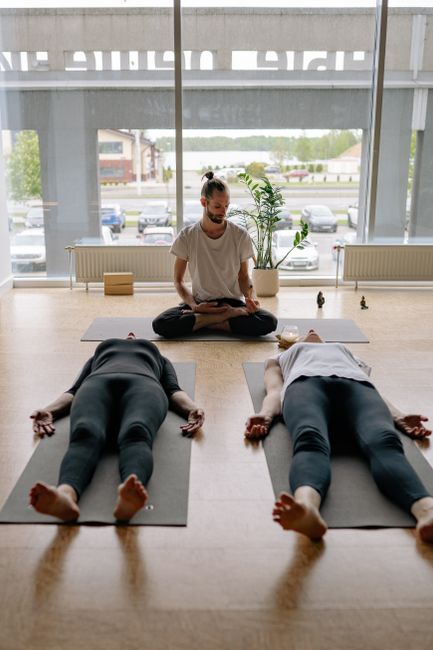
Instructor guides meditation for adults in yoga class with relaxation pose indoors.

Corpse pose is not Yoga Nidra

Corpse pose is a physical position. Yoga Nidra is a guided practice, usually a long recorded or spoken script of body awareness, breath and visualisation, and it is often done lying in corpse pose. You can rest in corpse pose without doing Yoga Nidra, and Yoga Nidra can be done in side-lying rest or even in a chair. The posture called Yoganidrasana is something else again: an advanced pose with the legs behind the head.

Precautions in plain words

For most people corpse pose is safe. If the lower back aches when the legs are straight, put a bolster or rolled blanket under the knees. After the first trimester of pregnancy, use side-lying rest instead of lying flat for a long time. Some people find lying still with the eyes closed brings up uncomfortable feelings or memories; keep the eyes open, rest a hand on the belly, or choose a shorter rest. If you feel dizzy getting up, take it slowly, especially after inversions or a hot class. This page is general information, not individual advice.

Before, after and where it is taught

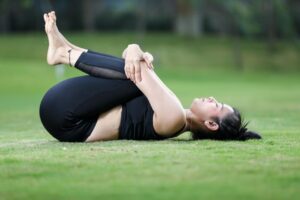
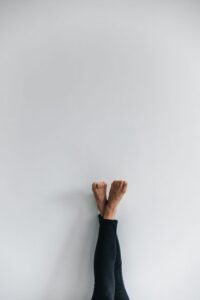
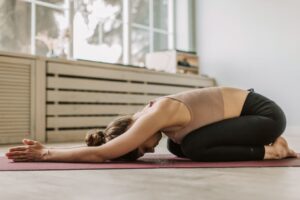
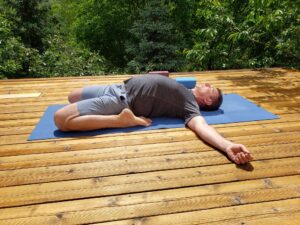
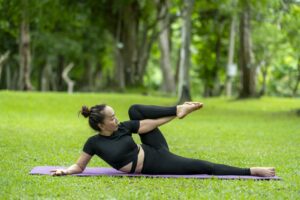
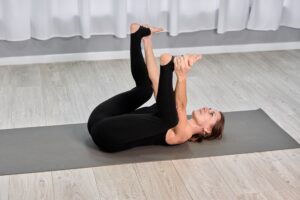
Corpse pose usually comes last. Gentle poses such as wind-relieving pose, reclining spinal twist or happy baby are a natural way to arrive on the floor, and in a restorative class reclining bound angle or legs up the wall often come just before. You will meet it in every style, from hatha and Sivananda to vinyasa, restorative and yin. Browse more resting poses in the pose library.
Preparatory poses

Related poses

Styles that use this pose

More resting and restorative poses

Frequently asked questions

How long should I stay in corpse pose?

At least five minutes at the end of a class is a common suggestion (Yoga Journal). B.K.S. Iyengar gives 15 to 20 minutes for a dedicated practice; the Bihar School says a minute or two is enough during an asana session.

Is it OK to fall asleep in savasana?

It happens, especially at first, and it is not harmful. The aim, though, is to stay quietly aware while the body rests. Counting the breath or scanning the body helps.

Is savasana the same as Yoga Nidra?

No. Savasana is the lying posture; Yoga Nidra is a guided relaxation and awareness practice that is often done lying in savasana.

Can I do corpse pose when pregnant?

After the first trimester, use side-lying rest instead of lying flat on your back for long periods, as ACOG advises, and follow your health care provider's guidance.

Sources

  1. B.K.S. Iyengar, Light on Yoga (Yoga Dipika), asana 200 Savasana (also called Mrtasana), plate 592, Digital Library of India (Internet Archive) (accessed October 6, 2026)
  2. Swami Satyananda Saraswati, Asana Pranayama Mudra Bandha: Shavasana (the corpse pose), Bihar School of Yoga (Internet Archive) (accessed October 6, 2026)
  3. Corpse Pose (Savasana), Sivananda Yoga Vedanta Centre London (accessed October 6, 2026)
  4. Corpse Pose: How to Properly Rest in Savasana, Yoga Journal (accessed October 6, 2026)
  5. Corpse Pose, Yoga International (accessed October 6, 2026)
  6. 8 Restorative Yoga Poses to Calm You Down in Minutes (Side-Lying Savasana; Savasana with a Bolster), Yoga Journal (accessed October 6, 2026)
  7. Exercise During Pregnancy (FAQ), American College of Obstetricians and Gynecologists (accessed October 6, 2026)
  8. Hatha Yoga Pradipika, translated by Pancham Sinh (1914), 1.32, Internet Archive (accessed October 6, 2026)

Facts checked on October 6, 2026