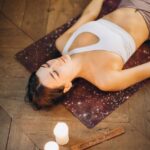
This bedtime yoga sequence, also called evening yoga, is a slow 15-minute routine for the end of the day: child’s pose, cat-cow, a seated forward fold, a reclining twist, happy baby, legs up the wall and a few minutes of rest. Most of it can be done on a mat beside the bed, and the last steps even in bed. It is a newly designed educational sequence by YogaVacation; there is no traditional evening sequence.
What it can and cannot do
Many people find a quiet routine helps them unwind. The research is mixed: the U.S. National Center for Complementary and Integrative Health summarises reviews in which yoga may improve sleep quality in some groups, while a U.S. clinical guideline found the evidence insufficient to recommend yoga as a treatment for insomnia. So treat this as a pleasant wind-down, not a sleep treatment, and talk to a doctor about persistent sleep problems.
How the counting and sides work
Everything is slow. Cat-cow is the only moving step (six slow rounds); every other pose is held for about a minute, breathing through the nose and letting the exhalation lengthen. The twist is done to the right, then to the left. Dim the lights, put the phone away, and keep the movements small: the aim is to slow down, not to stretch hard. These holds are our suggestion.
The sequence, step by step
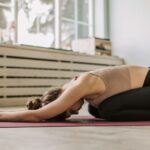
1. Child’s pose. Kneel with the big toes together and the knees about hip-width apart, then fold the chest down between the thighs and rest the forehead on the mat, a block or a pillow. Yoga Journal suggests a bolster lengthwise between the thighs if the head does not reach the floor comfortably. Let the arms rest back beside the legs, palms up. This is the moment to arrive: notice the breath without changing it.
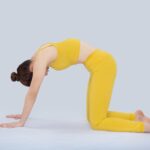
2. Slow cat-cow. Come onto hands and knees. Inhale as the belly softens and the chest lifts; exhale as the back rounds. Move at the speed of your breath, slower than you would in a morning class, so each round takes a full inhale and a full exhale.
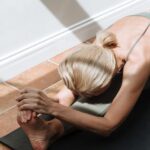
3. Seated forward fold, knees soft. Sit with the legs out in front and bend the knees as much as you like, even resting the chest on a pillow on the thighs. The point here is not to reach the toes. It is to let the back of the body rest forward with gravity.
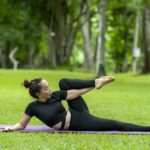
4. Reclining twist. Lie on your back, bring the knees in and lower both knees to one side, arms out wide. Yoga Journal notes that a pillow or folded blanket under the knees is fine, and that small movements can be as useful as big ones. Keep the far shoulder heavy without forcing it down. Change sides.
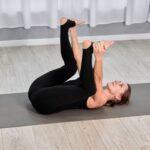
5. Happy baby. Hold the outsides of the feet, or the backs of the thighs if the feet are far away, with the knees a little wider than the body. Rocking slowly from side to side is welcome.
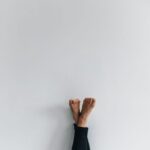
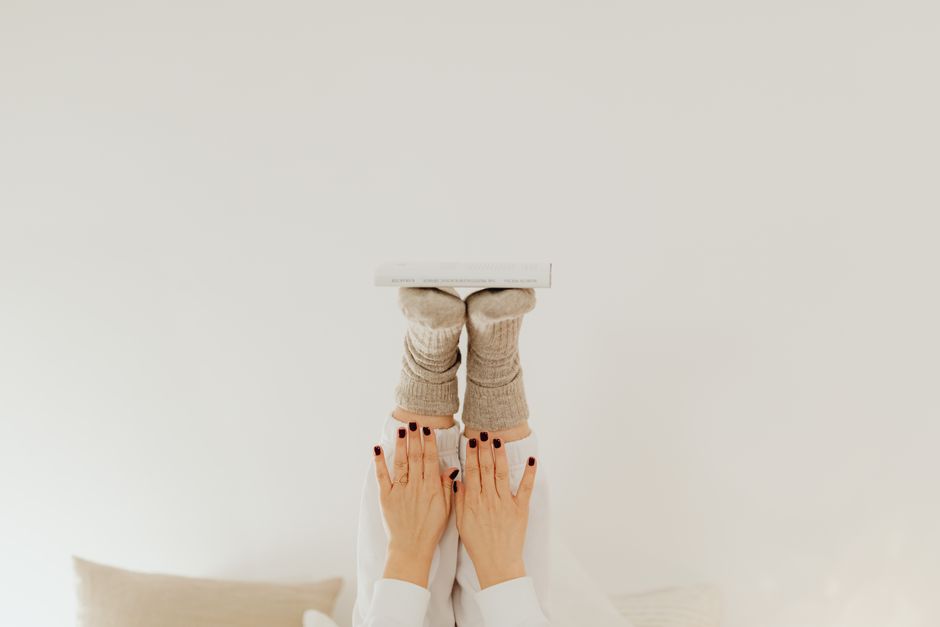
6. Legs up the wall. Sit sideways next to a wall, then swing the legs up as you lie back. If the hamstrings are tight, move further from the wall so the legs can rest without strain. In bed, rest the calves on a stack of pillows instead. To come out, bend the knees and roll onto your side.
7. Corpse pose. Lie flat with the arms a little away from the body, palms up, and a rolled blanket under the knees if your lower back likes it. If you are already in bed, this can simply be the way you fall asleep.
How to practise it safely
- Avoid big backbends and fast flows right before bed; this sequence leaves them out on purpose.
- Legs up the wall raises the legs above the heart: with glaucoma, uncontrolled high blood pressure or a heart condition, ask a health professional first, or rest the calves on a pillow instead.
- Knee problems: pad the knees in child’s pose or replace it with lying on the back, knees hugged in.
- Pregnancy: replace the supine poses with side-lying rest; ask your midwife or doctor.
This sequence has not yet been reviewed by a qualified teacher.
Easier alternatives
Do only legs up the wall and the final rest; or try the fully supported restorative sequence. Gentle breathing such as diaphragmatic breathing fits well at the end. For the start of the day, see morning yoga.