This article contains affiliate links: if you buy through them we may earn a commission, at no extra cost to you. Read our affiliate disclosure.
Starting yoga can feel like walking into a room where everyone already knows the words. They don’t, not really, and nobody expects you to. This guide to yoga for beginners walks you through choosing a style, the handful of poses worth learning first, the little equipment you need, a simple plan for your first four weeks, and the mistakes almost every newcomer makes.
In short: start with a gentle or beginner-labeled class, ideally with a teacher, two or three times a week. Learn a small set of foundation poses, use props without embarrassment, breathe steadily, and stop anything that causes sharp pain. Consistency matters far more than how far you can stretch.
Before you start: a quick health check
Yoga is generally considered a safe form of physical activity for healthy people when it is done properly under a qualified instructor, according to the U.S. National Center for Complementary and Integrative Health (NCCIH). Injuries do happen, most often sprains and strains of the knee or lower leg, and NCCIH notes that learning entirely on your own without supervision has been linked to higher risk.
If you are pregnant, over 65, recovering from an injury, or living with a condition such as high blood pressure, glaucoma, or a back, hip or knee problem, talk to your doctor before you begin and tell your teacher at the start of class. You may simply need to skip or change a few poses. We have separate guides for prenatal yoga and yoga for older adults. This page is general information, not individual medical advice.
Yoga for beginners: choosing a style
Class names can be confusing, so here is the short version. Our full types of yoga comparison goes into each one.
| If you want… | Try | Why it suits beginners |
|---|---|---|
| A calm, steady introduction | Hatha (as a modern class label) | Poses are held for a few breaths with time to set up |
| Lots of instruction on alignment | Iyengar | Detailed teaching and generous use of props |
| Deep rest and slow stretching | Yin or restorative | Few poses, long holds, mostly on the floor |
| Movement and a light sweat | A beginner vinyasa or “flow” class | Breath-linked movement, but look for “level 1” or “beginner” |
| Support from a chair | Chair yoga | Seated and chair-supported versions of poses |
Two styles are better left until you know your body a little: fast, strong classes such as power yoga, and heated classes such as hot yoga or Bikram. NCCIH notes that hot yoga carries particular risks from overheating and dehydration. That doesn’t make them off-limits, just a second step rather than a first.
In person, online or at home?
An in-person class gives you something a video can’t: a teacher who can see you and offer a different version of a pose. For your first few weeks, try to take at least some classes live, either in a studio or a small online class where the teacher can see you. Then add short home sessions in between. If you are nervous about walking into a studio, read your first yoga class for what happens from the moment you arrive.
The first poses to learn
You don’t need dozens of poses. A small set covers the basic shapes you will meet in most classes: standing, bending forward, supporting yourself on your hands, gentle backbends and rest. Learn these well and the rest gets easier.
- Mountain pose: standing tall with even weight; the base of every standing pose.
- Cat-cow: a paired movement on hands and knees that warms up the spine with the breath.
- Downward-facing dog: the inverted V you will see in almost every flowing class. Bend your knees as much as you like.
- Cobra pose: a gentle backbend lying on your front.
- Tree pose: a standing balance; keep a hand on the wall at first.
- Bridge pose: lifting the hips while lying on your back.
- Corpse pose: lying still at the end of practice. It is part of the practice, not a break from it.
For photos, steps and safer options for each, see our list of beginner yoga poses, or browse the full pose directory. Once those feel familiar, the sun salutation strings several of them into a short flowing sequence.
What you need (and what you don’t)
The honest answer is: less than the shops suggest.
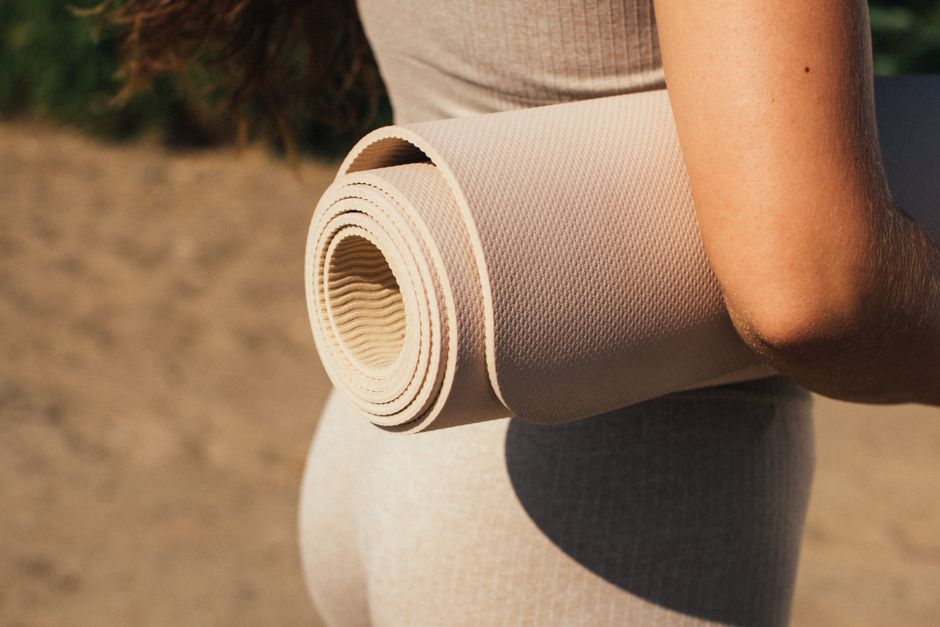
- A mat with good grip. This is the one item worth buying early, because slipping in downward-facing dog is both annoying and unsafe. Most studios rent or lend mats if you want to wait. Our yoga mat guide explains thickness and materials.
- One or two blocks. A block brings the floor closer when your hands don’t reach, which makes many standing poses safer and steadier. See yoga blocks.
- Comfortable clothes you can move in that won’t ride up when you fold forward. Nothing special is needed; our yoga clothing guide covers what works for heated and slower classes.
- A blanket or towel for padding under knees and for warmth during the final rest.
- Water, especially if the room is warm.
Yoga is usually practiced barefoot. A strap and a firm cushion are useful later; you can improvise with a belt and a folded blanket in the meantime.
If you do want to buy a first mat and a block, these are two widely available, researched options (we have not tested them):
Gaiam Cork Yoga Mat
- Cork top, TPE base
- 68 x 24 in, 5 mm
- About $40, seen October 2026
Gaiam Foam Yoga Block
- Latex-free EVA foam
- 9 x 6 x 4 in, three heights
- About $9, seen October 2026
Your first four weeks: a simple plan
This is a suggestion, not a prescription. Adjust it to your schedule and how your body responds; if anything hurts, scale back.
| Week | Classes | At home | Focus |
|---|---|---|---|
| 1 | Two beginner classes | One 10-minute session: cat-cow, mountain, downward-facing dog with bent knees, rest | Learn the names and the basic shapes; breathe through your nose if comfortable |
| 2 | Two beginner classes | Two 10–15-minute sessions; add cobra and bridge | Notice where you hold your breath and let it move |
| 3 | Two or three classes | Two 15-minute sessions; try a half sun salutation | Move slowly between poses; use a block whenever it helps |
| 4 | Two or three classes, one in a new style | One 20-minute session, such as a morning sequence or a bedtime wind-down | Look back: which classes did you enjoy? Keep those |
Two or three sessions a week is a manageable rhythm for most beginners and leaves time to recover. Short and regular beats long and occasional. Our guide to building a consistent practice has more ideas for keeping the habit going once the novelty wears off.
Breathing and relaxation from day one
Breath is the thread that runs through every style. In most beginner classes you will simply be asked to breathe steadily, often through the nose, and to keep breathing while you hold a pose. If you want to practice outside class, start with diaphragmatic breathing, which is gentle and suitable for almost everyone. Leave forceful techniques and long breath-holds until you can learn them from a qualified teacher.
The quiet minutes at the end of class are also worth taking seriously. If you enjoy them, our beginner’s guide on how to meditate is a natural next step.
Common beginner mistakes
- Pushing into pain. A stretch can feel intense; it should not feel sharp, pinching, burning or electric. Ease off straight away if it does.
- Holding the breath. If you can’t breathe smoothly in a pose, you are probably working too hard. Back off a little.
- Copying the person next to you. Bodies differ in proportions and joint structure. Two people can do the same pose correctly and look quite different.
- Skipping props. Blocks, straps and blankets aren’t a sign of weakness. Experienced practitioners use them all the time.
- Locking the knees. In standing poses and forward bends, keep a soft, slight bend rather than jamming the joint straight.
- Starting too hard. A fast or heated class on day one is a common reason people decide yoga “isn’t for them.”
- Leaving out the rest. Slipping away before the final relaxation means missing the part many people come to value most.
Finding a good teacher
A good beginner teacher matters more than the style on the timetable. It is fair to ask a studio how long a teacher has been teaching, what training they completed and whether they regularly teach newcomers. Certificates and registry listings vary a lot in what they mean, and no single credential is required everywhere; our guide to yoga teacher credentials explains the differences. In class, look for someone who gives clear instructions, shows easier options without being asked, and checks in about injuries before you start.
How to tell if a class is right for you
After a good beginner class you should feel looser and calmer, perhaps a little tired, but not sore for days or anxious about going back. The teacher should give clear instructions, offer options, and welcome questions about injuries. If a class leaves you confused or in pain, try a different teacher or style before deciding yoga isn’t for you.
Where to go next
Learn a little background in what is yoga, keep working through the beginner poses, or pick a ready-made sequence from our practice plans. If you’d like to learn in a focused week away, our guide to yoga retreats for beginners explains what to look for. Everything else for newcomers lives on the Learn Yoga hub.
Frequently asked questions
How often should a beginner do yoga?
Two or three sessions a week is a manageable start for most people, with short home sessions in between if you enjoy them. Regular short practice tends to work better than occasional long sessions.
What type of yoga is best for beginners?
Look for classes labeled beginner, gentle, hatha or level 1. Iyengar classes give detailed alignment teaching, and yin or restorative classes are slow and floor-based. Fast power classes and heated classes are better as a second step.
Can I learn yoga at home?
Yes, many people practice at home, but try to take at least some classes with a teacher who can see you, especially in the first weeks. NCCIH notes that learning entirely without supervision has been linked to a higher risk of injury.
Do I need to be flexible to start yoga?
No. You start where you are. Bend your knees, use blocks and choose simpler versions of poses; flexibility is not a requirement.
What should I wear to my first yoga class?
Comfortable, stretchy clothes that stay in place when you bend forward. Yoga is usually practiced barefoot. Bring water and, if you have one, a mat.
Is yoga safe if I have a health condition?
Often yes, with changes, but check with your doctor first and tell your teacher before class. Conditions such as pregnancy, glaucoma, high blood pressure and joint injuries can call for modified or skipped poses.
Sources
- Yoga: Effectiveness and Safety (safety section), National Center for Complementary and Integrative Health (NIH) (accessed October 6, 2026)
- What Is Iyengar Yoga?, Iyengar Yoga National Association of the United States (accessed October 6, 2026)
- Restorative yoga, Wikipedia (accessed October 6, 2026)
- Yin Yoga, Wikipedia (accessed October 6, 2026)
- Gaiam Cork Yoga Exercise Mat (price and stock check), Amazon.com (accessed October 6, 2026)
- Gaiam Yoga Block (price and stock check), Amazon.com (accessed October 6, 2026)
Facts checked on October 6, 2026