Mountain Pose (Tadasana): how to stand, Samasthiti and props

Mountain pose (Tadasana, also called Samasthiti) is the basic standing posture: weight even over both feet, legs active, spine tall. Almost every standing pose begins and ends here.

Not yet reviewed by a qualified teacher Names and shape checked against 5 sources

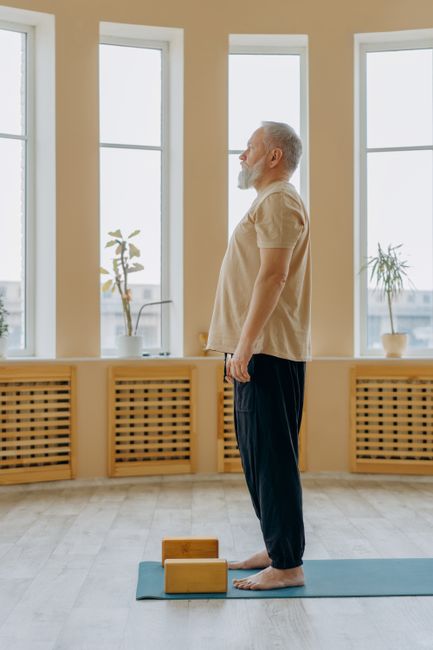
Senior man standing on yoga mat indoors, engaging in mindful exercise with natural sunlight streaming through windows.
Sanskrit name
Tāḍāsana ताडासन (source)
Pronunciation
tah-DAHS-ah-nah (source)
Also called
Equal Standing, Equal Standing Pose, Standing pose
Other spellings
Tadasana, Samasthiti, Samasthitih, Samasthitiḥ
Pose family
Standing
Starting position
Standing
Movement
Neutral rest
Taught in
Hatha Yoga: The Historical Term and the Modern Class, Vinyasa Yoga: Flow, Breath and What to Expect, Aerial Yoga: How Hammock Yoga Works and Who It Suits, Chair Yoga: Seated and Chair-Supported Practice
Difficulty
Beginner
Prerequisite skills
Being able to stand unaided. Use a wall or chair for support if balance is uncertain.
Body areas
Core, Feet and ankles, Legs, Spine
Props
Block, Chair, None, Wall
Practised
Solo

Names in different traditions

TraditionName usedNote
Iyengar (Light on Yoga)Tāḍāsana (also called Samasthiti)Light on Yoga, asana 1, Plate 1: the basic standing pose; arms ideally overhead but usually by the thighs.
Ashtanga vinyasa (Pattabhi Jois lineage)SamasthitiḥThe attention position that opens and closes each sun salutation and standing posture (AshtangaYoga.info, Surya Namaskara A).
Bihar School of Yoga (Asana Pranayama Mudra Bandha)Tadasana = "palm tree pose"A different exercise: arms overhead with fingers interlocked, rising onto the toes. Not this standing pose.
Common Yoga Protocol (Ministry of Ayush, India)Samasthiti / TadasanaUses Samasthiti (also called Tadasana) for the standing start position, and "Tadasana (Palm Tree Posture)" for the arms-up, heels-raised stretch.

Step by step

Coming into the pose

  1. Stand with the big toes touching and the heels slightly apart, or with the feet hip-width apart and parallel.
  2. Lift and spread the toes, then lay them back down. Rock gently forward and back, side to side, and let the sway settle until the weight is even over the whole of both feet.

In the pose

  1. Firm the thighs and lift the kneecaps without locking the knees.
  2. Stack ankles, knees, hips and shoulders in one vertical line. Lengthen up through the crown of the head with the chin level.
  3. Let the arms hang by your sides, shoulders soft and away from the ears. Breathe slowly through the nose for 5 to 10 breaths.

Coming out

  1. Simply relax, or move from here into the next standing pose.

Breathing

Breathe naturally through the nose. Many teachers use mountain pose to settle the breath before a sequence: slow, even breaths that move the lower ribs and belly.

Alignment cues

  • Weight evenly spread over heels and balls of the feet, inner and outer edges.
  • Heel and toe of each foot in line, not turned out, even with the feet apart.
  • Thighs active, knees straight but not pushed back.
  • Shoulders over hips, crown of the head over the pelvis.
  • Shoulders relaxed down, chest open, chin level.

Common alignment errors

  • Standing with the weight on one leg, on the heels, or on the outer edges of the feet.
  • Locking (hyperextending) the knees.
  • Tucking the tailbone hard, which flattens the lower back and pushes the hips forward.
  • Lifting the shoulders toward the ears or rounding them forward.

Modifications and easier variations

  • Stand with the feet hip-width apart for a steadier base and less tension in the lower back. none

Advanced variations

Props and chair adaptations

  • Stand with your back to a wall, heels a few centimetres away, to feel where your back body is. wall
  • Seated mountain: sit near the front of a chair, feet under the knees, and lengthen up through the crown of the head. chair
  • Squeeze a block between the upper thighs to feel the legs working. block

Precautions

  • If you feel light-headed or dizzy, widen the stance, bend the knees slightly or sit down.
  • With balance problems, practise beside a wall or a chair.
  • Pregnancy: stand with the feet hip-width apart or wider.

Learn it with a teacher: You can learn this pose on your own. A teacher is useful for checking your stacking from the side (ears, shoulders, hips and ankles in one line).

General information, not medical advice. Poses do not cure illness. If you are pregnant, injured or have a health condition, check with your doctor and tell your teacher before you practise.

In short: mountain pose is the basic standing posture of yoga: feet together or hip-width apart, weight spread evenly over both feet, legs active, spine tall and arms relaxed by your sides. It looks like simply standing still, but it is where almost every standing pose starts and ends, and the place where you learn how you actually stand.

Most of us stand with the weight thrown onto one leg, the heels or the outer edges of the feet. Mountain pose asks you to notice that and come back to the middle. B.K.S. Iyengar opens the standing poses of Light on Yoga with it and calls it the basic standing pose; Yoga Journal describes it as the cornerstone of the standing poses. Below we explain the two names it goes by, the cues behind the steps and how it is used in different schools.

Tadasana and Samasthiti: one pose, two names

The Sanskrit name is Tāḍāsana, usually written Tadasana: tāḍa is a mountain and āsana a seat or posture (see what asana means). Light on Yoga gives it as “Tadasana (also called Samasthiti)”. Samasthiti joins sama (even, upright, unmoved) and sthiti (standing still, steadiness), so it describes the even, steady quality of the pose.

In Ashtanga vinyasa, Samasthitiḥ is the name of the attention position, feet together and hands by the sides, that opens and closes each sun salutation and each standing posture. India’s Common Yoga Protocol (Ministry of Ayush) also says the standing start position is called Samasthiti or Tadasana. Two schools use “Tadasana” for something else: in the Bihar School of Yoga’s Asana Pranayama Mudra Bandha and in the Common Yoga Protocol, Tadasana is translated “palm tree pose” and is done with the arms overhead, rising onto the toes. That stretch is a different exercise; on this page we mean the even, flat-footed standing pose. The Bihar side-bending version is on our swaying palm tree page.

Making mountain pose work

Start from the feet. Iyengar asks you not to bear the weight on either the heels or the toes but to spread it evenly; Yoga Journal suggests rocking forward and back and side to side, then letting the sway settle until you are balanced over the whole foot. From there, stack ankles, knees, hips and shoulders in one line. The legs are awake rather than locked: if your knees tend to push back (hyperextend), keep a micro-bend.

The upper body stays tall without stiffening. Let the shoulders settle away from the ears and the chest open, and avoid the old cue to tuck the tailbone hard, which flattens the lower back and pushes the hips forward. Breathe slowly through the nose. If standing with the feet together feels wobbly or strains the lower back, take the feet hip-width apart: Iyengar notes that even with the feet apart it is better to keep heel and toe in line rather than turned out.

Precautions in plain words

Mountain pose is safe for nearly everyone, but standing still for a long time can make some people light-headed. If you feel dizzy, widen the stance, keep a slight bend in the knees, keep breathing, or sit down. With balance problems, practise with your back to a wall or beside a chair. During pregnancy, stand with the feet hip-width or wider. This page is general information, not individual advice.

Preparation and what comes next

Mountain pose needs no preparation; a few breaths of attention to the feet are enough. It leads naturally into upward salute (arms overhead), standing forward fold, chair pose and tree pose, and it is the place to come back to between standing poses to feel what the last one did.

Where it is taught

You will meet it in practically every style: as Tadasana in Iyengar and hatha classes, as Samasthiti at the start and end of every sun salutation in Ashtanga, and as the quiet standing pause in vinyasa flows. Browse more standing postures in the yoga pose library.
Follow-up poses and transitions

Related poses

Styles that use this pose

More standing poses

Frequently asked questions

What is mountain pose called in Sanskrit?

Tāḍāsana, usually written Tadasana (tāḍa = mountain). Light on Yoga says it is also called Samasthiti, and Ashtanga uses Samasthitiḥ for the same standing position.

What is the difference between Tadasana and Samasthiti?

They name the same feet-together standing position. Iyengar gives both names; Ashtanga uses Samasthiti for the attention position that opens and closes each sun salutation. The Bihar School uses "Tadasana" for a different stretch, rising onto the toes with the arms up.

Should my feet be together or apart?

Either. Feet together is the classic form; hip-width apart is steadier and often kinder to the lower back. Keep heel and toe of each foot in line.

Is it really a yoga pose if I am just standing?

Yes. It trains how you distribute weight and stack the body, which every other standing pose builds on.

Sources

  1. B.K.S. Iyengar, Light on Yoga (Yoga Dipika): asana 1, Tadasana (also called Samasthiti), Plate 1, Internet Archive (Digital Library of India copy) (accessed October 6, 2026)
  2. Mountain Pose: How to Do Tadasana, Yoga Journal (accessed October 6, 2026)
  3. Surya Namaskara A (Samasthitih as start and end position), AshtangaYoga.info (Dr. Ronald Steiner) (accessed October 6, 2026)
  4. Swami Satyananda Saraswati, Asana Pranayama Mudra Bandha: Tadasana (the palm tree pose), Bihar School of Yoga (Internet Archive copy) (accessed October 6, 2026)
  5. Common Yoga Protocol (International Day of Yoga): Samasthiti / Tadasana (Palm Tree Posture), Ministry of Ayush, Government of India (Internet Archive copy) (accessed October 6, 2026)

Facts checked on October 6, 2026