The traditional 12-position sun salutation as taught by the Sivananda Yoga Vedanta Centres, how the leading leg alternates and rounds are counted, and the Bihar School version.
Origin and source
Order as published by Sivananda Yoga Vedanta Centres (Canada, Bahamas ashram pages). The Bihar School version is in Swami Satyananda Saraswati, Asana Pranayama Mudra Bandha (Bihar School of Yoga), which notes that surya namaskara was not traditionally regarded as part of yoga practices but was included for its value. We do not give an age for this order.
Who it is for
Able to get down to and up from the floor, kneel in a lunge and take weight on the hands. Suitable for beginners with the usual care; no jumping.
The steps in order
Version shown: Sivananda Yoga Vedanta Centres order (plank in position 5, eight-point position in 6); Bihar School variant described in the copy
| # | Step | Count | Breath | Side | Cues and options |
|---|
| 1 |  1 Prayer position
Praṇāmāsana | 1 | Exhale | | Transition: Stand with the feet together, palms together at the chest. Easier option: Feet hip-width apart. |
| 2 |  2 Raised arms, bending back
Hasta Uttānāsana | 2 | Inhale | | Transition: Stretch the arms up and arch back gently from the upper back. Easier option: Arms up without the backbend. |
| 3 | 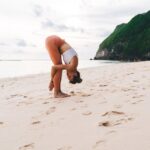 3 Standing forward bend (hands beside the feet)
Pādahastāsana | 3 | Exhale | | Transition: Fold forward, palms flat beside the feet. Easier option: Bend the knees to place the hands. |
| 4 | 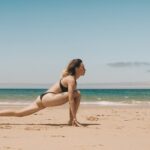 4 Equestrian lunge, right leg back
Aśva Sañcalanāsana | 4 | Inhale | Right | Transition: Step the right leg back, knee down, look up. (Second half of the round: left leg.) Easier option: Blanket under the back knee; hands on blocks. |
| 5 | 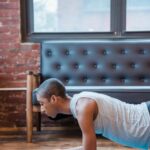 5 Plank | 5 | Hold the breath | | Transition: Bring the other leg back; body in one line. Easier option: Knees down. Breath retained per the Sivananda Bahamas description; Sivananda Canada gives no breath here. |
| 6 | 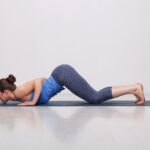 6 Eight-point position (knees, chest, forehead)
Aṣṭāṅga Namaskāra | 6 | Exhale | | Transition: Lower knees, then chest and forehead (or chin), hips lifted. Easier option: Lower all the way to the floor. |
| 7 | 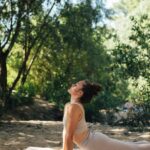 7 Cobra
Bhujaṅgāsana | 7 | Inhale | | Transition: Slide forward and lift the chest, elbows bent and close. Easier option: Low cobra. |
| 8 | 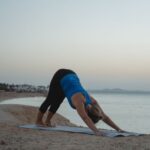 8 Inverted V (downward dog)
Adho Mukha Śvānāsana | 8 | Exhale | | Transition: Tuck the toes and lift the hips; heels toward the floor. Easier option: Knees bent. |
| 9 | 9 Equestrian lunge, right foot forward
Aśva Sañcalanāsana | 9 | Inhale | Right | Transition: Step the right foot forward between the hands, back knee down, look up. (Second half: left foot.) Easier option: Help the foot forward with the hand. |
| 10 | 10 Standing forward bend
Pādahastāsana | 10 | Exhale | | Transition: Bring the back foot forward and fold. Easier option: Knees bent. |
| 11 | 11 Raised arms, bending back
Hasta Uttānāsana | 11 | Inhale | | Transition: Come up with the arms stretching forward then up. Easier option: Rise with bent knees. |
| 12 | 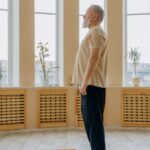 12 Standing, arms down
Tāḍāsana | 12 | Exhale | | Transition: Lower the arms; repeat with the left leg to complete the round. Easier option: Rest between rounds. |
Left and right
Positions 4 and 9 alternate the leg: right leg back in 4 and forward in 9 in the first half of the round, left leg in the second half.
Repetitions and counting
Sivananda: one round = two sequences of 12 positions, right leg moving first, then left. Start with four rounds and build to twelve (Sivananda Canada). Bihar: positions 1-12 are half a round, 13-24 complete it; 3-12 rounds, beginners 2-3.
Props and adaptations
Blanket under the back knee in the lunges; knees down in plank; lower all the way to the floor instead of the eight-point position; low cobra; bend the knees in the forward bends; keep the backbend small. Gentle standing and chair versions avoid the floor.
Precautions
- High blood pressure, glaucoma or dizziness: the forward bends and inverted V take the head below the heart; check with a health professional.
- Back, wrist or knee problems: use the props and smaller movements above.
- Pregnancy: the Bihar School book advises against this practice after the fourth month; ask a prenatal teacher.
- Breath retention in plank (Sivananda) or in the eight-point position (Bihar) should be short and comfortable; breathe freely if it strains.
Learn it with a teacher: A Sivananda or Satyananda teacher can show the mantra and breathing traditions; the movements themselves can be learned from a beginners class.
General information, not medical advice. Poses do not cure illness. If you are pregnant, injured or have a health condition, check with your doctor and tell your teacher before you practise.
12-Position Sun Salutation around the world
Share your 12-Position Sun Salutation, wherever you are
The 12-position sun salutation is the version taught in Sivananda Yoga and, with a few differences, in the Bihar School of Yoga (Satyananda tradition). Instead of jumping back to chaturanga as in Ashtanga, you step into a low lunge, take a plank, lower to the floor with eight points touching, lift into cobra, press back to an inverted V and return the same way. It is slower and rounder than the Ashtanga versions, and it is the warm-up before the asanas in a traditional Sivananda class.
The order shown in the steps table is the one published by the Sivananda Yoga Vedanta Centres. Further down we set out the Bihar School version, which differs in positions 5 and 8.
The Sivananda order
1 prayer position; 2 raised arms with a backbend; 3 standing forward bend; 4 equestrian lunge (one leg back, knee down, looking up); 5 plank; 6 eight-point position (knees, chest and forehead or chin to the floor, hips lifted); 7 cobra; 8 inverted V (downward dog); 9 equestrian lunge with the same leg forward again; 10 standing forward bend; 11 raised arms with a backbend; 12 standing, arms down or in prayer. The hands stay in the same place on the mat from position 3 to position 10, which keeps the sequence stable.
Leading leg and counting rounds
Sivananda centres describe one round as two sequences: the first with the right leg moving in positions 4 and 9 (stepping back, then forward again), the second with the left. So twelve positions done twice equal one round. The Bihar School says the same thing in different words: positions 1 to 12 are half a round, and positions 13 to 24 repeat them with the other leg. In practice, then, both schools mean both sides when they say “one round”. This matters when you compare with Ashtanga, where one round of Sun Salutation A is a single, symmetrical pass, or with teachers who count each side as a round. When following a class or a book, check which convention it uses.
How many? The Sivananda Canada centre suggests starting with four rounds and building up to twelve. The Bihar School’s Asana Pranayama Mudra Bandha suggests 3 to 12 rounds, with beginners starting at 2 or 3 and adding gradually.
Breath and mantras
Movements that open or lift happen on the inhale, folds and lowering on the exhale. Position 5 is where the schools differ most: the Sivananda Bahamas ashram describes holding the breath in plank, and the Bihar School describes the breath held out in the eight-point position. In both traditions each position can be paired with one of the twelve names of the sun, such as Om Mitraya Namaha; the Bihar School also gives six short seed syllables (bija mantras) for faster practice. The mantras are devotional and optional; see the sun salutation overview for the list.
The Bihar School version
In Asana Pranayama Mudra Bandha (Swami Satyananda Saraswati, Bihar School of Yoga) the twelve positions are: pranamasana (prayer), hasta uttanasana (raised arms), padahastasana (hand to foot), ashwa sanchalanasana (equestrian), parvatasana (the “mountain pose”, an inverted V), ashtanga namaskara (salute with eight limbs, chin on the floor), bhujangasana (cobra), parvatasana again, ashwa sanchalanasana, padahastasana, hasta uttanasana and pranamasana. There is no plank: from the lunge you go straight to the inverted V, then lower. The book also pairs each position with a point of concentration (a chakra).
How to practise it safely
Keep the backbend in position 2 small and lifted, rather than dropping the head back. In the lunge, pad the back knee if it is sensitive. Lower into the eight-point position slowly with the elbows in; it asks less of the shoulders than chaturanga, which is one reason this version suits newer students. Bend the knees in the forward bends. If you have high blood pressure, glaucoma, back or wrist problems, ask a health professional first; the Bihar School book advises against this practice after the fourth month of pregnancy. Stop with dizziness or sharp pain.
Easier alternatives
The beginner sun salutation uses the same idea with smaller movements; the gentle standing and chair versions leave out the floor completely. In a full Sivananda class, these sun salutations sit between the breathing exercises and the 12 basic asanas.