
Chair Sun Salutation: a seated version for any body

A newly designed seated sun salutation in a chair: 10 steps with the breath, alternating knees, for older adults, limited mobility and desk breaks.

Not yet reviewed by a qualified teacher Needs verification: names and instructions not yet confirmed by two sources

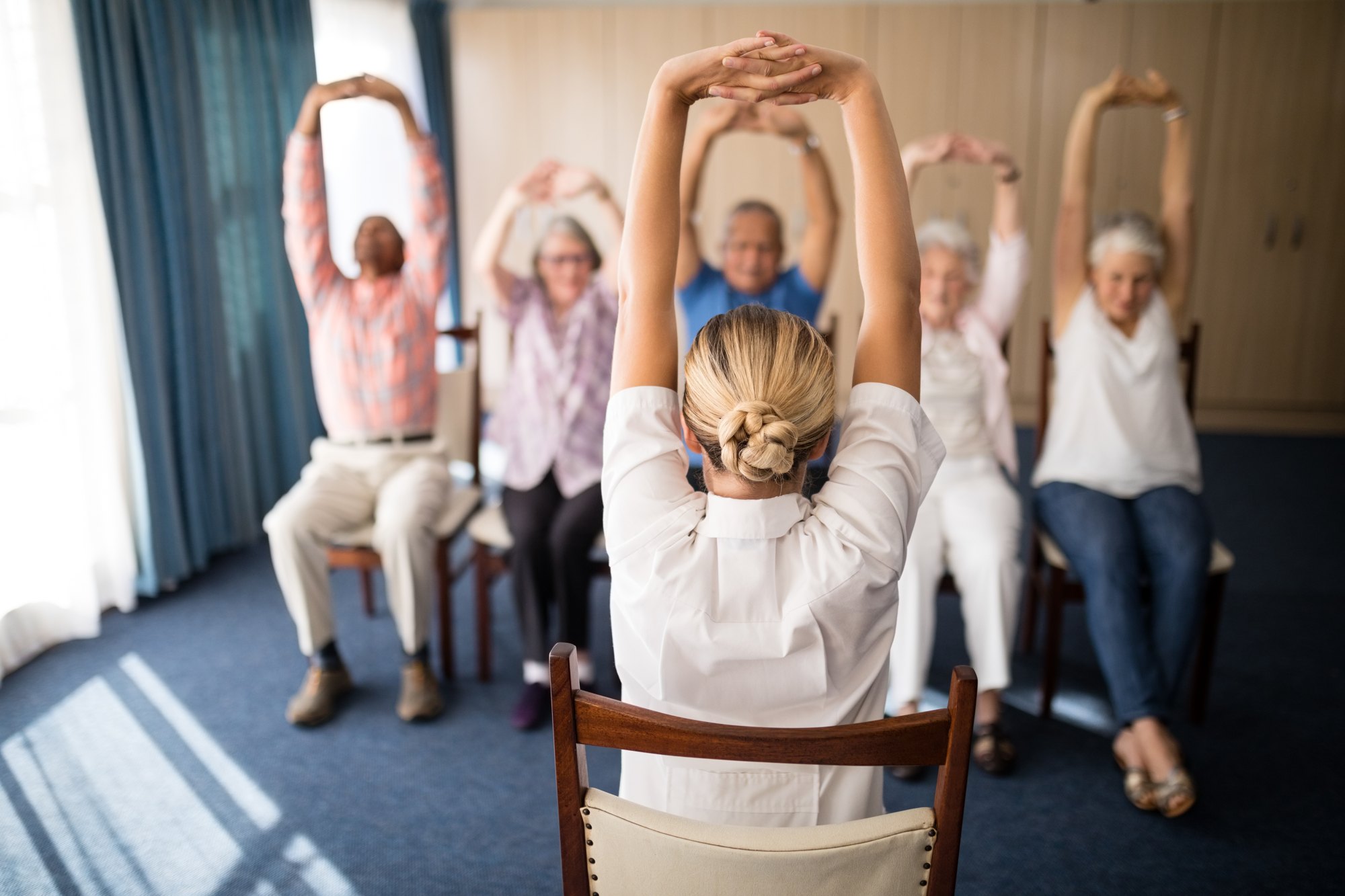
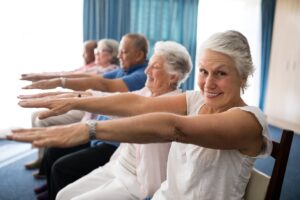
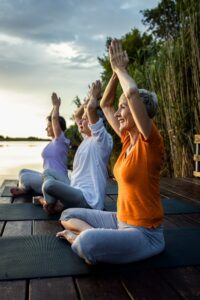
Chair yoga class raising arms overhead
Also called
Seated Sun Salutation, Chair Surya Namaskar
Tradition
YogaVacation educational flow (chair yoga)
Order
Newly designed educational flow
Level
Beginner
Approximate duration
about 5 minutes
Focus
Desk and chair
Audience
Beginners, Limited mobility, Office workers, Older adults
Props
Block, Chair
Styles
Chair Yoga: Seated and Chair-Supported Practice
Body areas
Hips, Shoulders, Spine

A newly designed educational flow, not a traditional sequence. Teachers order these poses in many ways.

Printable view

Origin and source

Newly designed by YogaVacation in 2026, modelled on the 12-position sun salutation (alternating leg). Not a traditional sequence.

Who it is for

Able to sit upright on a chair without support; arm movements can be reduced. For older adults, limited mobility, office workers.

The steps in order

Version shown: YogaVacation chair flow, 10 steps

#StepCountBreathSideCues and options
1Sit tall, palms together
Praṇāmāsana
1Exhale

Transition: Feet flat, front of the chair.

Easier option: Block under the feet if they do not reach the floor.

2Seated arms up
Ūrdhva Hastāsana
2Inhale

Transition: Sweep the arms up.

Easier option: Arms to shoulder height, or one arm at a time.

3Seated forward fold over the thighs3Exhale

Transition: Hinge from the hips, hands slide down the shins.

Easier option: Forearms rest on the thighs.

4Seated knee hug, right knee
Pavanamuktāsana
4InhaleRight

Transition: Sit up, lift the right knee and hold it with both hands; lengthen the spine.

Easier option: Hands under the thigh; small lift only.

5Seated cow (chest lift)
Marjaryasana-Bitilasana
5Inhale

Transition: Foot down, hands on the knees, lift the chest and look slightly up.

Easier option: Keep the head level.

6Seated cat (round the back)
Marjaryasana-Bitilasana
6Exhale

Transition: Round the back, chin toward the chest.

Easier option: Small range.

7Seated knee hug, right knee again
Pavanamuktāsana
7InhaleRight

Transition: Same knee as step 4.

Easier option: Skip after hip surgery unless cleared.

8Seated forward fold8Exhale

Transition: Foot down, fold over the thighs.

Easier option: Smaller fold.

9Rise, arms up
Ūrdhva Hastāsana
9Inhale

Transition: Come up slowly and reach.

Easier option: Hands on the thighs to come up.

10Palms together
Praṇāmāsana
10Exhale

Transition: Pause before the next round with the other knee.

Easier option: Rest as needed.

Left and right

Hug the right knee in steps 4 and 7 in the first round, the left knee in the next; alternate.

Repetitions and counting

One pass of 10 steps = one round; 4-8 rounds, an even number.

Props and adaptations

Stable chair without wheels or arms; block or book under the feet; cushion behind the lower back between rounds; reduce the arm range; wheelchair users lock the brakes and may skip or assist the knee lift.

Precautions

  • Dizziness: keep the fold small and rise slowly.
  • Hip or knee replacement: ask your surgeon or physiotherapist which movements are allowed.
  • Osteoporosis: keep forward bending small with a long spine; ask your clinician.

Learn it with a teacher: Suitable to practise on your own; a chair-yoga teacher can adapt it to specific needs.

General information, not medical advice. Poses do not cure illness. If you are pregnant, injured or have a health condition, check with your doctor and tell your teacher before you practise.

Beginner and chair alternatives

Beginner Sun Salutation: a slower, knees-down way to learn the sequence, Gentle Standing Sun Salutation: no floor work, with a wall

The chair sun salutation is a newly designed educational flow by YogaVacation, done sitting on a sturdy chair. It is for anyone who cannot stand for long or get down to the floor: people with limited mobility, older adults, people recovering from illness (with their clinician’s agreement), wheelchair users who can move the upper body, and office workers who want a few minutes of movement at the desk. It follows the arc of a sun salutation, reaching up, folding, drawing one leg in, opening and rounding the spine, and coming back, with one breath per movement.

Chair versions of the sun salutation are taught in many chair yoga classes, but there is no single standard order. This is ours. Traditional orders are on the sun salutation overview.

Setting up

Use a stable chair without wheels or arms, on a non-slip floor. Sit toward the front edge so the back is free, with the feet flat and hip-width apart and the knees roughly over the ankles. If your feet do not reach the floor, put a block, book or folded blanket under them. If you are in a wheelchair, lock the brakes first and skip the leg movement or lift the leg with your hands.

How each seated step maps to the standing version

Arms up and prayer are the same as standing. The seated forward fold over the thighs stands in for the standing forward bend. Hugging one knee toward the chest replaces the lunge and keeps the alternating leg of the 12-position version. The seated cow, lifting the chest with the hands on the knees, stands in for cobra, and the seated cat, rounding the back, for downward dog. The flow keeps the rhythm and the pattern of breath, with no weight on the hands or knees.

One round, step by step

Begin sitting tall with the palms together at the chest and breathe out (step 1). Breathing in, sweep the arms up (2). Breathing out, hinge forward from the hips and let the hands slide down the shins (3). Breathing in, sit up and hug the right knee toward the chest, keeping the spine long (4). Put the foot down, rest the hands on the knees and, breathing in, lift the chest into seated cow (5); breathing out, round the back into seated cat (6). Hug the same right knee in again on an inhalation (7), put the foot down and fold forward on the exhalation (8). Breathe in as you come up slowly and reach the arms up (9), and breathe out as the palms return to the chest (10). That is one round. The next round repeats the order with the left knee.

The order mirrors itself, which makes it easy to remember: up, fold, knee, then the spine bending both ways in the middle, then knee, fold, up. If you lose your place, simply finish with the arms up and palms together and start again.

How the counting and sides work

There are 10 steps. In steps 4 and 7 you hug the right knee in the first round and the left knee in the second. One pass is one round; do an even number, four to eight, about five minutes. Inhale to lift and open, exhale to fold and round. Go slower than you think; there is no prize for speed.

How to practise it safely

  • Fold only as far as is comfortable; rest the forearms on the thighs if a deeper fold makes you dizzy, and come up slowly.
  • After hip or knee replacement surgery, ask your surgeon or physiotherapist which knee and hip movements are allowed before hugging the knee in.
  • With osteoporosis, many clinicians advise caution with rounded forward bending; keep the fold small and the back long, and ask your clinician.
  • Keep arm movements below shoulder height if the shoulders are painful.

This page is general information, not individual advice, and has not yet been reviewed by a qualified teacher. Stop with any sharp pain.

Easier options

  • Take two breaths per step. If one breath per movement feels rushed, stay in each position for an extra breath. The flow becomes slower and calmer.
  • Use the chair back. Sit back against the backrest for the arm movements and the knee hug if sitting upright without support is tiring.
  • Arms only. Leave out the folds and knee hugs and do steps 1, 2, 5, 6, 9 and 10: arms up, chest lift, round the back, arms up, palms together.
  • Fewer rounds. Two rounds (one with each knee) is already a complete practice.

Good times for it are first thing in the morning, as a break after sitting for an hour or so at a desk, or before a seated meditation.

Where to go next

Pair it with our chair yoga sequence or the seated moon salutation. If standing is possible, the gentle standing sun salutation is the next step. A few rounds of diaphragmatic breathing make a calm finish.
Frequently asked questions

Can you do a sun salutation in a chair?

Yes. This seated version keeps the arc of the sun salutation, reaching up, folding, drawing one knee in and opening the chest, without standing or going to the floor.

Is there an official chair sun salutation?

No. Chair yoga teachers use different versions; this one is our own educational design.

Sources

  1. Sun Salutation: 12 positions with alternating leg (structure modelled here), Sivananda Yoga Vedanta Centre, Canada (accessed October 6, 2026)
  2. Yoga: Effectiveness and Safety, National Center for Complementary and Integrative Health (NIH) (accessed October 6, 2026)

Facts checked on October 6, 2026