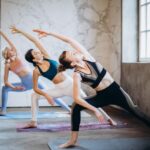

Seated Moon Salutation: a chair flow based on Kripalu’s version

A seated moon salutation in a chair, based on Kripalu's published version: arm sweeps, side bends, seated star and goddess, and a lateral stretch to each side, with breath cues.

Not yet reviewed by a qualified teacher Needs verification: names and instructions not yet confirmed by two sources

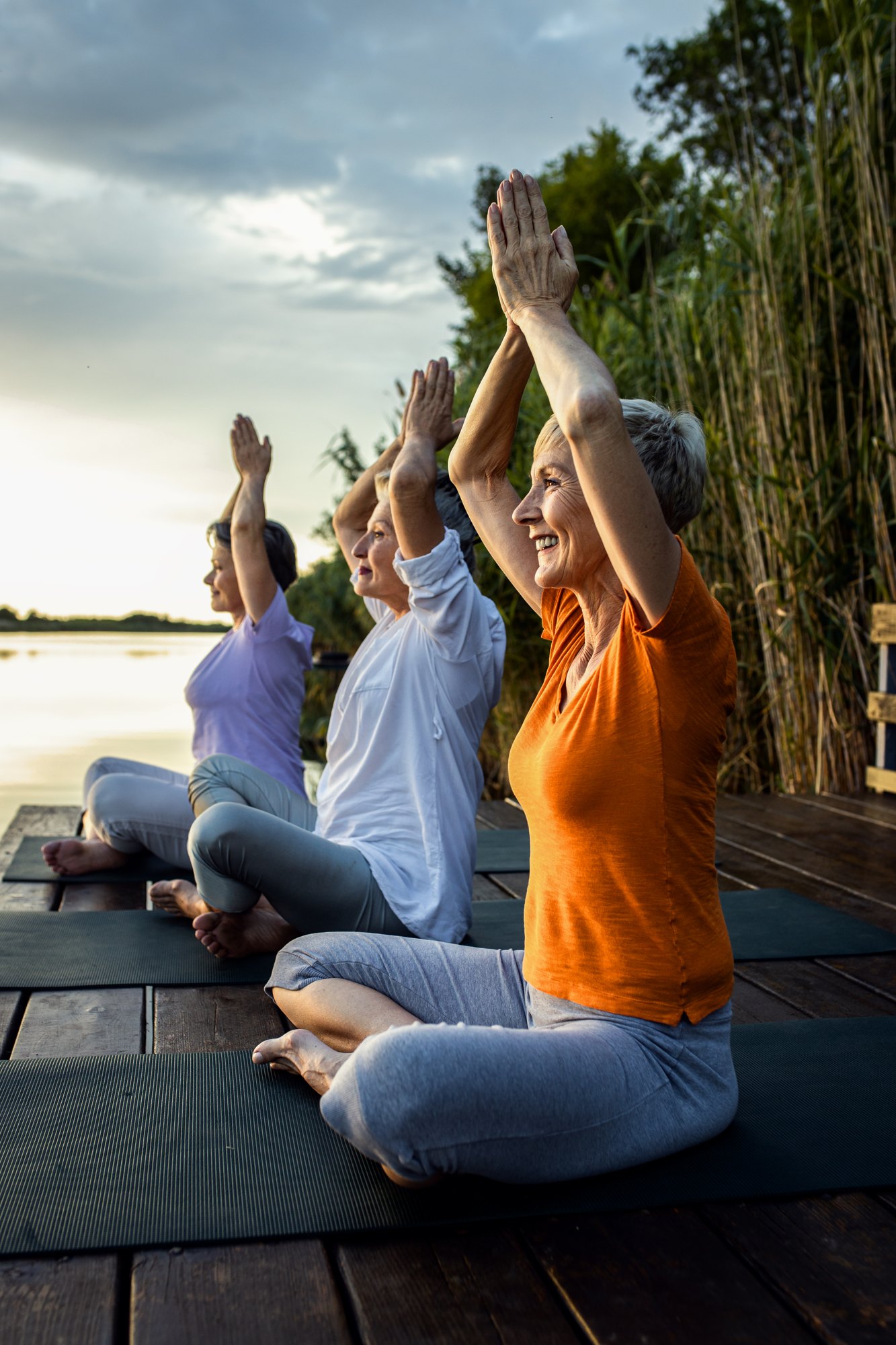
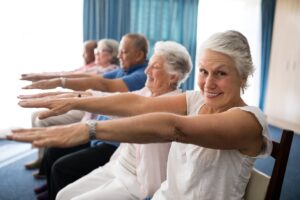
Seniors raising their arms on a lakeside deck
Also called
Chair Moon Salutation, Seated Moon Salute
Tradition
Kripalu Yoga (chair adaptation)
Order
Newly designed educational flow
Level
Beginner
Approximate duration
about 6 minutes
Focus
Desk and chair
Audience
Beginners, Limited mobility, Office workers, Older adults
Props
Chair
Styles
Chair Yoga: Seated and Chair-Supported Practice
Body areas
Hips, Shoulders, Spine

A newly designed educational flow, not a traditional sequence. Teachers order these poses in many ways.

Printable view

Origin and source

Our educational chair flow based on the seated moon salute by Megha Nancy Buttenheim, published by Kripalu Center for Yoga & Health (moon salutations vary between schools).

Who it is for

Able to sit upright on a chair. Older adults, limited mobility, office workers, beginners.

The steps in order

Version shown: Based on Kripalu's seated moon salute (Megha Nancy Buttenheim): her 20 cues in her order, grouped into 14 steps

#StepBreathSideHoldCues and options
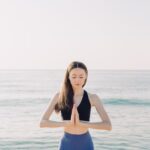
1Sit upright, hands in prayer
Praṇāmāsana
Free breathing

Transition: Front of the chair, feet flat.

Easier option: Block under the feet.

2Full-moon arm sweep overheadInhale

Transition: Exhale the arms down, inhale sweep them up in an arc.

Easier option: One arm at a time.

3Seated side bend right, centre, left, centreExhaleEach side

Transition: Exhale to bend, inhale to centre.

Easier option: One hand on the chair.

4Seated five-pointed starFree breathing

Transition: Hands on the chair, step the feet wide, arms out.

Easier option: Feet less wide.

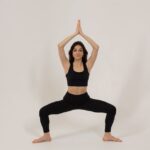
5Seated goddess, elbows bent, fingers upExhale

Transition: Inhale, then exhale and bend the elbows.

Easier option: Hands lower.

6Seated starExhale

Transition: Inhale, exhale back to star.

Easier option: Arms lower.

7Seated lateral angle to the right, left arm overhead
Utthita Pārśvakoṇāsana
ExhaleRight

Transition: Lean to the right with the right forearm resting on the thigh, sweep the left arm overhead.

Easier option: Hand on the hip instead of overhead.

8Seated starInhale

Transition: Return to centre.

Easier option: Arms lower.

9Seated lateral angle to the left, right arm overhead
Utthita Pārśvakoṇāsana
ExhaleLeft

Transition: Elbow to the thigh, other arm overhead, fingers reaching.

Easier option: Smaller bend.

10Seated starInhale

Transition: Back to centre.

Easier option: Arms lower.

11Seated goddess, hands overhead; breatheExhalea few breaths
Kripalu (seated moon salute)

Transition: Elbows bent, hands overhead; return to star; pause.

Easier option: Hands on the thighs.

12Feet closer, arms overhead (seated mountain)
Ūrdhva Hastāsana
Inhale

Transition: Bring the legs closer, sweep the arms up.

Easier option: Arms to shoulder height.

13Seated side bends, both sidesExhaleEach side

Transition: Exhale bend, inhale centre.

Easier option: Hand on the chair.

14Arms down in a full-moon arc to prayer; pause and breathe
Praṇāmāsana
Exhale

Transition: Repeat two more times.

Easier option: Rest with the eyes closed.

Left and right

Side bends right then left; lateral angle stretch to one side, then the other.

Repetitions and counting

One round = the full flow; Kripalu suggests pausing to breathe, then two more repetitions.

Props and adaptations

Sturdy armless chair; block under the feet; feet less wide; one arm at a time; hand on the hip in the lateral stretch.

Precautions

  • Hip replacement: ask your surgeon or physiotherapist before taking the knees wide.
  • Shoulders: keep the arms lower if raising them hurts.
  • Chair safety: no wheels, on a non-slip floor; wheelchair brakes on.

Learn it with a teacher: Suitable on your own; a chair-yoga teacher can adapt it for specific conditions.

General information, not medical advice. Poses do not cure illness. If you are pregnant, injured or have a health condition, check with your doctor and tell your teacher before you practise.

Beginner and chair alternatives

Gentle Moon Salutation: a standing flow based on Kripalu’s version, Chair Sun Salutation: a seated version for any body

Moon salutations vary between schools, and there is no single standard seated version. The seated moon salutation on this page is our educational chair flow based on the seated moon salute that Megha Nancy Buttenheim, co-creator of the classical Kripalu moon salute, published with Kripalu Center for Yoga & Health. Her version lets the whole flow be done sitting: arm circles and side bends, the feet stepping wide into a seated “star”, a seated goddess with the elbows bent, and a lateral angle stretch to each side with the elbow resting on the thigh. We keep her order and breath cues; the chair set-up, safety notes and adaptations are ours.

We chose to build on Kripalu’s published seated version rather than invent a new flow. We have found it documented only by Kripalu, so treat it as one school’s approach. One detail: Kripalu’s text says “right elbow to the left thigh” for the first lateral angle, which reads like a slip, since the left side uses the left elbow on the left thigh; we lean to the right with the right forearm on the right thigh. The general picture of moon salutations, including versions from other schools, is on the moon salutation overview.

Who it suits

Anyone who prefers or needs to sit: older adults, people with limited mobility or balance concerns, people at a desk, and those recovering from illness (with their clinician’s agreement). It also makes a calm, short evening practice. You need a sturdy, armless chair without wheels; sit toward the front edge with the feet flat.

The shape of the flow

Sitting upright with the hands in prayer, you sweep the arms overhead in a wide arc (the “full moon”) and bend to the right and the left. With the hands on the chair, you step the feet wide into a seated five-pointed star, then bend the elbows with the fingers pointing up for a seated goddess. From star, you lean to one side with the forearm resting on the thigh and sweep the other arm overhead for a lateral angle stretch, then change sides. A seated goddess with the hands overhead, a pause, then the feet come closer, the arms rise, the side bends repeat, and the arms float down in an arc back to prayer. Kripalu suggests a pause to breathe and then two more repetitions.

Breath, sides and rounds

The breath cues follow Kripalu’s: inhale as the arms sweep up or return to centre, exhale into each side bend, goddess and lateral stretch. The right side comes first in the side bends; the lateral angle stretch goes to one side and then the other within the same round. Three rounds, as Kripalu suggests, take about five to eight minutes.

How it compares with the standing versions

Buttenheim published the seated flow next to a gentle standing version, and comparing them shows what the chair changes. Both open and close the same way: prayer hands, the arms sweeping overhead, half-moon side bends to the right and left, then five-pointed star and goddess. In the standing version the middle of the flow moves into triangle, warrior I and warrior II on each side. The seated version replaces those standing poses with the lateral angle stretch, which keeps the long side-body line without needing to balance on the legs.

Making each movement work

Kripalu’s seated text starts with a few long, deep breaths before the first arm sweep, and that is worth keeping: it sets the slow pace for the rest. The arms can rise only slightly or all the way overhead, as Kripalu’s text allows, so choose the height your shoulders like. In the lateral angle stretch, reach the top fingers overhead and out to the side only if it is easy. For the gentle standing version, Buttenheim invites you to find your own pace, very slow or a little quicker, and to finish with the eyes closed and several long breaths; both suggestions suit the seated flow too.

How to practise it safely

  • Step the feet wide only as far as is comfortable for the hips and knees; keep the knees pointing the same way as the toes.
  • In the lateral stretch, let the elbow rest on the thigh so the arm supports the spine; bend only as far as stays easy.
  • Keep the arms lower, or move one arm at a time, if the shoulders are sore.
  • After hip replacement, check with your surgeon or physiotherapist before taking the knees wide.

Our adaptations are not part of Kripalu’s text and have not yet been reviewed by a qualified teacher.

Where to go next

If you can stand, try the gentle moon salutation. For a fuller seated practice, see the chair yoga sequence and the chair sun salutation, and our guide to chair yoga.
Frequently asked questions

Can you do a moon salutation sitting down?

Yes. Kripalu publishes a seated moon salute by Megha Nancy Buttenheim, done in a chair with side bends, a seated star and goddess, and a lateral angle stretch to each side. This page is our flow based on it; other schools may teach seated moon salutations differently.

How many rounds of the seated moon salutation?

Kripalu suggests pausing to breathe after the first round and then doing two more.

Sources

  1. Variations on the Moon Salute: Gentle and Seated Versions (Megha Nancy Buttenheim), Kripalu Center for Yoga & Health (accessed October 6, 2026)
  2. Chandra Namaskar: Honoring the Moon Salute, Kripalu Center for Yoga & Health (accessed October 6, 2026)

Facts checked on October 6, 2026