Goddess Pose: the wide squat with knees over toes

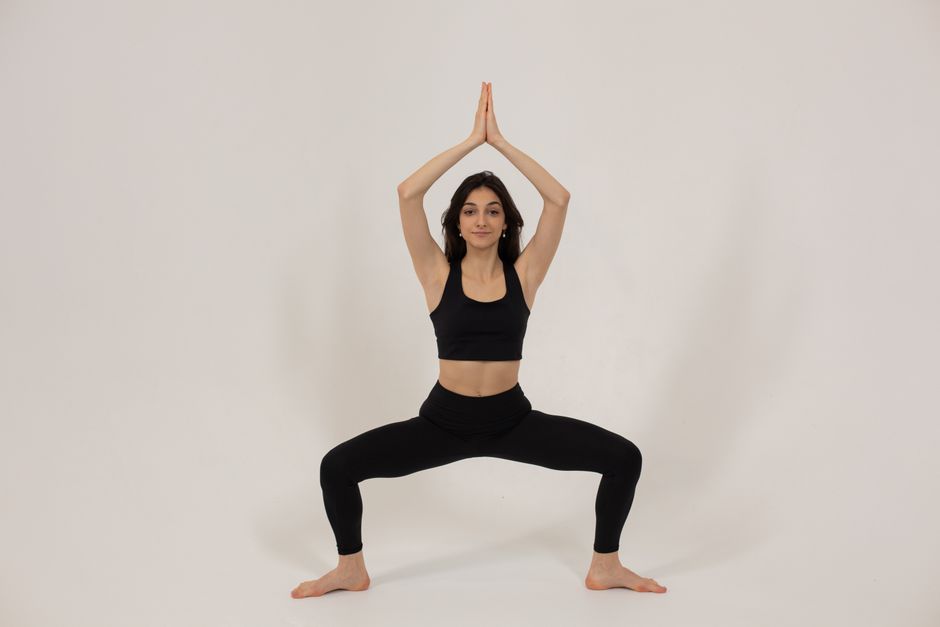
Goddess pose is a modern wide-legged squat with the toes turned out and the knees bending over them, spine upright and arms in cactus or prayer. A strong, grounding hold.

Not yet reviewed by a qualified teacher Names and shape checked against 3 sources

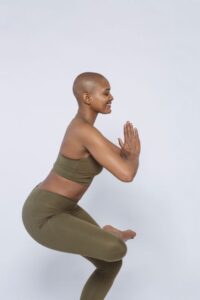
Full body of young slim barefooted ethnic female in sportswear performing Utkata Konasana pose with hands above head while practicing yoga in white studio
Sanskrit name
No established Sanskrit name: a modern descriptive name
Also called
Goddess Squat, Fierce Angle Pose, Utkata Konasana (modern usage), Horse Stance (related martial-arts stance)
Record
Modern descriptive name (no established Sanskrit)
Pose family
Hip opener and leg extension, Standing
Starting position
Standing
Movement
Hip external rotation, Strength hold
Taught in
Vinyasa Yoga: Flow, Breath and What to Expect, Hatha Yoga: The Historical Term and the Modern Class, Kundalini Yoga: Practices, Origins and What a Class Involves
Difficulty
Beginner
Prerequisite skills
A comfortable wide stance and bending the knees under load.
Body areas
Core, Hips, Legs, Shoulders
Props
Chair, None, Wall
Practised
Solo

Names in different traditions

TraditionName usedNote
Yoga JournalUtkata Konasana (Goddess Pose)Wide stance, toes out, lower straight down toward 90° at the knees, thighs externally rotated, cactus arms; a static isometric hold.
Yoga InternationalGoddess pose (utkata konasana)From star pose bend the knees, hands to the heart; toes point out at the same angle as the knees.

Step by step

Coming into the pose

  1. Stand with the feet wide apart (as in five-pointed star) and turn the toes out.
  2. Exhale, bend the knees and lower the torso straight down, knees moving out in line with the toes.

In the pose

  1. Work toward the thighs near parallel to the floor only as far as the knees stay over the toes. Keep the pelvis under the shoulders and the spine tall.
  2. Bend the elbows to 90 degrees (cactus arms) with the shoulders open, or bring the palms together at the chest. Hold five breaths, building toward a minute or two.

Coming out

  1. Inhale, press into the feet and straighten the legs; step the feet together.

Breathing

Exhale as you lower; hold with steady, full breaths; inhale to rise.

Alignment cues

  • Knees track over the toes at the same angle.
  • Lower straight down; pelvis under the shoulders.
  • Spine tall; lower back long.
  • Weight even through both feet.

Common alignment errors

  • Knees collapsing inward past the toes.
  • Buttocks sticking out and the lower back arching.
  • Leaning the torso forward.
  • Shoulders lifting toward the ears in cactus arms.

Modifications and easier variations

  • Stay higher with the hands on the thighs; shorter holds. none

Advanced variations

  • Lift the heels for a balance challenge, or pulse slowly between goddess and five-pointed star with the breath.

Props and chair adaptations

  • Back against a wall to keep the spine upright. wall
  • Sit on the front edge of a chair with the knees wide and the feet turned out; lift the chest. chair
  • Hold the back of a chair in front of you for balance. chair

Precautions

  • Knee pain: come up higher and realign the knees over the toes; with a knee or hip injury ask a physiotherapist first.
  • Lower back: keep the pelvis under the shoulders.
  • Shoulder problems: hands at the chest or on the thighs.
  • Pregnancy: keep it high and supported; follow your midwife’s or doctor’s advice.

Learn it with a teacher: You can learn it on your own. Ask a teacher if the knees ache in wide squats.

General information, not medical advice. Poses do not cure illness. If you are pregnant, injured or have a health condition, check with your doctor and tell your teacher before you practise.

In short: goddess pose is a wide-legged squat with the toes turned out: the knees bend in the same direction as the toes, the hips lower toward knee height, the spine stays upright and the arms are usually bent at right angles (cactus arms) or the hands rest at the chest. It strengthens the legs and hips and opens the inner thighs. The one rule: knees track over the toes.

Goddess pose is a strong, upright hold that many people enjoy for its grounded, powerful feeling. Below we explain the name, the cues that keep the knees happy, the precautions and how it links to other poses.

The name: a modern pose

Goddess pose is a modern descriptive name. It is not among the poses of Light on Yoga or the Ashtanga series. Yoga Journal and Yoga International both teach it, and both give the label Utkaṭa Koṇāsana (“fierce angle pose”), which you will also hear in classes; because it does not come from the traditional texts we checked, we list it as modern usage. Martial-arts students will recognise a similar wide, bent-knee stance, the horse stance; it is related in shape but comes from a different tradition, so we mention it only for comparison.

Making goddess pose work

Start from a wide stance, for example from five-pointed star. Turn the toes out; Yoga International’s rule is that because the knees bend outward, the toes should point out at the same angle. Bend the knees and lower the torso straight down, as Yoga Journal describes, bringing the legs toward a right angle while the thighs rotate outward and the knees stay in line with the feet. The pelvis stays under the shoulders rather than tipping back or forward.

Arms: Yoga Journal bends the elbows to 90 degrees into “cactus” arms with the shoulders open; palms together at the chest, or hands on the thighs, are gentler options. Keep the breath steady. Yoga Journal describes goddess pose as a static hold in the low position, an isometric contraction that builds strength and muscular endurance, and Yoga International suggests a minute or two can be an empowering hold. Start with five breaths and build up.

Getting the stance right

Most problems in goddess pose come from the width of the stance and the angle of the feet. Yoga Journal’s strength sequence faces the long side of the mat with the feet about 3 to 4 feet apart (taller people need a wider stance) and both feet angled out about 45 degrees. Then bend the knees and check two things: the knees point toward the toes, neither collapsing inward nor pushing out past the little toes, and the knees stack over the heels. If the knees drift forward past the ankles, step the feet a little wider.

Once the legs are set, look at the trunk. Lift through the lower belly so the torso stays upright, and notice whether the lower back is arching. If it is, draw the navel gently toward the spine. In that sequence the hands rest in prayer in front of the chest for a minute or longer; if that is too much at first, come up and rest, then sink down again.

A gentle variation from Yoga Journal’s neck and shoulder practice adds a twist: in the squat, rest your hands on your thighs, lower your right shoulder and turn the upper body toward the left, using the right hand to ease the right knee a little wider. This also stretches the inner thigh. Come back to center and repeat on the other side.

Precautions in plain words

If the knees hurt, come up higher, turn the toes out a little more or less so the knees point over them, and shorten the hold. With a knee or hip injury, ask a physiotherapist before deep squatting holds. Keep the lower back long and avoid sticking the buttocks out. With shoulder problems, keep the hands at the chest or on the thighs. In pregnancy a wide squat is often comfortable; keep it high, hold a chair if needed and follow your midwife’s or doctor’s advice.

Preparation and what comes next

Prepare with five-pointed star, chair pose and wide-legged forward fold. From goddess you can shift into side lunge, lower into garland pose, or turn one foot forward into warrior II.

Where it is taught

Goddess pose is part of modern vinyasa, power and hatha classes, and some kundalini kriyas include long holds in it, according to Yoga International. It adapts well to a chair: sit on the front edge with the knees wide and the feet turned out.
Preparatory poses

Follow-up poses and transitions

Counterposes

Related poses

More hip opener and leg extension poses

Frequently asked questions

What is goddess pose in Sanskrit?

Classes often call it Utkata Konasana, and Yoga Journal and Yoga International use that label, but it is a modern pose and the name is modern usage rather than a traditional one.

How do I keep my knees safe in goddess pose?

Turn the toes out to the same angle the knees bend, lower straight down, and only go as low as the knees stay over the toes.

What is the difference between goddess pose and garland pose?

Goddess is a wide, upright squat with the hips at about knee height; garland (Malasana) is a deep squat with the hips close to the heels.

Sources

  1. A Yoga Sequence for an Open Heart (Utkata Konasana, Goddess Pose), Yoga Journal (accessed October 6, 2026)
  2. Do You (Really) Understand What Hip Openers Are? (Goddess Pose, external rotation), Yoga Journal (accessed October 6, 2026)
  3. How to Keep Your Knees Safe During Asana Practice (goddess pose, toes out at the knee angle), Yoga International (accessed October 6, 2026)

Facts checked on October 6, 2026