Warrior II (Virabhadrasana II): knee, arms and gaze

Warrior II (Virabhadrasana II, Ashtanga’s Virabhadrasana B) is a wide side-facing lunge with arms at shoulder height and the gaze over the front hand. Keep the front knee over the foot.

Not yet reviewed by a qualified teacher Names and shape checked against 3 sources

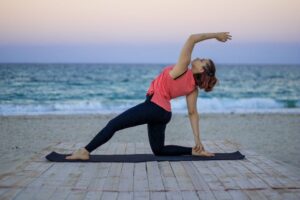
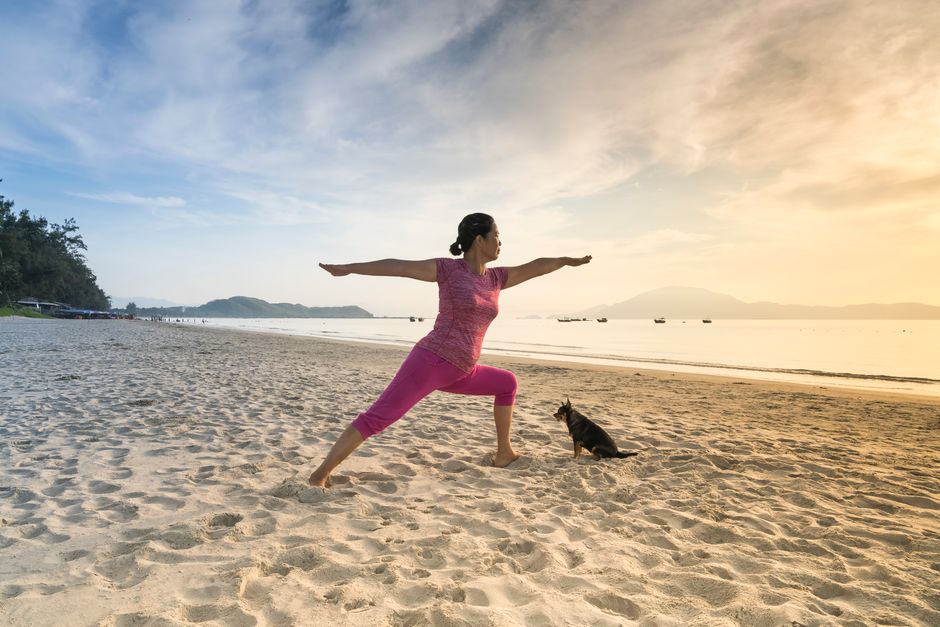
A woman performs a yoga pose on a tranquil beach with her dog at sunset, symbolizing harmony and relaxation.
Sanskrit name
Vīrabhadrāsana II वीरभद्रासन (source)
Also called
Warrior Two, Warrior 2, Warrior B
Other spellings
Virabhadrasana II, Virabhadrasana 2, Virabhadrasana B
Pose family
Hip opener and leg extension, Standing
Starting position
Standing
Movement
Hip external rotation, Strength hold
Taught in
Vinyasa Yoga: Flow, Breath and What to Expect, Hatha Yoga: The Historical Term and the Modern Class
Difficulty
Beginner
Prerequisite skills
Comfortable wide stance and bent-knee strength; arms at shoulder height.
Body areas
Core, Hips, Legs, Shoulders
Props
Block, Chair, None, Wall
Practised
Solo

Names in different traditions

TraditionName usedNote
Iyengar (Light on Yoga)Vīrabhadrāsana IIAsana 8, Plate 15: feet 4–4½ ft apart, front thigh parallel, arms stretched sideways, gaze over the front hand; 20–30 seconds.
Ashtanga vinyasa (AshtangaYoga.info)Vīrabhadrāsana BFrom Virabhadrasana A: widen the stance, heels on one line, back foot about 5° in, arms horizontal; five breaths each side.

Step by step

Coming into the pose

  1. Face the long side of the mat, feet wide (about under the wrists with the arms out), arms stretched out at shoulder height.
  2. Turn the right foot and knee to face the front of the mat; turn the left toes slightly in.

In the pose

  1. Exhale and bend the right knee over the right ankle, as deep as you can while the knee points over the middle of the foot.
  2. Keep the trunk upright, shoulders over hips. Press the outer edge of the back foot down and keep the back leg straight.
  3. Reach strongly through both arms, shoulders relaxed, and look past the right fingertips. Hold five breaths to 30 seconds.

Coming out

  1. Inhale, press into the feet and straighten the front leg; turn the feet parallel and repeat on the left.

Breathing

Exhale as you bend into the front knee; hold with steady, deep breaths. Iyengar: 20 seconds to half a minute; Ashtanga: five breaths; Yoga Journal: 5 to 10 breaths.

Alignment cues

  • Front knee over the ankle, pointing over the middle of the front foot.
  • Trunk vertical, shoulders over hips; no leaning over the front leg.
  • Arms reaching equally forward and back at shoulder height.
  • Outer edge of the back foot pressing down; back leg active.

Common alignment errors

  • Front knee collapsing inward toward the big toe.
  • Front knee moving past the ankle.
  • Leaning the torso toward the front leg.
  • Back arm drooping; shoulders lifting toward the ears.

Modifications and easier variations

  • Bend the front knee less, or put the hands on the hips. none

Advanced variations

Props and chair adaptations

  • Place a block between the front shin and a wall to steady the knee and stop it moving past the ankle (Yoga Journal). wall
  • Sit on the edge of a chair with the front thigh on the seat and the back leg extended, arms out or hands on the hips. chair

Precautions

  • Hamstring or groin tear, hip injury or hip replacement: avoid or modify (Yoga Journal).
  • Knee pain: bend less and keep the knee over the middle of the foot.
  • Shoulder problems: hands on the hips or at the chest.
  • Neck problems: look forward instead of over the front hand.

Learn it with a teacher: You can learn it on your own. Ask a teacher if your front knee hurts or keeps collapsing inward.

General information, not medical advice. Poses do not cure illness. If you are pregnant, injured or have a health condition, check with your doctor and tell your teacher before you practise.

In short: warrior II is a wide standing lunge facing the side of the mat: the front knee bends over the ankle, the back leg is straight, the arms stretch out at shoulder height and the gaze goes over the front hand. It builds strength and stamina in the legs and opens the hips. The one rule that matters most: keep the front knee pointing over the front foot.

Warrior II is often taught early because its shape is easy to see, yet holding it well takes real effort. Below we explain the name and its Ashtanga counterpart, the cues that keep the knee and shoulders comfortable, the precautions and where it fits in a practice.

The name: II in Iyengar, B in Ashtanga

The Sanskrit name is Vīrabhadrāsana II, after the warrior Vīrabhadra (see warrior I for the story). Light on Yoga numbers it II. In Ashtanga it is Vīrabhadrāsana B: in the primary series you move from the arms-up warrior A straight into this pose by widening the stance and lowering the arms to horizontal. If an Ashtanga teacher says “warrior B”, this is the pose they mean.

Making warrior II work

Stand facing the long side of the mat with the feet wide, roughly under the wrists when the arms are out. Turn the front foot to point forward and the back foot slightly in; in this pose the heels can be on one line (AshtangaYoga.info turns the back foot in by only about five degrees). Bend the front knee and stack it over the ankle. Iyengar asks for the thigh parallel to the floor and the shin vertical; Yoga Journal points out that a right angle is not essential and that each body has its own depth. What is essential is the direction: the front knee tends to drift toward the big-toe side, so draw it toward the little-toe side until it points over the middle of the foot.

Keep the trunk upright, shoulders over hips, rather than leaning over the front leg. Stretch the arms out as if, in Iyengar’s image, two people were pulling you from either end, and keep the shoulders relaxed. Press the outer edge of the back foot down so the back leg stays active. Turn the head to look past the front fingertips. Iyengar gives 20 seconds to half a minute; Ashtanga five breaths; Yoga Journal 5 to 10 breaths.

Small refinements that change the pose

  • Weight in both legs. Yoga Journal asks you to share the weight evenly between the legs and keep the crown of the head over the pelvis. Most people sink into the front leg; notice it and shift back a little.
  • Anchor the back foot. Ray Long, orthopedic surgeon and yoga teacher, suggests planting the back heel and trying to drag the back foot away from the front foot without actually moving it. This wakes up the back hip and stops the pose from tipping forward.
  • Settle the shoulders. Turn the palms and inner elbows up toward the ceiling while you draw the shoulder blades down the back. Keep the shoulder blades steady, then turn the palms down again. Many people feel the shoulders drop away from the ears at once.
  • Come out with the breath. Exhale and press down through the feet, then inhale and straighten the legs. Turn the feet parallel before you change sides.

Yoga Journal also offers a useful question for longer holds: when you want to straighten the leg or drop the arms, ask whether it comes from a physical need or simply a wish to stop. Act on real need. Bend the front knee only as far as you can sustain, and use a block between the front shin and a wall if the knee keeps sliding forward past the ankle.
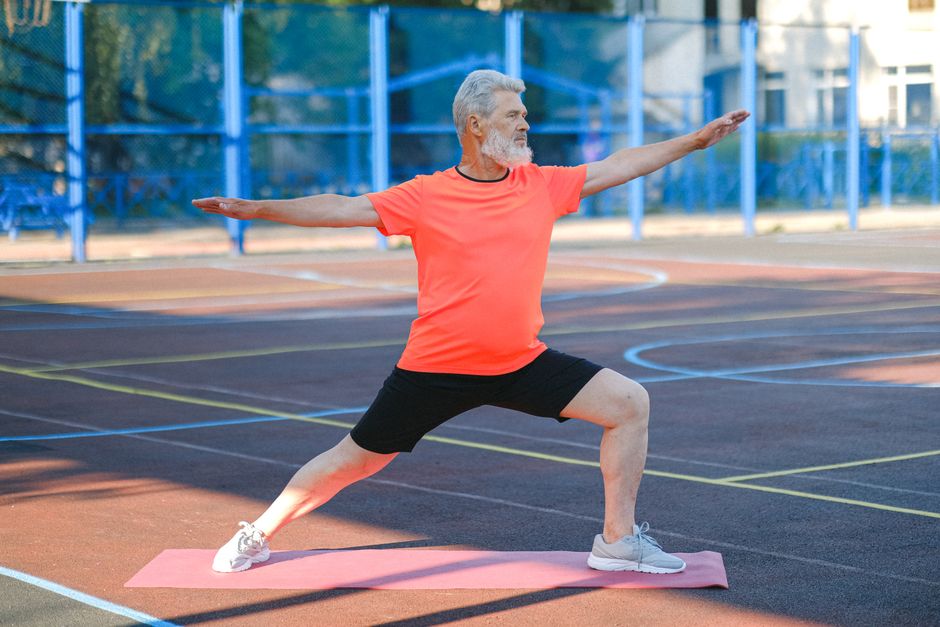
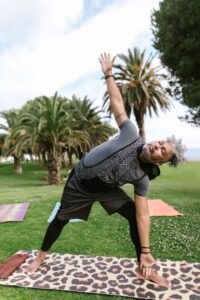
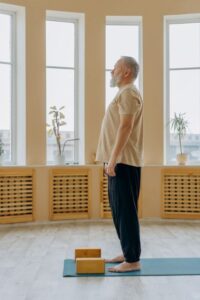
Elderly man performing warrior II yoga pose on an outdoor court.

Precautions in plain words

Do not let the front knee move past the ankle or fall inward. Yoga Journal advises avoiding or modifying the pose with a hamstring or groin tear, a hip injury or a hip replacement. With shoulder problems, keep the hands on the hips or together at the chest. If turning the head bothers the neck, look forward. For balance or a tired front thigh, straighten the front knee a little for a moment, or practise with a chair.

Preparation and what comes next

Yoga Journal lists low lunge, wide-legged forward fold and tree pose as preparation. From warrior II you can tip back into reverse warrior, lower the forearm into extended side angle, straighten the front leg for triangle, or reach into half moon. Mountain pose and standing forward fold make good counterposes.

Where it is taught

Warrior II is in Iyengar yoga, the Ashtanga primary series, and nearly every vinyasa, power and hatha class, where it often anchors warrior flows.

Preparatory poses

Follow-up poses and transitions

Counterposes

Related poses

More hip opener and leg extension poses

Frequently asked questions

Is warrior II the same as Virabhadrasana B?

Yes. Ashtanga calls it Virabhadrasana B; Iyengar and most other schools call it Virabhadrasana II.

Does my front thigh have to be parallel to the floor?

No. Light on Yoga describes the full form that way, but Yoga Journal notes that a right angle is not essential. Bend as far as you can while the knee stays over the ankle and points over the foot.

Where should I look in warrior II?

Over the front fingertips. If that strains the neck, look straight ahead.

Sources

  1. B.K.S. Iyengar, Light on Yoga: asana 8, Virabhadrasana II, Plate 15, Internet Archive (Digital Library of India copy) (accessed October 6, 2026)
  2. Warrior 2 Pose: How to Practice Virabhadrasana II, Yoga Journal (accessed October 6, 2026)
  3. Vīrabhadrāsana B: The powerful warrior pose, AshtangaYoga.info (Dr. Ronald Steiner) (accessed October 6, 2026)

Facts checked on October 6, 2026