Triangle Pose (Utthita Trikonasana): steps, block options and the Sivananda version

Triangle pose (Utthita Trikonasana) extends the trunk sideways over a straight front leg, lower hand to shin, block or floor, top arm up. Versions differ in Iyengar, Ashtanga and Sivananda.

Not yet reviewed by a qualified teacher Names and shape checked against 5 sources

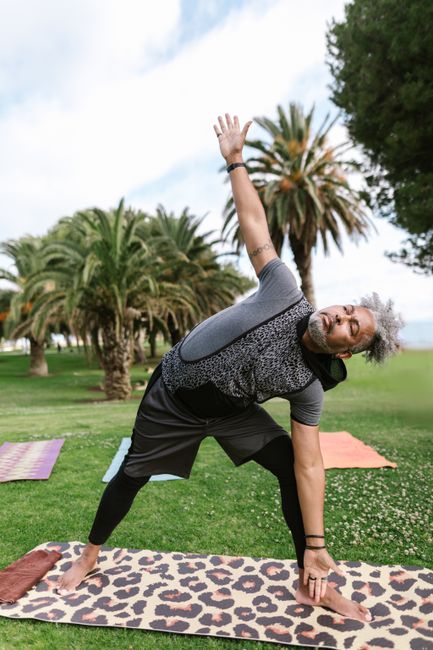
Senior man doing yoga in a park setting, demonstrating triangle pose under palm trees.
Sanskrit name
Utthita Trikoṇāsana उत्थित त्रिकोणासन (source)
Pronunciation
oo-TEE-tah trik-cone-AHS-ah-nah (source)
Also called
Extended Triangle, Extended Triangle Pose, Triangle
Other spellings
Utthita Trikonasana, Trikonasana, Trikoṇāsana
Pose family
Side bend, Standing
Starting position
Standing
Movement
Lateral bend
Taught in
Hatha Yoga: The Historical Term and the Modern Class, Vinyasa Yoga: Flow, Breath and What to Expect, Hot Yoga: What It Is, Room Temperatures and Who It Suits
Difficulty
Beginner
Prerequisite skills
A wide, steady stance and some hamstring length; a block makes up for tight hamstrings.
Body areas
Hamstrings, Hips, Legs, Shoulders, Spine
Props
Block, Chair, Wall
Practised
Solo

Names in different traditions

TraditionName usedNote
Iyengar (Light on Yoga)Utthita TrikoṇāsanaAsana 3, Plates 4–5: feet 3–3½ ft apart, front foot 90°, back foot slightly in, palm near the ankle or on the floor; half a minute to a minute.
Ashtanga vinyasa (AshtangaYoga.info)Utthita Trikoṇāsana (A)Standing sequence: heels on one line, front big toe held with index and middle fingers; five breaths. "B" is revolved triangle.
Sivananda Yoga Vedanta CentresTrikoṇāsana (Triangle)Last of the 12 basic asanas: feet slightly wider than shoulders, one arm up, bend sideways sliding the other hand down the leg, no twist; 30 seconds working to 2 minutes.

Step by step

Coming into the pose

  1. From mountain pose, step or jump the feet about 3 to 3½ feet apart (about one leg length) and raise the arms to shoulder height, palms down.
  2. Turn the right foot out 90 degrees and the left foot slightly in. Line up the right thigh and knee with the right foot.

In the pose

  1. Exhale, reach the trunk out over the right leg, then tip it sideways, bringing the right hand to the shin, a block, the floor or the big toe.
  2. Stretch the left arm up in line with the right shoulder. Turn the chest open; keep the backs of the legs, back of the chest and hips in one plane.
  3. Keep the legs straight but not locked and look up at the left thumb, forward or down. Stay five breaths (Ashtanga) to half a minute or a minute (Light on Yoga).

Coming out

  1. Inhale and come up with the arms out; turn the feet and repeat on the left side.

Breathing

Exhale as you extend sideways into the pose; breathe deeply and evenly while holding; inhale to come up.

Alignment cues

  • Front knee and thigh facing the same way as the front foot.
  • Legs straight but not hyperextended.
  • Reach out long before reaching down; both sides of the waist long.
  • Top arm in line with the lower shoulder; chest open to the side.

Common alignment errors

  • Pressing the lower hand to the floor at the cost of a rounded spine.
  • Locking or pushing back the front knee.
  • Collapsing the bottom side of the waist.
  • Chest turning toward the floor; hips sticking out behind.

Modifications and easier variations

  • Shorter stance, hand on the shin, top hand on the hip. none

Advanced variations

Props and chair adaptations

  • Lower hand on a block outside the front foot, at any height. block
  • Practise with the back body near a wall to feel the plane of the pose and for balance. wall
  • Sit near the edge of a chair, extend one leg to the side with the knee facing up, rest that hand on the shin and reach the other arm up (Yoga Journal). chair

Precautions

  • Hyperextending knees: keep a micro-bend in the front knee.
  • Neck problems: look forward or down instead of up.
  • Shoulder problems: top hand on the hip.
  • Hamstring injury or lower back pain: use a block and a shorter stance.

Learn it with a teacher: You can learn it from clear instructions. A teacher helps you find your stance length and hand height, and explains which version their school uses.

General information, not medical advice. Poses do not cure illness. If you are pregnant, injured or have a health condition, check with your doctor and tell your teacher before you practise.

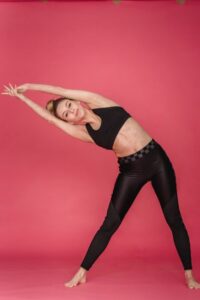
In short: triangle pose is a wide-legged standing pose in which both legs stay straight, the trunk extends sideways over the front leg, the lower hand reaches toward the shin, ankle, floor or a block, and the top arm points to the ceiling. It stretches the legs, hips and sides of the body. Reach long before you reach down, and put the lower hand wherever the spine can stay long.

Triangle is one of the classic standing poses and one of the few that nearly every school teaches. The details differ more than you might expect, especially in the Sivananda tradition, so below we explain the name, the main versions, the cues that matter, the precautions and where it fits.

The name and the versions

The Sanskrit name is Utthita Trikoṇāsana. Light on Yoga explains utthita as extended or stretched and trikoṇa as triangle (tri, three, and koṇa, angle), so the full name is extended triangle pose. Many people simply say Trikonasana.

In Light on Yoga, the feet are 3 to 3½ feet apart, the front foot turns out 90 degrees and the back foot slightly in, and the front palm rests near the front ankle or on the floor. In the Ashtanga standing sequence (Utthita Trikoṇāsana A), the index and middle fingers hook the front big toe and you stay five breaths. The Sivananda Yoga Vedanta Centres teach Triangle as the last of their 12 basic asanas, and their version is different: the feet stand slightly wider than the shoulders, you raise one arm and bend sideways, sliding the other hand down the leg without twisting, holding about 30 seconds and building toward two minutes. All three are true triangles; just know which one your class means. The twisting version has its own page, revolved triangle.

Making triangle work

Keep both legs straight but not locked, and keep the front thigh and knee facing the same way as the front foot; AshtangaYoga.info explains that lining up knee and ankle this way evens out the pressure in both joints. Before bending, reach the trunk forward over the front leg, then let it tip sideways, so the lengthening happens in the waist rather than the lower back collapsing. Iyengar’s picture is of the backs of the legs, the back of the chest and the hips in one line, as if the body were between two walls.

Where the lower hand goes is up to your hamstrings: the shin, a block outside the front foot, or the floor are all fine. A rounded spine with the hand on the floor is a worse triangle than a long spine with the hand on the shin. Turn the chest open toward the side and stretch the top arm up in line with the lower shoulder. Look up at the top thumb if the neck is comfortable; if not, Yoga Journal suggests looking straight ahead or down.

Precautions in plain words

Do not lock or push back the front knee; a micro-bend protects it if your knees hyperextend. With neck problems, look forward or down. With shoulder problems, rest the top hand on the hip. With hamstring injuries or lower back pain, use a block and a shorter stance. If balance is uncertain, practise with your back body near a wall.

Preparation and what comes next

Prepare with warrior II, standing side bend and hamstring stretches such as half standing forward fold. From triangle, many sequences move to revolved triangle, extended side angle or half moon.

Where it is taught

Triangle is in Iyengar yoga (Light on Yoga), the Ashtanga standing sequence, the Sivananda 12 basic asanas, and nearly every hatha and vinyasa class.
Preparatory poses

Follow-up poses and transitions

Counterposes

Related poses

Styles that use this pose

More side bend poses

Frequently asked questions

What does Utthita Trikonasana mean?

Utthita means extended or stretched and trikoṇa means triangle (tri = three, koṇa = angle), so extended triangle pose.

Do I need to touch the floor in triangle?

No. Rest the lower hand on the shin or a block if that keeps the spine long. A long spine matters more than touching the floor.

Why is the Sivananda triangle different?

The Sivananda centres teach Triangle as a lateral bend with the feet slightly wider than the shoulders, sliding one hand down the leg without twisting. It is their standard version in the 12 basic asanas.

How long should I hold triangle?

Ashtanga: five breaths. Light on Yoga: half a minute to a minute. Sivananda: about 30 seconds, building toward two minutes.

Sources

  1. B.K.S. Iyengar, Light on Yoga: asana 3, Utthita Trikonasana, Plates 4–5, Internet Archive (Digital Library of India copy) (accessed October 6, 2026)
  2. Extended Triangle Pose: How to Practice Utthita Trikonasana, Yoga Journal (accessed October 6, 2026)
  3. Utthita Trikoṇāsana (standing sequence), AshtangaYoga.info (Dr. Ronald Steiner) (accessed October 6, 2026)
  4. Triangle (Trikoṇāsana), The 12 Basic Asanas, Sivananda Ashram Yoga Ranch (accessed October 6, 2026)
  5. Trikonasana or Triangle Pose, Sivananda Yoga Vedanta Centre London (accessed October 6, 2026)

Facts checked on October 6, 2026