Kripalu Moon Salutation: the 17-step classical moon salute

The Kripalu moon salute: 17 standing, side-to-side steps through goddess, star, triangle, lunges and extended-leg squats, as created at Kripalu in the late 1980s.

Not yet reviewed by a qualified teacher Names and order checked against 3 sources

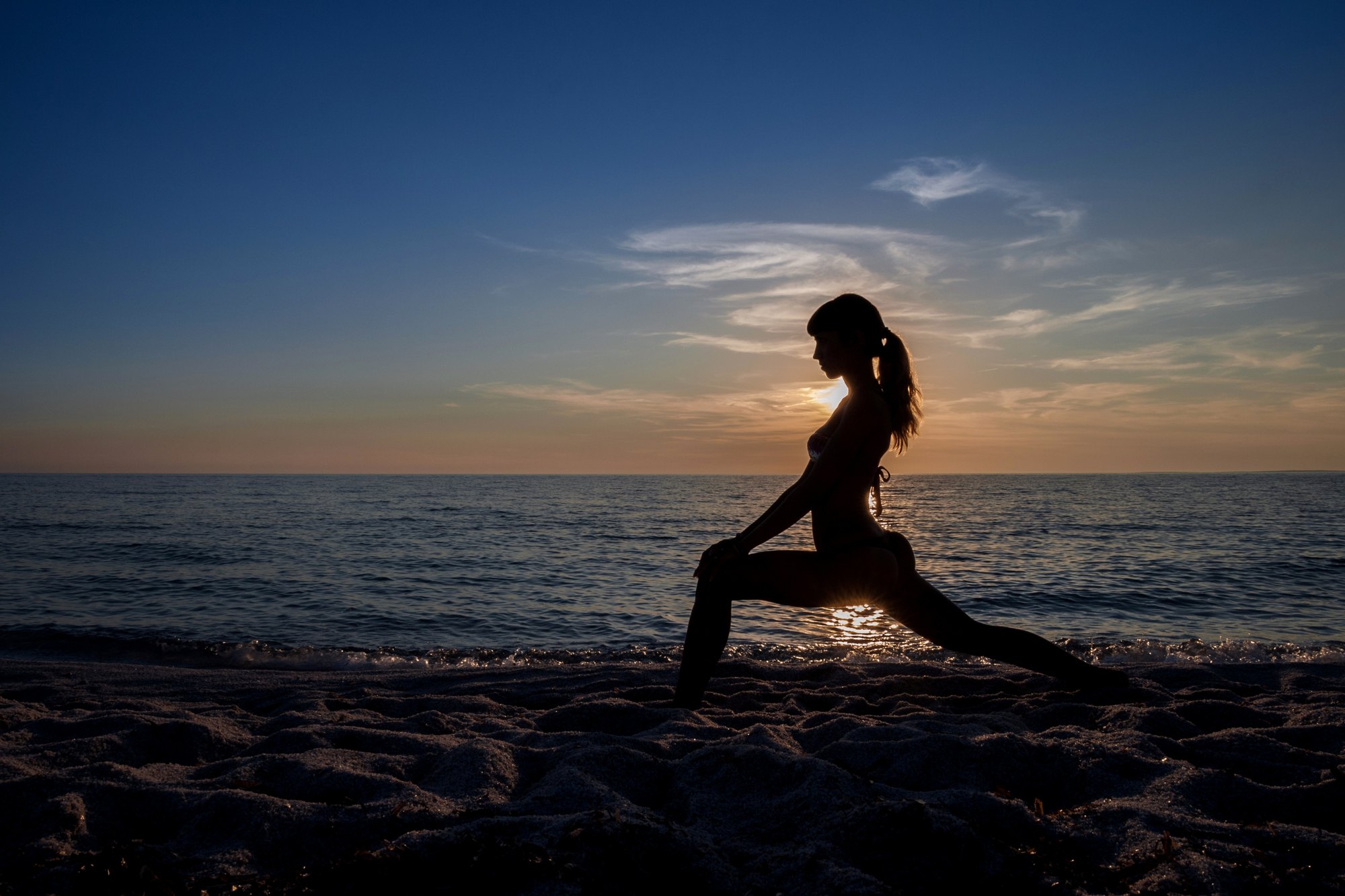
Crescent lunge silhouette by the sea at dusk
Sanskrit name
Candra Namaskāra (source)
Also called
Kripalu Moon Salute, Classical Moon Salute, Kripalu Chandra Namaskar
Tradition
Kripalu Yoga (Kripalu Center for Yoga & Health)
Order
Traditional, but varies by school
Level
Intermediate
Approximate duration
about 10 minutes
Focus
Evening
Audience
Experienced
Props
Blanket, Block, Mat
Styles
Hatha Yoga: The Historical Term and the Modern Class
Body areas
Hamstrings, Hips, Legs

Traditional, but the order and details vary between schools. This page follows the version named below.

Printable view

Origin and source

Created at Kripalu in the late 1980s by Megha Nancy Buttenheim, Deva Parnell, Patricia (Niti) Seip Martin and Bhumi Harriet Russell, per Kripalu.

Who it is for

Comfortable in goddess, triangle and a lunge; knees and hips that tolerate a wide squat.

The steps in order

Version shown: Kripalu classical moon salute, 17 steps, as published by Kripalu Center

#StepBreathSideCues and options
11 Mountain, hands in prayer (Anjali mudra)
Tāḍāsana
Free breathing

Transition: Feet together, palms at the chest.

Easier option: Feet hip-width.

22 Half moon (standing side bend), right then leftFree breathingEach side

Transition: Circle the arms overhead and arch to the right, then the left.

Easier option: One hand on the hip.

33 Victory warrior goddessFree breathing

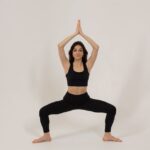
Transition: Step wide, knees bent, forearms up.

Easier option: Bend less.

44 Five-pointed starFree breathing

Transition: Straighten the legs, arms at shoulder height.

Easier option: Narrower stance.

55 Triangle, right
Utthita Trikoṇāsana
Free breathingRight

Transition: Right arm down toward the right leg, left arm up.

Easier option: Hand on a block.

66 Standing runner's stretch, right leg forward
Pārśvottānāsana
Free breathingRight

Transition: Turn to the right leg; head toward the right knee.

Easier option: Hands on blocks; knee soft.

77 Runner's stretch (lunge), right knee bent
Āñjaneyāsana
Free breathingRight

Transition: Bend the right knee, gaze forward; back knee up or down.

Easier option: Back knee down on a blanket.

88 Extended leg squat, left leg extended
Skandāsana
Free breathingLeft

Transition: Turn to face the side; squat over the right leg, left leg long, toes up.

Easier option: Hands on blocks; shallow squat.

99 Extended leg squat, right leg extended
Skandāsana
Free breathingRight

Transition: Shift across to squat over the left leg.

Easier option: Stay higher.

1010 Runner's stretch, left leg forward
Āñjaneyāsana
Free breathingLeft

Transition: Turn to the left leg, right leg back.

Easier option: Back knee down.

1111 Standing runner's stretch, left leg forward
Pārśvottānāsana
Free breathingLeft

Transition: Straighten the front leg, head toward the left knee.

Easier option: Blocks.

1212 Triangle, left
Utthita Trikoṇāsana
Free breathingLeft

Transition: Open to the side, right arm sweeps up.

Easier option: Hand on a block.

1313 Five-pointed starFree breathing

Transition: Lift up to star.

Easier option: Narrower stance.

1414 Victory warrior goddessFree breathing

Transition: Bend the knees, forearms up.

Easier option: Bend less.

1515 Mountain, arms overhead
Tāḍāsana
Free breathing

Transition: Step the feet together, arms up.

Easier option: Arms lower.

1616 Half moon, left then rightFree breathingEach side

Transition: Arch to the left, then the right.

Easier option: Hand on the hip.

1717 Mountain, hands to prayer
Tāḍāsana
Free breathing

Transition: Circle the arms down to the chest; repeat.

Easier option: Rest between rounds.

Left and right

Opens to the right first (triangle, runner's stretch and lunge on the right), crosses through the squats and returns on the left; the final side bends go left first, then right.

Repetitions and counting

One round = all 17 steps, covering both sides; repeat at your own pace. Kripalu gives no fixed number for the classical version.

Props and adaptations

Blocks under the hands in the runner's stretch and squats; blanket under the back knee; shallower goddess and squats; practise near a wall. Kripalu's gentle and seated versions are full alternatives.

Precautions

  • Knees: keep them over the toes in goddess and the squats; reduce depth.
  • Hips or knee surgery, pregnancy: ask a health professional or qualified teacher first.
  • Balance: practise near a wall.

Learn it with a teacher: The crossing between the two extended-leg squats is easiest to learn in a class.

General information, not medical advice. Poses do not cure illness. If you are pregnant, injured or have a health condition, check with your doctor and tell your teacher before you practise.

Beginner and chair alternatives

Gentle Moon Salutation: a standing flow based on Kripalu’s version, Seated Moon Salutation: a chair flow based on Kripalu’s version

The Kripalu moon salutation is the classical moon salute of Kripalu Yoga: a standing, side-to-side flow of 17 steps that travels from mountain pose through goddess, five-pointed star, triangle, a standing runner’s stretch, a runner’s lunge and a wide squat with one leg extended, then mirrors itself back to the other side. Kripalu Center for Yoga & Health describes it as honouring the moon in the way the sun salutation honours the sun, and as a softer, more inward practice.

It is one of several sequences called moon salutation. This page shows the Kripalu order as Kripalu publishes it.

Whose version, and since when

According to Kripalu, the moon salute was created at Kripalu in the late 1980s by Megha Nancy Buttenheim, Deva Parnell, Patricia (Niti) Seip Martin and Bhumi Harriet Russell. Buttenheim, a long-time Kripalu faculty member, later adapted it into a gentle standing version and a seated version (see gentle and seated moon salutation). Bernie Clark’s YinYoga.com publishes a closely matching sequence, which it describes as based on the Kripalu tradition, with an extra squat in the centre.

How the sides and rounds work

The sequence is a mirror. From mountain pose and the side bends you open out to the right: goddess, star, triangle to the right, runner’s stretch and lunge over the right leg, then the wide squat with the left leg extended. You shift across into the squat on the other side and come back up through the lunge, runner’s stretch and triangle on the left, then star, goddess, mountain and the side bends (this time left first), finishing in mountain with the hands in prayer. So one round covers both sides, and you start the next round with the side bends again.

Kripalu’s classical page does not give a breath for each step, so we do not invent one: breathe freely and slowly, usually one or more full breaths per position. Kripalu’s gentle version pairs exhales with the side bends and squats and inhales with rising to star, which many people find a natural rhythm here too.

Cues from Kripalu’s own instructions

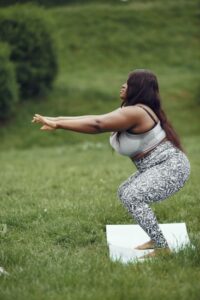
Kripalu’s published steps contain a few details that make the flow steadier. In victory warrior goddess, the feet sit at a slight diagonal, the knees bend while the sitting bones press down, and the elbows bend with the forearms pointing up. In the standing runner’s stretch, the hands can rest wherever they reach: the floor, the front foot, the shin or the thigh. In the runner’s stretch (a lunge), the back knee may touch the floor or stay lifted, so you can choose the easier version on any day.

The extended leg squat is the turning point of the round. Face the front, with the toes of the extended leg pointing up toward the sky, and think of two directions at once: the sitting bones pressing down and the crown of the head lifting up. To move to the other side, bring the hands to the floor in front of you and shift across, pressing the bent-leg foot, the hands and the heel of the extended leg into the ground.
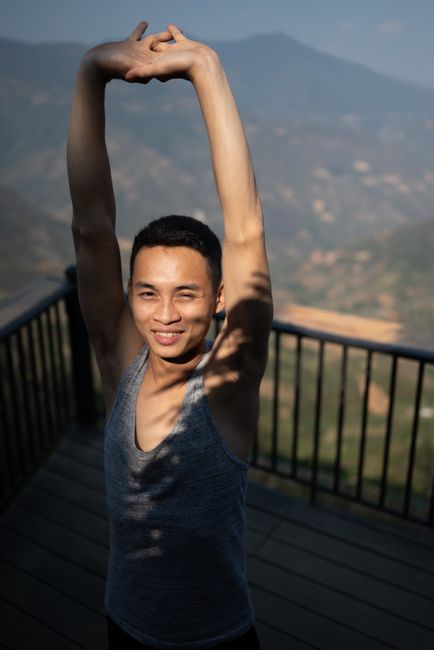
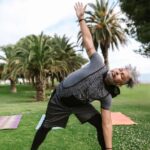
Smiling man stretching on a scenic outdoor deck with mountains in the background.

How to practise it safely

  • Knees in goddess and the squats: keep the knees in line with the toes and come only as low as you can without pain. Hands on blocks help in the extended-leg squat.
  • Lunge: lower the back knee onto a blanket if holding it up strains the knee or lower back.
  • Side bends: lengthen up before bending, and keep the weight even on both feet.
  • Balance: the wide stances and turns can be unsteady at first; practise near a wall.

Check with a health professional first after knee or hip surgery, in pregnancy, or with any condition that limits squatting. These instructions have not yet been reviewed by a qualified teacher.

Easier alternatives

Kripalu’s own gentle moon salute removes the deep squats and runner’s lunges and uses warriors instead; the seated moon salute is done in a chair. Learn the individual poses first on their pages: goddess, five-pointed star, triangle and low lunge.

When to practise it

Kripalu says the moon salute can be done at any time of day: at the end of a yoga practice, or whenever you want to quiet the mind. It describes the sequence as cooling and softening, and especially comforting in the evening as a way to wind down before sleep. Co-creator Megha Nancy Buttenheim explains the idea behind it: where the sun salutation raises energy, the moon salute was meant to recognize its downward flow. She calls the salutation “a meditation in motion,” and Kripalu suggests repeating it as many times as you wish.

Where it is taught

It is a staple of Kripalu Yoga classes and teacher trainings and has spread to many gentle, hatha and evening classes elsewhere, often with small changes. If a class calls something a moon salutation, it may or may not be this order.
Frequently asked questions

Who created the Kripalu moon salutation?

Kripalu says it was created at Kripalu in the late 1980s by Megha Nancy Buttenheim, Deva Parnell, Patricia (Niti) Seip Martin and Bhumi Harriet Russell.

Which side do you start on?

Kripalu's classical version opens to the right first, crosses through two extended-leg squats and returns on the left, so each round covers both sides.

Is the Kripalu moon salutation hard on the knees?

It includes goddess, a lunge and deep extended-leg squats. Keep the knees over the toes and reduce depth, or use Kripalu's gentle or seated versions.

Sources

  1. Chandra Namaskar: Honoring the Moon Salute, Kripalu Center for Yoga & Health (accessed October 6, 2026)
  2. Variations on the Moon Salute: Gentle and Seated Versions, Kripalu Center for Yoga & Health (accessed October 6, 2026)
  3. A Moon Salutation (based on the Kripalu tradition), Bernie Clark, YinYoga.com (accessed October 6, 2026)

Facts checked on October 6, 2026