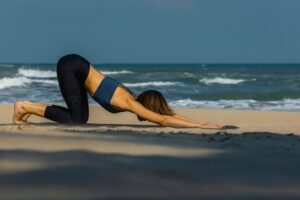
Low Lunge (Anjaneyasana): back knee down, arms up, hips forward
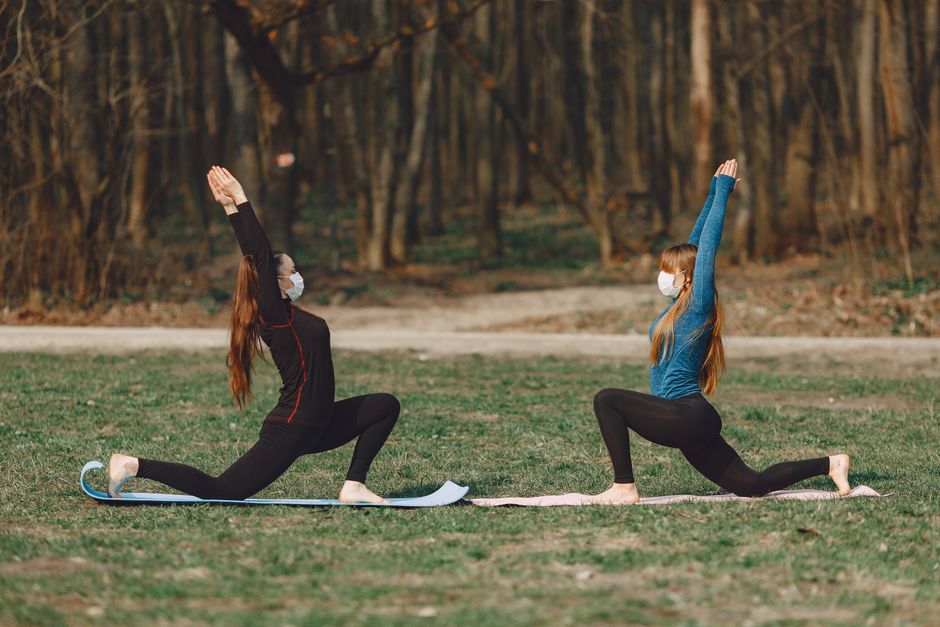
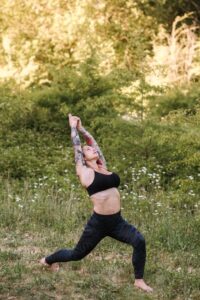
Low lunge (Anjaneyasana) is a kneeling lunge with the back knee down and the arms overhead. It stretches the front of the back hip; pad the knee and keep the lower back long.
By YogaVacation Editorial Team · Updated October 7, 2026 · Facts checked October 6, 2026
Not yet reviewed by a qualified teacher·Names and shape checked against 3 sources
Long relaxed lunge with the back knee down, named after Anjaneya (Hanuman); not part of the Ashtanga series.
Bihar / Sivananda / Art of Living sun salutation
Ashwa Sanchalanasana (equestrian pose)
Similar legs, hands on the floor, gaze up: separate record.
Step by step
Coming into the pose
From downward-facing dog (or hands and knees), step the right foot forward between the hands, knee over the heel.
Lower the left knee to the floor (on a folded blanket) and slide it back until you feel a comfortable stretch at the front of the left thigh and groin. Rest the top of the left foot on the floor.
In the pose
Inhale, lift the torso upright and sweep the arms up beside the ears. Keep the right knee over the ankle.
Draw the lower belly gently in and up so the lower back does not arch; lift the chest. Look forward, or up if the neck is comfortable. Hold several breaths to a minute.
Coming out
Exhale, bring the hands to the floor, tuck the back toes, lift the back knee and step back to downward dog. Repeat on the other side.
Breathing
Inhale to lift the torso and arms; hold with slow breaths, letting each exhalation soften the front of the back hip.
Alignment cues
Front knee over the heel, not past the ankle.
Back knee padded and far enough back for a comfortable stretch.
Lower belly lifting so the lower back stays long.
Chest lifts; shoulders away from the ears.
Common alignment errors
Sinking the hips forward and arching the lower back.
Front knee shooting past the ankle.
Bearing weight on the kneecap on a hard floor.
Throwing the head back.
Modifications and easier variations
Hands on the front thigh or hips instead of overhead. none
Advanced variations
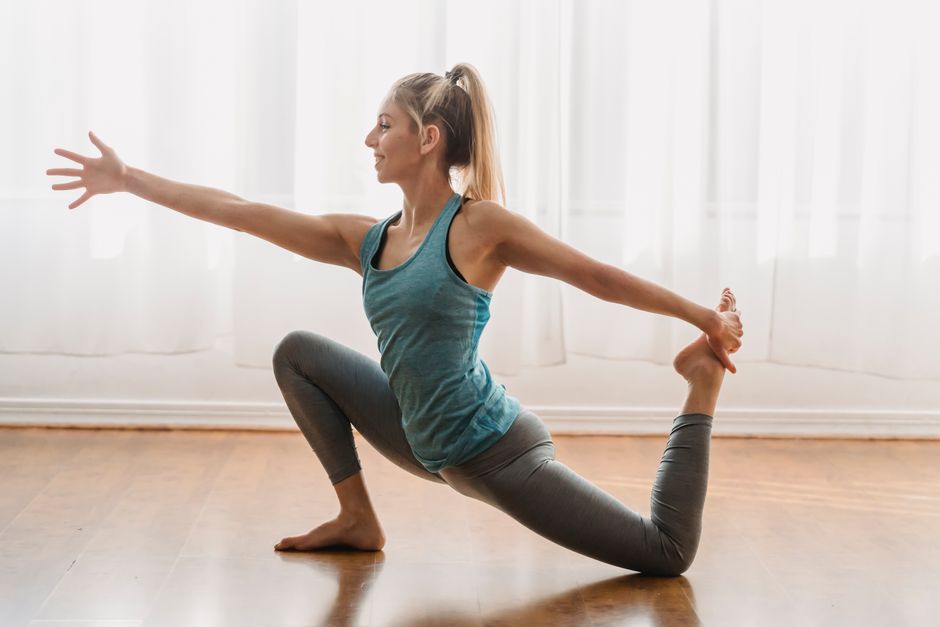
Bend the back knee and hold the back foot for a deeper quadriceps stretch (described by AshtangaYoga.info as the next step).
Folded blanket under the back knee (Yoga Journal). blanket
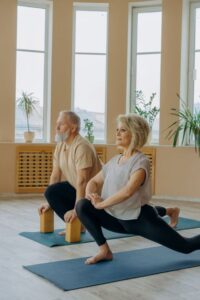
Hands on blocks either side of the front foot. block
Face a wall with the front big toe touching it and the fingertips on the wall for balance (Yoga Journal beginner tip). wall
Sit sideways on a chair with the front thigh on the seat and the back leg reaching back, knee bent or straight. chair
Precautions
Heart problems: listed by Yoga Journal; keep the arms down and ask your doctor.
Knee pain: pad the back knee or use the chair version.
Lower back pain: hands on the thigh, no arching.
Learn it with a teacher: You can learn it on your own. Ask a teacher if the back knee or lower back complains.
General information, not medical advice. Poses do not cure illness. If you are pregnant, injured or have a health condition, check with your doctor and tell your teacher before you practise.
The shapes look alike, but yin yoga holds them for several minutes with the muscles soft and props for support, while the active version is held with muscular engagement for a few breaths. The instructions and the intention differ, so follow the page for the version you are practising.
Low Lunge around the world
Share your Low Lunge, wherever you are
In short: low lunge is a kneeling lunge: the front foot is flat with the knee over the ankle, the back knee rests on the floor, and the torso lifts upright with the arms reaching overhead. It stretches the front of the back hip and thigh and lengthens the front of the body. Pad the back knee, move into the stretch slowly, and keep the front knee from moving past the ankle.
Low lunge is one of the friendliest ways to stretch the hip flexors, the muscles at the front of the hip that shorten with long hours of sitting. Below we explain the name, how it differs from the similar equestrian pose, the cues, the precautions and where it fits.
The name: Anjaneya, and not to be confused with equestrian pose
The Sanskrit name is Āñjaneyāsana, after Āñjaneya, a name of Hanumān, the monkey god of the Rāmāyaṇa, son of Añjanā. Yoga Journal uses the name for this shape, and AshtangaYoga.info’s Ronald Steiner describes Anjaneyasana as a long lunge with the back knee down, linking it to Hanuman’s devotion. It is not part of Light on Yoga or the Ashtanga series; it is a widely taught posture in modern hatha and vinyasa.
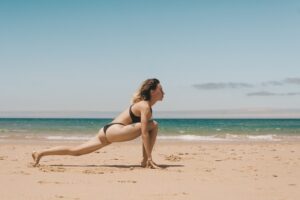
The 12-position sun salutation of the Bihar School, the Sivananda centres and the Art of Living has a similar kneeling lunge called Aśva Sañcalanāsana, equestrian pose. There the hands stay on the floor beside the front foot and the gaze lifts; in low lunge the torso comes upright and the arms go up. Same legs, different upper body and purpose.
Making low lunge work
Step one foot forward between the hands with the knee over the heel, lower the back knee and slide it back until you feel a comfortable stretch in the front of the back thigh and groin; the top of the back foot rests on the floor. AshtangaYoga.info suggests that if the back knee feels pressure, you lift it, move it further back and set it down again. A folded blanket under the knee helps most people.
Inhale and lift the torso, sweeping the arms up beside the ears. Rather than pushing the hips far forward and arching the lower back, draw the lower belly gently in and up so the stretch stays at the front of the back hip. Lift the chest; take the head back only if the neck is comfortable. Yoga Journal’s version holds about a minute; hands on the front thigh or on blocks are just as valid. To come out, lower the hands to the floor, tuck the back toes and step back.
Precautions in plain words
Yoga Journal lists heart problems among the cautions for low lunge; if that applies to you, keep the arms down and the effort moderate, and ask your doctor. With knee pain, pad the back knee well, or try the chair version; do not let the front knee move past the ankle. With lower back pain, keep the hands on the front thigh and avoid arching. If balance is shaky, keep the hands on blocks.
Āñjaneya is a name of Hanumān, the monkey god of the Rāmāyaṇa (son of Añjanā), so it is the pose named after Hanuman.
What is the difference between low lunge and equestrian pose?
Same kneeling legs. In low lunge the torso lifts and the arms reach up; in equestrian pose (Ashwa Sanchalanasana) the hands stay on the floor and the gaze lifts, as in the 12-position sun salutation.
My back knee hurts. What can I do?
Put a folded blanket under it, shift the knee slightly back so the weight is above the kneecap, or try the chair version.