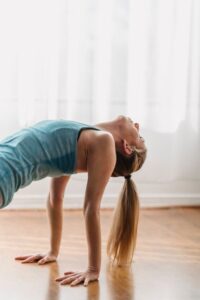
Reclining Hero Pose (Supta Virasana): steps, knee care and the bolster version
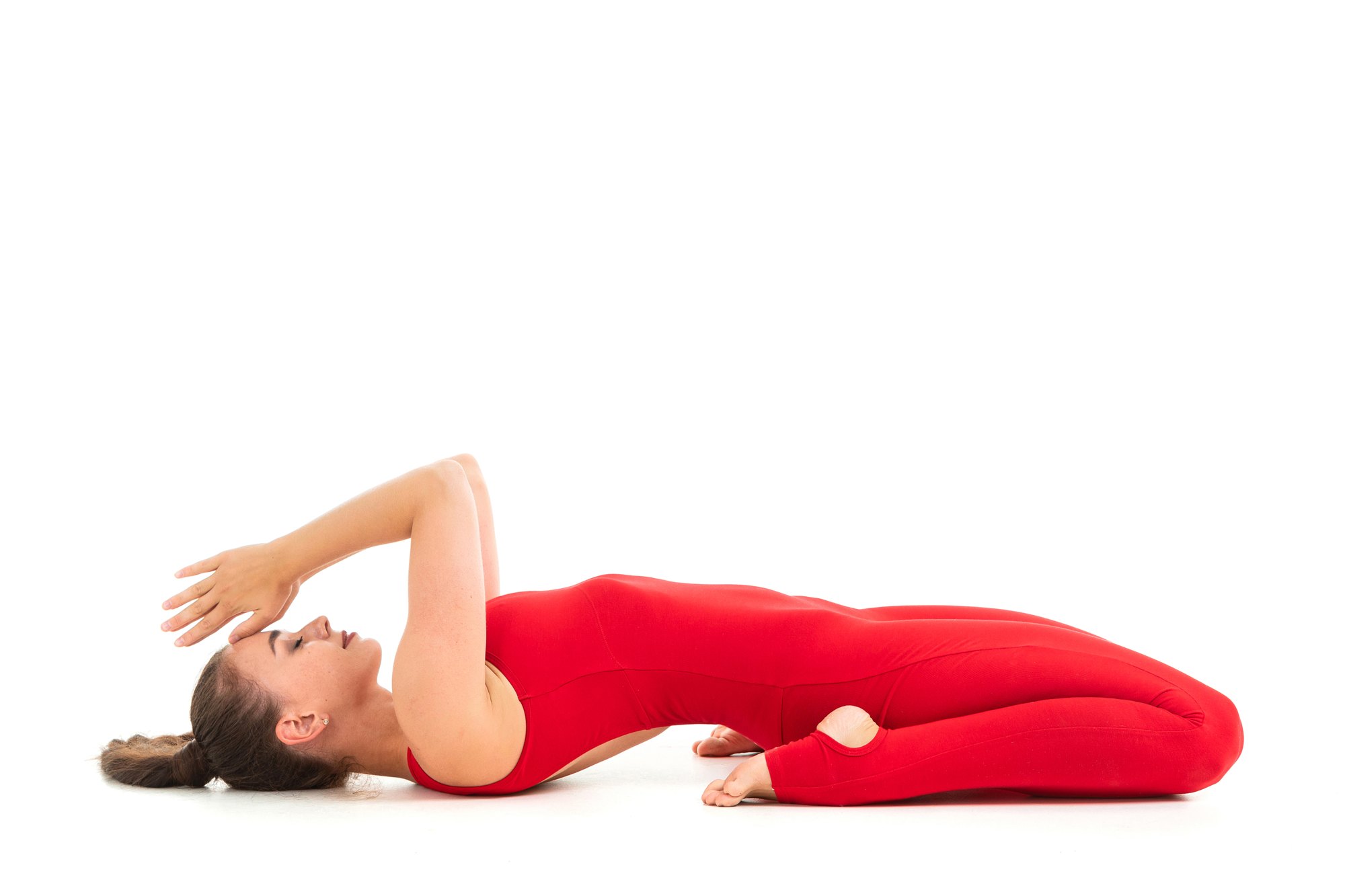
Reclining hero (Supta Virasana) leans back from hero pose to lie down, stretching the thighs, hip flexors and ankles. Intermediate for the knees; use a bolster.
By YogaVacation Editorial Team · Updated October 7, 2026 · Facts checked October 6, 2026
Not yet reviewed by a qualified teacher·Names and shape checked against 2 sources
Sitting comfortably in hero pose with the buttocks on the floor or a low block, without knee pain.
Body areas
Core, Feet and ankles, Hips, Legs, Spine
Props
Blanket, Block, Bolster, Mat, Strap
Practised
Solo
Names in different traditions
Tradition
Name used
Note
Iyengar (Light on Yoga)
Supta Vīrāsana
Asana 41, Plates 93-96: from Virasana recline onto the elbows, then the crown, then the back; arms overhead or by the thighs; beginners may keep the knees apart; up to 10-15 minutes. Continued as Paryankasana (asana 42).
Yoga Journal
Supta Virasana (Reclining Hero Pose)
Intermediate; only if you can sit easily between the feet; bolster support; 30 s to 1 min building to 5 min.
Yin yoga
Saddle
Related long-held shape; separate yin record yin-saddle.
Step by step
Coming into the pose
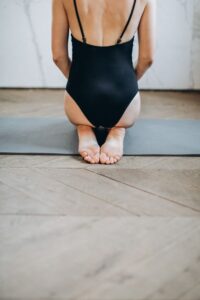
Sit in hero pose: knees together or slightly apart, feet beside the hips pointing straight back, buttocks on the floor or a block. Place a bolster lengthwise behind you if needed.
Exhale and lean back onto the hands, then onto the forearms and elbows one at a time.
On the elbows, use the hands to lengthen the buttock flesh toward the tailbone; draw the front ribs down.
In the pose
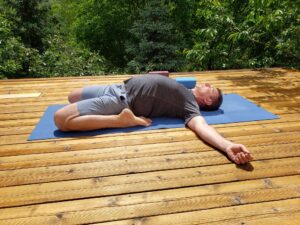
Lower the back onto the floor or bolster. Keep the thighs parallel and the knees no wider than the hips; arms by the sides or overhead.
Breathe quietly for 30 seconds to a minute at first, building up gradually.
Coming out
Press the forearms down, come onto the hands and lift the chest first to sit up in hero pose; then come out of hero carefully.
Breathing
Recline on an exhalation, breathe deeply and slowly in the pose, and come up on an exhalation.
Alignment cues
Feet beside the hips, pointing straight back.
Thighs parallel; knees no wider than the hips.
Front ribs soft; lower back long.
Shoulder blades on the floor when the arms go overhead.
Common alignment errors
Forcing the back to the floor while the knees hurt.
Knees splaying wide to make reclining easier.
Feet turned out or tucked under the thighs.
Lower back arching sharply with the ribs jutting up.
Coming up head first.
Modifications and easier variations
Half reclining hero: one leg folded back, the other knee bent with the foot on the floor; switch sides. block
Advanced variations
Paryankasana (couch pose): arch the back up onto the crown of the head, arms folded overhead (Light on Yoga).
Recline onto a bolster or stacked blankets; use as much height as you need. bolster
Sit on a block; a folded blanket under the knees or ankles. block
A strap around the mid-thighs if they slide apart. strap
Precautions
Knee pain: come up immediately; use more height or skip it.
Serious back, knee or ankle problems: only with an experienced teacher (Yoga Journal).
Lower back ache: raise the support behind you.
Feet must point straight back, never turned out.
Learn it with a teacher: Ask a teacher to set up the props the first time, especially if hero pose is new or your knees are sensitive.
General information, not medical advice. Poses do not cure illness. If you are pregnant, injured or have a health condition, check with your doctor and tell your teacher before you practise.
The shapes look alike, but yin yoga holds them for several minutes with the muscles soft and props for support, while the active version is held with muscular engagement for a few breaths. The instructions and the intention differ, so follow the page for the version you are practising.
Reclining Hero around the world
Share your Reclining Hero, wherever you are
In short: reclining hero is hero pose taken backwards: you sit between your heels with the knees bent and the feet beside the hips, then lean back onto the elbows and lie down. It stretches the front of the thighs, the hip flexors, the ankles and the belly. It is an intermediate pose for the knees: only try it if you can already sit comfortably in hero pose, and use a bolster behind you so the knees and lower back are never forced.
Many people know reclining hero as a long, quiet stretch after standing or at the end of a session, and Iyengar teachers often hold it for several minutes on a bolster. Below we explain the name, how to recline safely, the precautions, the bolster version and where it is taught.
The name
The Sanskrit name is Supta Vīrāsana: supta means lying down or reclining and vīra means hero, so “reclining hero”. It is the lying-down form of hero pose (Vīrāsana). Light on Yoga continues it into Paryaṅkāsana, the couch pose, in which the back arches up onto the crown of the head. Yin yoga has a related long-held shape called saddle, practised with relaxed muscles and different intentions. Do not confuse it with reclining thunderbolt, where the feet are under the buttocks rather than beside them.
How to make reclining hero work
Begin seated in hero pose, on the floor or on a block. Recline in stages: first onto the hands, then onto the elbows one at a time. Yoga Journal suggests pausing on the elbows to spread the flesh of the buttocks toward the tailbone with the hands, which lengthens the lower back. Then lower the back onto the floor or onto a bolster or folded blankets. If the front ribs jut up and the lower back arches sharply, the groins are tight: lift onto a higher support rather than forcing.
Keep the thighs parallel. A little space between the knees is fine, and Light on Yoga allows beginners to keep the knees apart, but do not let them splay wider than the hips. The knees can lift slightly from the floor. Rest the arms by the sides or stretch them overhead, without lifting the shoulder blades. Start with 30 seconds to a minute and build up gradually; Iyengar notes holds of 10 to 15 minutes for tired legs once the pose is comfortable. To come up, press the forearms down, come onto the hands and lift the chest first, then come out of hero pose carefully.
Precautions in plain words
The knees decide. If you feel pain in or around the knee, come up at once and use more height under the seat and behind the back. Yoga Journal cautions against the pose with serious back, knee or ankle problems unless an experienced teacher is helping you. Keep the feet pointing straight back beside the hips, never turned out under the thighs. If the lower back aches, raise the bolster. Come out slowly, because the knees and ankles may feel stiff.
Preparation and what comes next
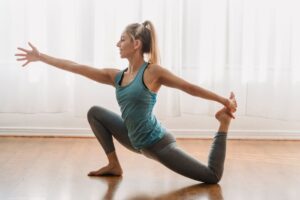
Prepare with hero pose, child’s pose, bound angle and a low lunge for the hip flexors. A gentler stage is half reclining hero, with one leg folded back and the other knee bent with the foot on the floor. Yoga Journal lists reclining hero as a useful preparation for many poses, including backbends such as camel and fish, and in Light on Yoga it is the starting point for the beginners’ route into Kapotasana.
Where it is taught
Reclining hero is a staple of Iyengar yoga (Light on Yoga), and appears in hatha and restorative classes on a bolster. Its yin counterpart is saddle.
Only if you can sit comfortably in hero pose first. Use a bolster and blocks, keep the feet pointing straight back and come up at the first sign of knee pain.
How is reclining hero different from yin saddle?
The shapes are related, but saddle is a yin pose held for minutes with relaxed muscles. Reclining hero keeps more alignment work and is usually held for shorter times.
How long should I stay?
Start with 30 seconds to a minute (Yoga Journal) and build up. Light on Yoga mentions 10 to 15 minutes once the pose is comfortable.