| 1 | Breathing exercise 1: Standing deep breathing (Pranayama) | Free breathing | n/a | sets as taught
Order per Alrefai et al. 2020 (Physiological Reports) and Nyer et al. 2019 (J Altern Complement Med) | Transition: Stand, fingers interlaced under the chin; inhale lifting the elbows, exhale lowering them with the head back. Easier option: Slow; arms lower. Breathing practice, not a posture: /breathing/pranayama/. |
| 2 | 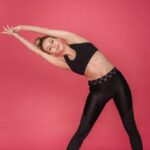 1. Half Moon Pose (Ardha Chandrasana, 26+2 version) | Free breathing | Each side | Varies by studio and teacher dialogue (two sets common)
Order per Alrefai et al. 2020 (Physiological Reports) and Nyer et al. 2019 (J Altern Complement Med) | Transition: Arms overhead, palms together; bend right, left, then back. Easier option: Smaller range. Standing side bend + backbend; not the one-legged half moon balance of Light on Yoga. |
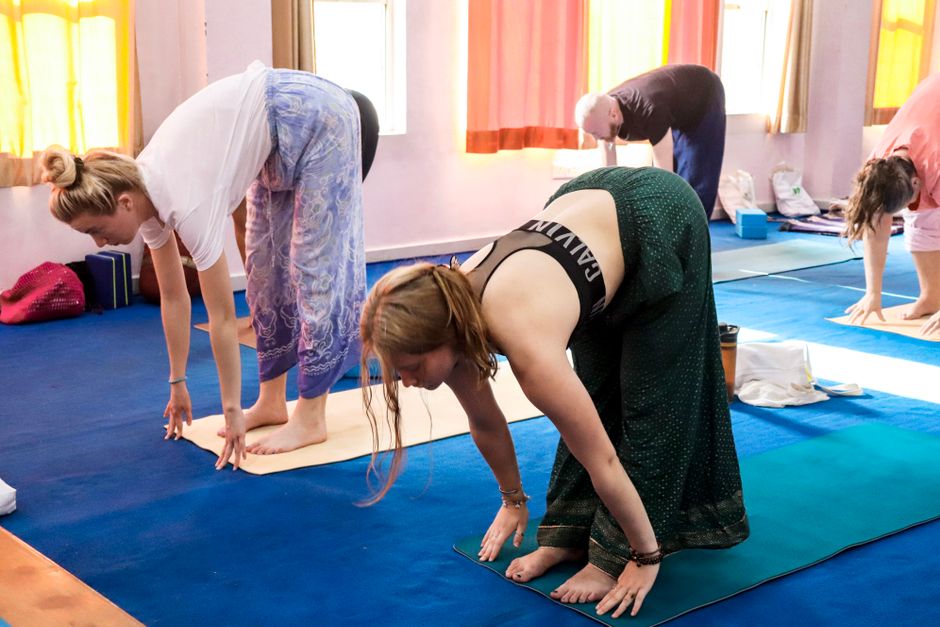
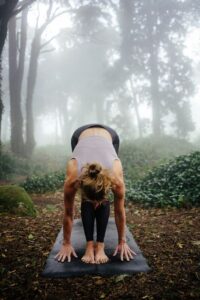
| 3 | 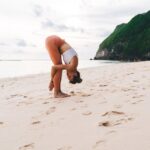 2. Hands to Feet Pose (Pada Hastasana)
Pādahastāsana | Free breathing | | Varies by studio and teacher dialogue (two sets common)
Order per Alrefai et al. 2020 (Physiological Reports) and Nyer et al. 2019 (J Altern Complement Med) | Transition: Fold forward, hands under the heels. Easier option: Bent knees. |
| 4 | 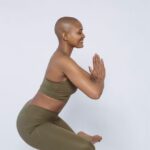 3. Awkward Pose (Utkatasana)
Utkaṭāsana | Free breathing | | Varies by studio and teacher dialogue (two sets common)
Order per Alrefai et al. 2020 (Physiological Reports) and Nyer et al. 2019 (J Altern Complement Med) | Transition: Three parts: chair, on the toes, and a low squat on the toes. Easier option: First part only. Includes stages beyond the chair pose record. |
| 5 | 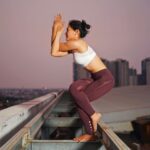 4. Eagle Pose (Garurasana)
Garuḍāsana | Free breathing | Each side | Varies by studio and teacher dialogue (two sets common)
Order per Alrefai et al. 2020 (Physiological Reports) and Nyer et al. 2019 (J Altern Complement Med) | Transition: Wrap arms and legs. Easier option: Toes of the wrapped foot on the floor. |
| 6 | 5. Standing Head to Knee Pose (Dandayamana Janushirasana) | Free breathing | Each side | Varies by studio and teacher dialogue (two sets common)
Order per Alrefai et al. 2020 (Physiological Reports) and Nyer et al. 2019 (J Altern Complement Med) | Transition: Standing on one leg, hold the other foot, extend the leg forward, forehead to knee. Easier option: Hold the foot with the knee bent. No pose record yet; related: extended hand to big toe pose. Demanding balance. |
| 7 | 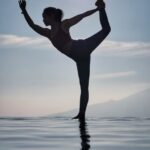 6. Standing Bow Pulling Pose (Dandayamana Dhanurasana)
Naṭarājāsana | Free breathing | Each side | Varies by studio and teacher dialogue (two sets common)
Order per Alrefai et al. 2020 (Physiological Reports) and Nyer et al. 2019 (J Altern Complement Med) | Transition: Kick the held foot back and up, arm forward. Easier option: Smaller kick; hand on a wall. Close to the dancer pose record. |
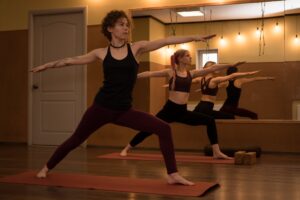
| 8 | 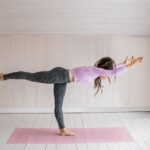 7. Balancing Stick Pose (Tuladandasana)
Vīrabhadrāsana III | Free breathing | Each side | Varies by studio and teacher dialogue (two sets common)
Order per Alrefai et al. 2020 (Physiological Reports) and Nyer et al. 2019 (J Altern Complement Med) | Transition: Arms overhead, tilt forward into a T on one leg. Easier option: Lift the back leg less. Shape close to Warrior III with the arms forward. |
| 9 | 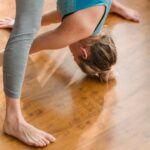 8. Standing Separate Leg Stretching Pose
Prasārita Pādottānāsana | Free breathing | | Varies by studio and teacher dialogue (two sets common)
Order per Alrefai et al. 2020 (Physiological Reports) and Nyer et al. 2019 (J Altern Complement Med) | Transition: Feet wide, fold, hold the heels. Easier option: Bent knees. |
| 10 | 9. Triangle Pose (Trikanasana, 26+2 version) | Free breathing | Each side | Varies by studio and teacher dialogue (two sets common)
Order per Alrefai et al. 2020 (Physiological Reports) and Nyer et al. 2019 (J Altern Complement Med) | Transition: Wide stance, front knee bent to a right angle, one arm down, one up. Easier option: Front knee less bent. Bent-knee version; differs from the triangle pose record (straight legs). |
| 11 | 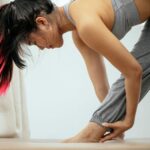 10. Standing Separate Leg Head to Knee Pose
Pārśvottānāsana | Free breathing | Each side | Varies by studio and teacher dialogue (two sets common)
Order per Alrefai et al. 2020 (Physiological Reports) and Nyer et al. 2019 (J Altern Complement Med) | Transition: Hands in prayer overhead, fold over the front leg, forehead to knee. Easier option: Hands on blocks. Close to pyramid pose. |
| 12 |  11. Tree Pose (called Tadasana in this sequence)
Vṛkṣāsana | Free breathing | Each side | Varies by studio and teacher dialogue (two sets common)
Order per Alrefai et al. 2020 (Physiological Reports) and Nyer et al. 2019 (J Altern Complement Med) | Transition: Foot in half lotus at the hip, hands in prayer. Easier option: Sole on the inner thigh (tree pose record). Name differs: Tadasana is mountain pose elsewhere. |
| 13 | 12. Toe Stand (Padangustasana) | Free breathing | Each side | Varies by studio and teacher dialogue (two sets common)
Order per Alrefai et al. 2020 (Physiological Reports) and Nyer et al. 2019 (J Altern Complement Med) | Transition: From tree, fold and lower onto the toes of the standing foot. Easier option: Stay in tree. Knee caution: skip with knee problems. |
| 14 | 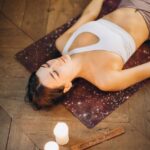 13. Dead Body Pose (Savasana)
Śavāsana | Free breathing | | a short rest
Varies by studio and teacher dialogue (two sets common) | Transition: Lie on the back; start of the floor series. |
| 15 | 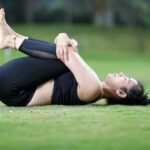 14. Wind Removing Pose (Pavanamuktasana)
Pavanamuktāsana | Free breathing | Each side | Varies by studio and teacher dialogue (two sets common)
Order per Alrefai et al. 2020 (Physiological Reports) and Nyer et al. 2019 (J Altern Complement Med) | Transition: Right knee to the chest, left, then both. |
| 16 | Sit-up (transition) | Exhale | n/a | | Transition: Arms overhead, sit up and touch the toes; repeated between floor postures. Easier option: Roll to the side and come up. Counted as a posture in some lists; a transition here. |
| 17 | 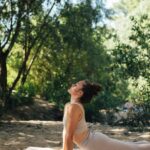 15. Cobra Pose (Bhujangasana)
Bhujaṅgāsana | Free breathing | | Varies by studio and teacher dialogue (two sets common)
Order per Alrefai et al. 2020 (Physiological Reports) and Nyer et al. 2019 (J Altern Complement Med) | Transition: Lie on the belly, hands under the shoulders, lift. Easier option: Low cobra. |
| 18 | 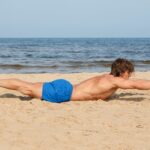 16. Locust Pose (Salabhasana)
Śalabhāsana | Free breathing | Each side | Varies by studio and teacher dialogue (two sets common)
Order per Alrefai et al. 2020 (Physiological Reports) and Nyer et al. 2019 (J Altern Complement Med) | Transition: Arms under the body; one leg, the other, then both. Easier option: One leg at a time only. |
| 19 | 17. Full Locust Pose (Poorna Salabhasana)
Śalabhāsana | Free breathing | | Varies by studio and teacher dialogue (two sets common)
Order per Alrefai et al. 2020 (Physiological Reports) and Nyer et al. 2019 (J Altern Complement Med) | Transition: Arms out to the sides like wings, lift arms, chest and legs. Easier option: Lift the chest only. Variation of the locust record. |
| 20 | 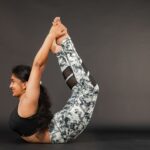 18. Bow Pose (Dhanurasana)
Dhanurāsana | Free breathing | | Varies by studio and teacher dialogue (two sets common)
Order per Alrefai et al. 2020 (Physiological Reports) and Nyer et al. 2019 (J Altern Complement Med) | Transition: Hold the feet and kick up. Easier option: Strap; half bow. |
| 21 | 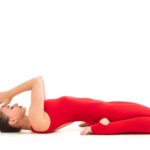 19. Fixed Firm Pose (Supta Vajrasana, 26+2 version)
Supta Vīrāsana | Free breathing | | Varies by studio and teacher dialogue (two sets common)
Order per Alrefai et al. 2020 (Physiological Reports) and Nyer et al. 2019 (J Altern Complement Med) | Transition: Sit between the heels, lie back. Easier option: Lean back on the elbows; blanket under the back. Shape matches reclining hero; name collides with Ashtanga Supta Vajrasana (lotus). |
| 22 | 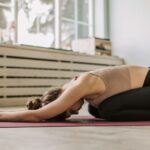 20. Half Tortoise Pose (Ardha Kurmasana)
Bālāsana | Free breathing | | Varies by studio and teacher dialogue (two sets common)
Order per Alrefai et al. 2020 (Physiological Reports) and Nyer et al. 2019 (J Altern Complement Med) | Transition: Kneel, arms overhead, fold forward with the forehead and hands on the floor. Related to child pose with the arms extended; no separate record. |
| 23 | 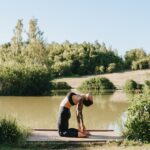 21. Camel Pose (Ustrasana)
Uṣṭrāsana | Free breathing | | Varies by studio and teacher dialogue (two sets common)
Order per Alrefai et al. 2020 (Physiological Reports) and Nyer et al. 2019 (J Altern Complement Med) | Transition: Kneel, hands to the heels. Easier option: Hands on the lower back. Deep backbend. |
| 24 | 22. Rabbit Pose (Sasangasana) | Free breathing | | Varies by studio and teacher dialogue (two sets common)
Order per Alrefai et al. 2020 (Physiological Reports) and Nyer et al. 2019 (J Altern Complement Med) | Transition: Kneel holding the heels, round forward onto the crown of the head, hips lift. Easier option: Less weight on the head; skip with neck problems. No pose record yet. |
| 25 | 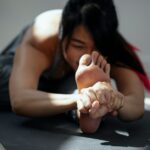 23. Head to Knee Pose (Janushirasana)
Jānu Śīrṣāsana | Free breathing | Each side | Varies by studio and teacher dialogue (two sets common)
Order per Alrefai et al. 2020 (Physiological Reports) and Nyer et al. 2019 (J Altern Complement Med) | Transition: One leg bent, fold over the straight leg. Easier option: Bent knee. Some lists combine 23 and 24. |
| 26 | 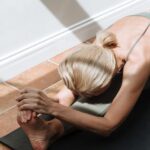 24. Stretching Pose (Paschimotthanasana)
Paścimottānāsana | Free breathing | | Varies by studio and teacher dialogue (two sets common)
Order per Alrefai et al. 2020 (Physiological Reports) and Nyer et al. 2019 (J Altern Complement Med) | Transition: Both legs straight, fold. Easier option: Bent knees. |
| 27 | 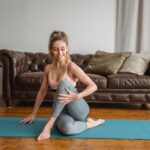 25. Spine Twisting Pose (Ardha Matsyendrasana)
Ardha Matsyendrāsana | Free breathing | Each side | Varies by studio and teacher dialogue (two sets common)
Order per Alrefai et al. 2020 (Physiological Reports) and Nyer et al. 2019 (J Altern Complement Med) | Transition: Seated twist, each side. Easier option: Bottom leg straight. Also item 25 in the two studies, which number the breathing exercises and the sit-up inside the 26. |
| 28 | Breathing exercise 2: Blowing in Firm Pose (Kapalbhati in Vajrasana) | Free breathing | n/a | sets as taught
Order per Alrefai et al. 2020 (Physiological Reports) and Nyer et al. 2019 (J Altern Complement Med) | Transition: Kneel in thunderbolt pose; forceful exhalations through the mouth. Easier option: Gentle exhalations; skip with high blood pressure, heart conditions or pregnancy. Breathing practice, not a posture: /breathing/kapalabhati/. |
| 29 | Final Savasana
Śavāsana | Free breathing | | a few minutes
Varies by studio and teacher dialogue (two sets common) | Transition: Lie down to finish. |