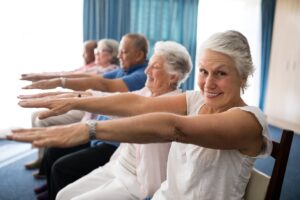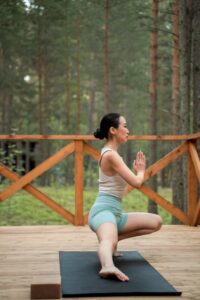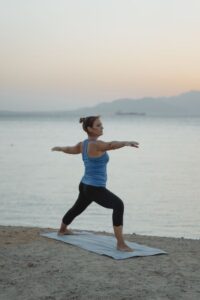

This chair yoga sequence is a 20-minute routine done sitting on, or standing beside, a sturdy chair. It moves the spine in every direction, wakes up the hips, knees and ankles, and stretches the shoulders and neck, without getting down to the floor. It is a newly designed educational sequence by YogaVacation, written for older adults, people with limited mobility, and anyone who sits at a desk all day. Chair yoga has no fixed traditional order.
Chair-based yoga is widely taught and has been studied in trials with older adults, for example an eight-week chair yoga programme for people with lower-limb osteoarthritis and the Gentle Years Yoga trial of a 12-week chair-based programme in England and Wales. Those studies looked at their own programmes, not this one. See chair yoga for more about the style.
Setting up
Use a stable chair without wheels or arms, its back against a wall. Sit towards the front edge with the feet flat and hip-width apart; if the feet do not reach the floor, put a block or a thick book under them. Keep a cushion handy for the lower back. For the two standing steps, stand behind the chair and hold its back.
The order, step by step
We built the order to warm up gently, move the spine in each direction, then work down to the hips, knees and feet before standing. It starts with about a minute of seated mountain: sit tall, hands on the thighs, and let each exhale grow a little longer. Then comes seated cat-cow, lifting the chest on the inhale and rounding the back on the exhale, which wakes up the whole spine. Arm raises follow, so the shoulders open while the breath stays steady.
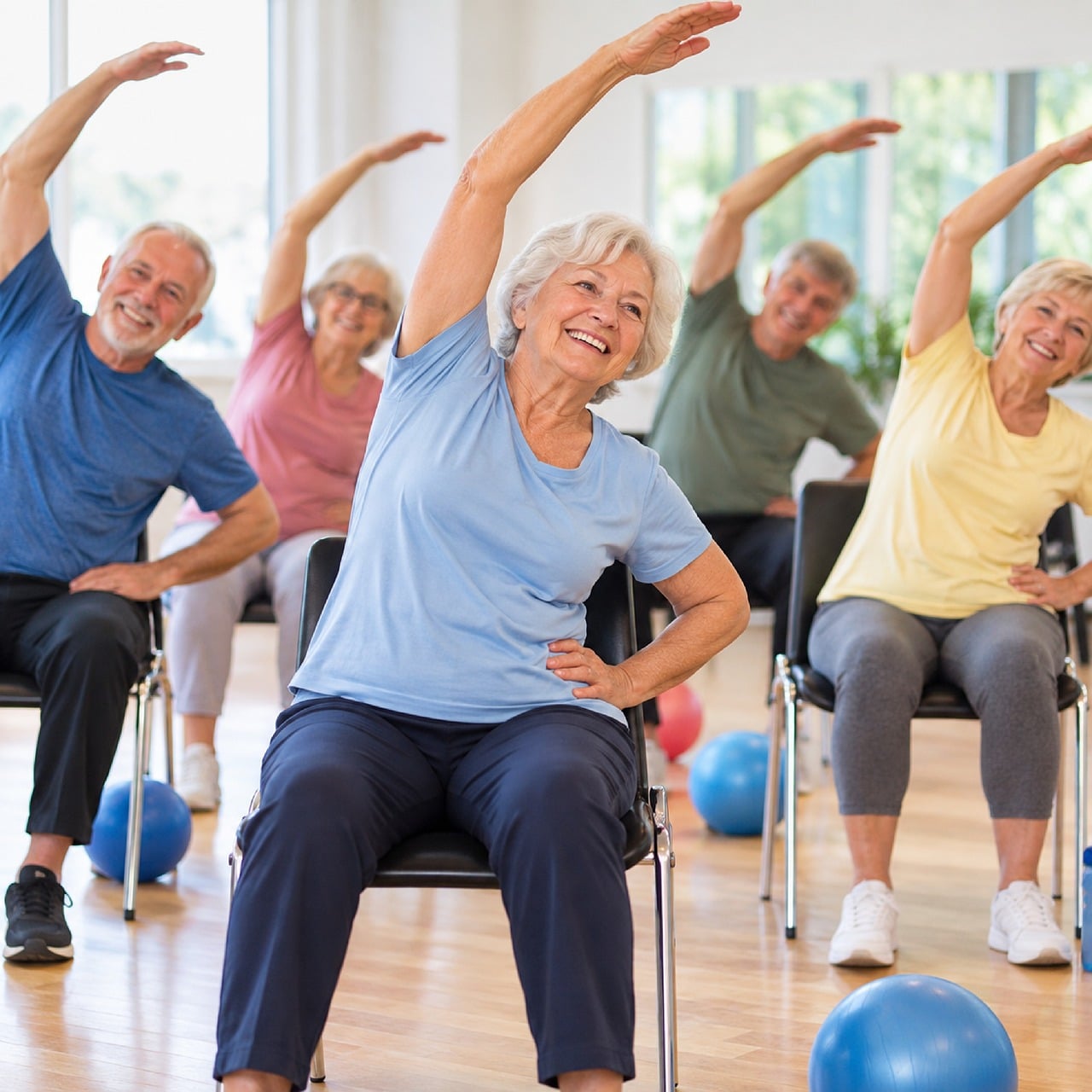
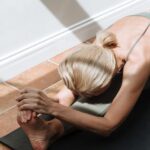
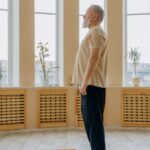
Next the spine moves sideways (the seated side bend) and then turns (the seated twist): sit tall on the inhale and bend or turn on the exhale. The seated forward fold, forearms on the thighs, brings the spine forward and lets the back relax. Ankle circles and toe lifts get the feet and ankles moving, which helps before you stand. The seated figure four stretches the outer hip, and seated warrior II, sitting sideways on the seat, gives the legs some work. Then you stand behind the chair for mountain and heel raises, holding the chair back the whole time, and finish with two minutes of rest, sitting back with the eyes closed or open. All of these timings are our suggestion, not a traditional count.
How the counting and sides work
Moving steps (cat-cow, arm raises, ankle circles) are repeated five to eight times with the breath: inhale to lift or open, exhale to fold or twist. Held steps (side bend, twist, forward fold, figure four) stay for three to five breaths. Side bend, twist, figure four and the seated warrior are done on the right, then the left. These counts are our suggestion. One pass through the list is the practice.
How to practise it safely
- Move within a comfortable range. No movement should cause pain.
- Hip replacement: ask your surgeon or physiotherapist before the figure-four stretch and deep forward folds; some precautions limit hip bending and crossing the legs.
- Osteoporosis: keep the forward fold small with a long spine, and twist gently; avoid rounding forward under load.
- Dizziness or low blood pressure: come up from the forward fold slowly, head last, and sit for a few breaths before standing.
- Neck problems: keep neck movements small and slow; skip the head rolls.
The US National Center for Complementary and Integrative Health (NCCIH) says yoga is generally considered safe for healthy people when done properly with a qualified instructor, but that older adults may need to be particularly careful: yoga injuries treated in emergency departments are more common in people 65 and older than in younger adults. It suggests that older adults, pregnant women and people with health conditions talk with their health care providers and their yoga teacher about their needs, and it names knee or hip injuries, lumbar spine disease, severe high blood pressure, balance problems and glaucoma as conditions that may call for changes. That is one reason this plan stays seated for most of the time and keeps a hand on the chair whenever you stand.
If you have a health condition, ask your doctor or physiotherapist whether this kind of exercise suits you. This sequence has not yet been reviewed by a qualified teacher.
Easier alternatives and next steps
Make it shorter by doing only the first six steps; leave out the standing steps if balance is uncertain. When this feels easy, try the chair sun salutation or the seated moon salutation, or the standing-only gentle standing sun salutation.
A few other ways to make it easier: do every step at half the range; take the arm raises one arm at a time; keep both hands on the thighs in the twist; and stay seated for the standing steps, lifting the heels from the chair instead. If you are short on time, the breathing, cat-cow, twist and ankle steps alone make a good three-minute break.
When to practice it
Any time of day works. Many people like it in the morning to loosen up, or in the middle of a long stretch at a desk. Leave a little time after a large meal before the forward fold and twist. Wear comfortable clothes, take off shoes that pinch, and keep water nearby. Doing the sequence a few times a week, at an easy pace you can enjoy, matters more than doing each step perfectly.