Upward Salute (Urdhva Hastasana): arms overhead without the backbend

Upward salute (Urdhva Hastasana) raises the arms overhead from mountain pose and lengthens the whole body. It opens most sun salutations; the aim is length, not a backbend.

Not yet reviewed by a qualified teacher Names and shape checked against 5 sources

Silhouette of a person in water with outstretched arms during a vibrant sunset.
Sanskrit name
Ūrdhva Hastāsana ऊर्ध्व हस्तासन (source)
Pronunciation
OORD-vah hahs-TAHS-ah-nah (source)
Also called
Raised Arms Pose, Raised Hands Pose, Upward Hands Pose, Talasana (palm tree pose, per Yoga Journal), Urdhva Vrksasana (AshtangaYoga.info label)
Other spellings
Urdhva Hastasana
Pose family
Standing
Starting position
Standing
Movement
Neutral rest
Taught in
Vinyasa Yoga: Flow, Breath and What to Expect, Hatha Yoga: The Historical Term and the Modern Class, Chair Yoga: Seated and Chair-Supported Practice
Difficulty
Beginner
Prerequisite skills
A steady mountain pose and comfortable range to lift the arms; the arms can stay wide or lower if the shoulders are tight.
Body areas
Arms and wrists, Shoulders, Spine
Props
Chair, None, Strap
Practised
Solo

Names in different traditions

TraditionName usedNote
Yoga Journal / Yoga InternationalUrdhva Hastasana (Upward Salute)Arms overhead from mountain pose, palms facing; opening position of most sun salutations.
Ashtanga vinyasa (AshtangaYoga.info)Ūrdhva VṛkṣāsanaLabel used for movement 1 of Surya Namaskara A in AshtangaYoga.info’s picture list.
Iyengar (Light on Yoga)Tadasana with arms overhead (Plate 12)Described as the ideal form of Tadasana and the start of Utkatasana and Virabhadrasana I; not given its own name.
Bihar School / Sivananda / Art of LivingHasta UttanasanaRaised arms WITH a backward bend in the 12-position sun salutation: a separate record.

Step by step

Coming into the pose

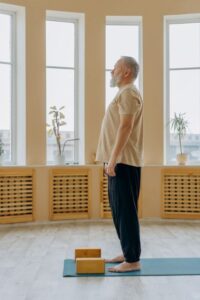
  1. Stand in mountain pose with the weight even over both feet.
  2. Inhale and sweep the arms out to the sides and up overhead, shoulder-width apart, palms facing each other.

In the pose

  1. Reach up through the fingertips while the feet press down. Let the shoulder blades move up and out as the arms rise.
  2. Soften the front ribs down toward the hip bones so the lower back does not arch. Keep the chin level, or look up at the thumbs if the neck is comfortable.
  3. If the arms stay straight, you can join the palms. Stay for a few breaths, or move straight on in a sun salutation.

Coming out

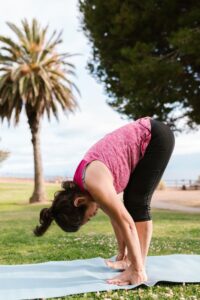
  1. Exhale and lower the arms to the sides, or fold forward into standing forward fold.

Breathing

Raise the arms on an inhalation and lower them, or fold forward, on an exhalation. In a sun salutation this is one breath; held on its own, breathe slowly through the nose.

Alignment cues

  • Feet grounded, legs active as in mountain pose.
  • Arms shoulder-width apart, palms facing, upper arms near the ears if the shoulders allow.
  • Shoulder blades rotate up and out with the arms; do not force them down.
  • Front ribs soft, lower back long.

Common alignment errors

  • Flaring the front ribs and arching the lower back to get the arms higher.
  • Bending the elbows to join the palms.
  • Throwing the head back and squeezing the back of the neck.
  • Lifting and tensing the shoulders around the ears.

Modifications and easier variations

  • Feet hip-width apart, arms in a wide V or slightly forward. none
  • Lying version: lie on your back and take the arms overhead along the floor, keeping the natural curves of the spine. mat

Advanced variations

Props and chair adaptations

  • A strap looped around the upper arms just above the elbows, at shoulder width, helps keep the arms straight and parallel. strap
  • Seated upward salute: sit tall near the front of a chair, feet flat, and raise the arms overhead. chair

Precautions

  • Shoulder injury or pain when lifting the arms: keep the arms lower or the hands on the hips.
  • Neck problems: keep the gaze forward rather than looking up.
  • If raising the arms makes you dizzy, move slowly and breathe evenly.

Learn it with a teacher: You can learn it on your own. After shoulder surgery or with ongoing shoulder pain, ask a physiotherapist or experienced teacher how high to take the arms.

General information, not medical advice. Poses do not cure illness. If you are pregnant, injured or have a health condition, check with your doctor and tell your teacher before you practise.

In short: upward salute is mountain pose with the arms raised overhead: feet grounded, legs active, arms reaching up beside the ears and the whole body lengthening from the floor to the fingertips. It is the first movement of most sun salutations. The aim is length, not a backbend: keep the front ribs soft and let the arms go wider if the shoulders are tight.

Raising the arms sounds easy, yet it shows quickly whether the shoulders move freely and whether the lower back arches to make up for them. Upward salute is a good place to learn that difference. Below we explain the name, how the shoulders work in the pose, the precautions and where it appears in a practice.

The name and its relatives

The Sanskrit name is Ūrdhva Hastāsana: ūrdhva means upward, hasta hand and āsana posture, so “raised hands pose”. Yoga Journal and Yoga International both use the name for this shape, and Yoga Journal notes it is sometimes also called Talasana, the palm tree pose. In Light on Yoga, B.K.S. Iyengar describes the arms stretched overhead with the palms joined as the ideal form of mountain pose, and starts chair pose and warrior I from it, without giving it a separate name.

Names differ between schools. AshtangaYoga.info, in its picture list of Sun Salutation A, labels this first movement Ūrdhva Vṛkṣāsana (upward tree). The 12-position sun salutation taught by the Bihar School of Yoga, the Sivananda centres and the Art of Living uses a deliberate backward bend at this point, called Hasta Uttānāsana; that shape has its own page, raised arms with backbend. The Bihar School also calls a different arms-up exercise, rising onto the toes, “Tadasana (the palm tree pose)”.

Making upward salute work

Build it from the ground: set up a steady mountain pose first, with the weight spread over both feet. As you inhale, sweep the arms up, shoulder-width apart, palms facing each other. Let the shoulder blades move up and outward as the arms rise; that rotation is what lets the arms go overhead without pinching. Forcing the shoulders down while the arms are up works against it.

The most common compensation is in the ribs and lower back: when the shoulders run out of range, the front ribs flare and the lower back arches. Yoga Journal’s teaching cue is to soften the front ribs down toward the hip bones. If that is hard with the arms beside the ears, open the arms into a wide V or bring them slightly forward. Join the palms and look at the thumbs only if the arms stay straight and the neck stays easy.
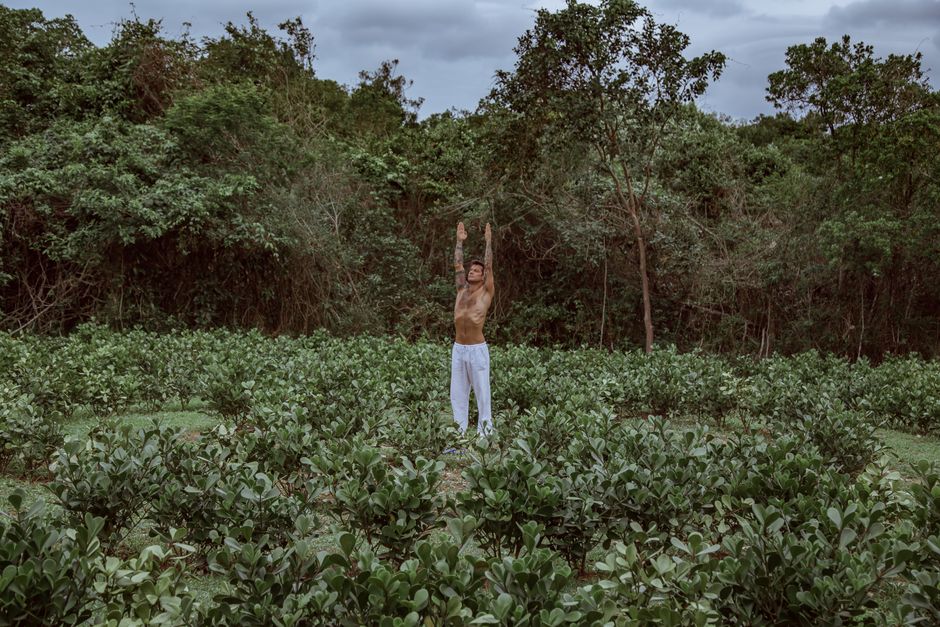
Shirtless man practicing yoga with arms raised in a green field, promoting wellness and mindfulness.

Precautions in plain words

With a shoulder injury or pain when lifting the arms, keep the arms lower, in a V, or rest the hands on the hips. If looking up strains the neck, keep the gaze forward. People who feel dizzy when raising the arms quickly can move more slowly and breathe evenly. Ask a teacher or physiotherapist about overhead movement after shoulder surgery.

Preparation and what comes next

Mountain pose is the only preparation needed. In a sun salutation upward salute leads into standing forward fold on the exhale, and in Sun Salutation B the same arm position is held while the knees bend into chair pose. Warrior I and high lunge use the same arms with the legs in a lunge.

Where it is taught

It opens Sun Salutation A in Ashtanga and most vinyasa classes (see our sun salutation guide), and it is used in hatha and Iyengar classes as a standing stretch. A chair version, arms raised while seated, fits easily into chair yoga.
Preparatory poses

Follow-up poses and transitions

Counterposes

Related poses

More standing poses

Frequently asked questions

What is upward salute in Sanskrit?

Ūrdhva Hastāsana, usually written Urdhva Hastasana: raised hands pose. Some Ashtanga sources label the same movement Urdhva Vrksasana.

Is upward salute a backbend?

Not in this version: the aim is to lengthen upward with the lower back long. The 12-position sun salutation adds a deliberate backward bend at this point, called Hasta Uttanasana.

What if I cannot straighten my arms overhead?

Take the arms wider into a V or slightly forward, or loop a strap around the upper arms. Straight, comfortable arms matter more than palms touching.

Sources

  1. Upward Salute (Urdhva Hastasana), Yoga Journal (accessed October 6, 2026)
  2. Upward Bow Basics Part 1 (urdhva hastasana, upward salute, as a preparatory pose), Yoga International (accessed October 6, 2026)
  3. Surya Namaskara A (movement 1 labelled Urdhva Vriksasana), AshtangaYoga.info (Dr. Ronald Steiner) (accessed October 6, 2026)
  4. B.K.S. Iyengar, Light on Yoga: Tadasana (arms overhead ideal), Plate 12 in Utkatasana and Virabhadrasana I, Internet Archive (Digital Library of India copy) (accessed October 6, 2026)
  5. Swami Satyananda Saraswati, Asana Pranayama Mudra Bandha: Surya Namaskara position 2, Hasta Uttanasana, Bihar School of Yoga (Internet Archive copy) (accessed October 6, 2026)

Facts checked on October 6, 2026