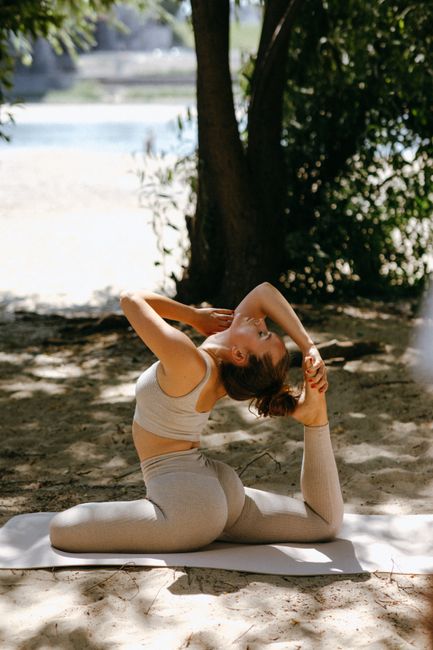
Knowing poses is one thing; knowing what to do when you unroll your mat at home is another. Our practice plans solve that. Each yoga sequence here is a ready-made routine with its length, level, focus and props stated at the top, the poses in order with how long to hold them, and simpler options for every step. Pick one that fits the time you have and press play on your own practice.
In short: choose a plan by how much time you have, your level and what you want from the session (waking up, winding down, flexibility, a flowing warm-up). Beginners should start with the sun salutation or a short morning plan. Every plan links to full guides for its poses, and every pose has an easier version.
Start here: three steps
- Learn one short sequence. The sun salutation is the classic place to begin: a few minutes long, used in many styles, and easy to adapt.
- Add a plan for your day. Try the 15-minute morning yoga sequence to wake up, or the 10-minute bedtime yoga wind-down in the evening.
- Choose a goal. When you’re ready for a little more, the 20-minute yoga for flexibility plan works through the hips, hamstrings and spine.
Traditional sequences and newly designed flows
A pose (asana) is one posture; a sequence arranges several poses in an order, usually with the breath. That is why the sun salutation lives here and not in the pose library: it is a sequence, and each of its steps links to the pose’s own guide. Larger, established practices that belong to one tradition, such as the Ashtanga primary series or the Sivananda 12 basic postures, have their own section: traditional practice series.
Every sequence page says which kind it is:
- Fixed, traditional order: a tradition practises these steps in this order, and the page names the tradition and its source.
- Traditional, but varies by school: the sequence is old or widely shared, but schools order or count it differently. The page names the version it shows. The moon salutation, for example, has no single fixed order.
- Newly designed educational flow: an order we or a named teacher put together for a purpose, such as a morning routine or a warrior flow. These are useful, but they are not traditional sequences, and we say so.
Each sequence lists its steps in a numbered table, with the breath, the side, suggested holds (and whose version they come from), transitions and an easier option for each step, plus a printable view for your mat.
How to find the right yoga sequence
Use the filters in the directory below to narrow the plans down:
| Filter | Options | Tip |
|---|---|---|
| Length | Under 10 minutes, 10–20 minutes, 20–40 minutes, longer | Short and regular beats long and rare |
| Level | Beginner, all levels, intermediate, advanced | If you are new, stay with beginner or all-levels plans for the first few weeks |
| Focus | Morning, evening, flexibility, gentle, strength, balance, restorative and more | Match the plan to the time of day and how you feel |
| Props | None, block, strap, bolster, blanket, chair, wall | Plans that list props still work with household substitutes |
Filtered views are just shortcuts; every plan also appears in the full list.
How our practice plans are built
Every plan follows the same template so you always know what you’re getting:
- The essentials at the top: level, total time, the equipment you’ll need and the focus of the session.
- Poses in order: each step shows the pose, how long to stay (in breaths or seconds), which side, and a short note. Each pose links to its full guide in the pose directory with steps, alignment cues, props and cautions.
- Options: an easier version of each demanding step, and a shorter version of the whole plan for busy days.
- How to finish: every plan ends with rest, usually in corpse pose, because ending calmly is part of the practice.
The order of poses follows principles most teachers share: warm up the spine and large joints first, move from simpler to more demanding shapes, balance forward bends with gentle backbends, and wind down before resting. Plans are written from published teaching traditions and our pose guides; they are general routines, not personal programs or therapy.
Beginner plans first
If you are new to yoga, these are the plans to try, in this order:
- Sun salutation, starting with the half version and stepping rather than jumping.
- Morning yoga, a short wake-up routine.
- Bedtime yoga, gentle floor poses to slow down before sleep.
Before your first home session, it helps to have learned the basic shapes in a class. Our beginner yoga poses and yoga for beginners guides cover that ground, including a four-week starter plan.
Breath in every plan
Each plan suggests how to breathe: usually slow, steady breathing through the nose, with the movement following the breath rather than the other way round. Some flowing sequences link one movement to each inhale or exhale. If breath work interests you, start with diaphragmatic breathing; teachers of flowing styles often use ujjayi breathing, which is best learned in class.
Plans by style
Some sequences belong to particular styles. The sun salutation is central to Ashtanga and vinyasa classes, while long-hold floor sequences come from yin and restorative yoga. If you prefer to sit or need support, chair yoga adapts many poses for a chair. The types of yoga comparison explains each style.
Props that make plans easier
You can do every plan with a mat and household items, but a few props make a real difference:
- Blocks bring the floor closer in standing poses and forward folds. See yoga blocks.
- A bolster or firm cushions support restful poses. See yoga bolsters.
- A blanket pads the knees and keeps you warm in the final rest.
- A mat with good grip matters most in flowing plans. See our yoga mat guide.
Practicing safely at home
- Practice poses you have already learned with a teacher, and build up gradually.
- Move slowly and breathe smoothly. If you can’t breathe easily, ease off.
- Stop any pose that causes sharp, pinching or electric pain.
- If you are pregnant, older, injured or have a health condition, check with your doctor first and choose plans marked gentle. Our guides on prenatal yoga and yoga for older adults explain what to change.
The U.S. National Center for Complementary and Integrative Health notes that yoga is generally safe for healthy people under a qualified teacher, that learning entirely without supervision has been linked to more injuries, and that some conditions call for modified poses. Plans on this site are general information, not medical advice.
More plans on the way
We are adding plans for desk breaks, travel days, strength, balance and prop-supported practice. Each one will follow the same template and link to its pose guides. Browse every current plan below.
All sequences and flows
Fixed, traditional order
| Name | Tradition | Order | Time | Level |
|---|---|---|---|---|
| Sun Salutation A Sūrya Namaskāra A | Ashtanga vinyasa yoga (K. Pattabhi Jois lineage, Mysore) | Fixed, traditional order | 5 min | Intermediate |
| Sun Salutation B Sūrya Namaskāra B | Ashtanga vinyasa yoga (K. Pattabhi Jois lineage, Mysore) | Fixed, traditional order | 8 min | Intermediate |
Traditional, but varies by school
| Name | Tradition | Order | Time | Level |
|---|---|---|---|---|
| Kripalu Moon Salutation Candra Namaskāra | Kripalu Yoga (Kripalu Center for Yoga & Health) | Traditional, but varies by school | 10 min | Intermediate |
| Moon Salutation Candra Namaskāra | Modern; versions from Kripalu, ParaYoga and others | Traditional, but varies by school | 10 min | Beginner, Intermediate |
| Common Vinyasa Transition | Ashtanga vinyasa and modern vinyasa / flow classes | Traditional, but varies by school | 2 min | Intermediate |
| 12-Position Sun Salutation Sūrya Namaskāra | Sivananda Yoga (Sivananda Yoga Vedanta Centres); Bihar School of Yoga / Satyananda (variant) | Traditional, but varies by school | 10 min | Beginner |
Newly designed educational flow
| Name | Tradition | Order | Time | Level |
|---|---|---|---|---|
| Evening / Bedtime Yoga | Modern hatha (YogaVacation educational flow) | Newly designed educational flow | 15 min | Beginner |
| Beginner Sun Salutation | YogaVacation educational flow (based on the 12-position and Ashtanga sun salutations) | Newly designed educational flow | 8 min | Beginner |
| Chair Sun Salutation | YogaVacation educational flow (chair yoga) | Newly designed educational flow | 5 min | Beginner |
| Chair Yoga Sequence | Chair yoga (modern adaptive yoga) | Newly designed educational flow | 20 min | Beginner |
| Crow Pose Preparation | Modern hatha (YogaVacation peak-pose sequence) | Newly designed educational flow | 20 min | Intermediate |
| Dancing Warrior | Modern vinyasa (name used by many teachers; no single source) | Newly designed educational flow | 10 min | Intermediate |
| Gentle Moon Salutation | Kripalu Yoga | Newly designed educational flow | 10 min | Beginner |
| Gentle Standing Sun Salutation | YogaVacation educational flow | Newly designed educational flow | 6 min | Beginner |
| Headstand Preparation | Modern hatha (YogaVacation peak-pose sequence) | Newly designed educational flow | 20 min | Intermediate |
| Morning Yoga | Modern hatha (YogaVacation educational flow) | Newly designed educational flow | 15 min | Beginner |
| Restorative Yoga Sequence | Restorative yoga (prop-supported practice in the line of B.K.S. Iyengar and Judith Hanson Lasater) | Newly designed educational flow | 45 min | All levels, Beginner |
| Seated Moon Salutation | Kripalu Yoga (chair adaptation) | Newly designed educational flow | 6 min | Beginner |
| Warrior Flow | YogaVacation educational flow (modern hatha/vinyasa poses) | Newly designed educational flow | 15 min | Beginner, Intermediate |
| Wheel Pose Preparation | Modern hatha (YogaVacation peak-pose sequence) | Newly designed educational flow | 30 min | Advanced, Intermediate |
| Yin Yoga Sequence for Hips and Spine | Yin yoga (as taught by Paul Grilley and Bernie Clark) | Newly designed educational flow | 45 min | All levels, Beginner |
| Yoga for Flexibility | Modern hatha (YogaVacation educational flow) | Newly designed educational flow | 20 min | Beginner, Intermediate |
Other
| Name | Tradition | Order | Time | Level |
|---|---|---|---|---|
| Sun Salutation (Surya Namaskar) Sūryanamaskāra | 10 min | All levels, Beginner | ||
| Cat-Cow Marjaryasana-Bitilasana paired movement | Beginner |
Cat-cow is a paired movement between two poses; its guide sits in the pose library and is listed here too. For the full Ashtanga, Sivananda, Bihar and 26+2 practices, see traditional practice series.
Frequently asked questions
What is a yoga sequence?
A yoga sequence is a set of poses practiced in a planned order, usually starting with warm-ups, moving through more demanding poses and ending with rest. Our practice plans give the order, timing and easier options for each step.
What is the difference between a sequence and a practice series?
A sequence is any ordered set of poses, traditional or newly designed. A practice series is a larger, established practice within one tradition, such as the Ashtanga primary series, with a set order taught in that school.
Which yoga sequence should a beginner start with?
The sun salutation, done slowly with the half version first, or a short morning sequence. Both use basic poses and take only a few minutes.
How long should a home yoga practice be?
Anything from ten minutes upward is worthwhile. A short session you do regularly is more useful than a long one you skip.
Do I need props for these practice plans?
Each plan lists its props at the top. Most work with a mat alone, and blocks, a strap or a blanket can be replaced with books, a belt or a folded towel.
Can I follow a practice plan if I have an injury?
Check with your doctor first and tell a teacher about the injury. Use the easier options in each plan and skip any pose that causes pain. The plans are general routines, not therapy.
Sources
- Yoga: Effectiveness and Safety (safety section), National Center for Complementary and Integrative Health (NIH) (accessed October 6, 2026)
Facts checked on October 6, 2026