Revolved Lunge: the twisting lunge, knee-down first

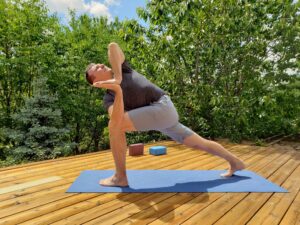
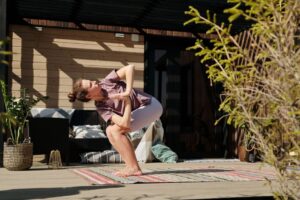
Revolved lunge is a modern twisting lunge: elbow outside the front thigh, palms together, chest turning toward the front leg. Learn it with the back knee down.

Not yet reviewed by a qualified teacher Names and shape checked against 2 sources

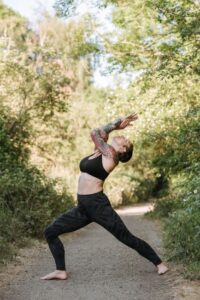
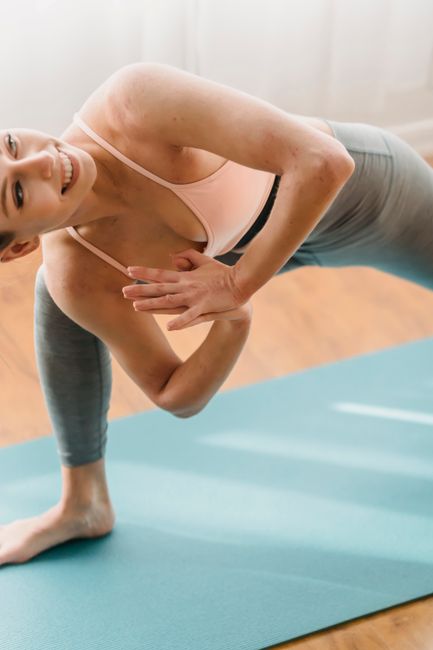
Positive crop active female in sportswear practicing Parivrtta Anjaneyasana posture with folded hands while standing on mat during yoga training
Sanskrit name
No established Sanskrit name: a modern descriptive name
Also called
Twisted Lunge, Revolved Crescent Lunge, Revolved High Lunge, Twisting Low Lunge, Parivrtta Anjaneyasana (modern usage)
Record
Modern descriptive name (no established Sanskrit)
Pose family
Standing, Twist
Starting position
Standing
Movement
Balance, Twist
Taught in
Vinyasa Yoga: Flow, Breath and What to Expect, Hatha Yoga: The Historical Term and the Modern Class
Difficulty
Intermediate
Prerequisite skills
A comfortable low lunge; for the knee-up version, a steady high lunge.
Body areas
Core, Hips, Legs, Spine
Props
Blanket, Block, Chair
Practised
Solo

Names in different traditions

TraditionName usedNote
Yoga JournalRevolved Crescent Lunge (Parivrtta Anjaneyasana); Twisting Low Lunge with the back knee downFrom high lunge with the hands down; keep the plank line; stack the shoulders; stabilise the pelvis; take the backbend out of the twist; 5 breaths each side.
Yoga InternationalRevolved High Lunge (parivrtta anjaneyasana)Axial extension, then a half hinge, then rotation with the elbow outside the thigh; back knee down if balance is hard.

Step by step

Coming into the pose

  1. Start in a lunge with the right foot forward, knee over the ankle. Lower the left knee to a folded blanket while you learn.
  2. Inhale and grow tall without arching the back. Bring the palms together at the chest.

In the pose

  1. Exhale and hinge forward about halfway with a long spine, then rotate from the ribs to the right and hook the left elbow outside the right thigh.
  2. Keep the right thigh in line with the knee and ankle, the shoulders stacked and both collarbones wide. Inhale to lengthen, exhale to turn a little more.
  3. If steady, tuck the back toes and lift the back knee. Stay about five breaths.

Coming out

  1. Inhale and unwind, hands to the floor; step back to downward dog and repeat on the other side.

Breathing

Inhale for length, exhale to turn. Keep the breath moving into the belly and ribs; about five breaths per side.

Alignment cues

  • Lengthen first; no backbend before or during the twist.
  • Front thigh in line with the knee and ankle.
  • Shoulders stacked; lower shoulder does not roll forward.
  • Long line from the back heel through the side waist.

Common alignment errors

  • Backbending just before or while twisting.
  • Lower shoulder collapsing forward.
  • Front knee swaying in or out.
  • Twisting from the neck.

Modifications and easier variations

  • Back knee down on a blanket (Yoga Journal’s twisting low lunge). blanket

Advanced variations

Props and chair adaptations

  • Lower hand on a block inside the front foot, top hand on the hip, instead of hooking the elbow. block
  • Sit sideways on a chair with the back leg extended and twist toward the front thigh, holding the chair back. chair

Precautions

  • Low back injury: avoid the strong leg work (Yoga Journal); knee down, small twist.
  • Neck problems: look down.
  • Knee pain: pad the back knee; front knee not past the ankle.
  • Pregnancy: closed twists are usually avoided; ask your teacher for an open twist.

Learn it with a teacher: Learn the knee-down version first. With back problems, ask a teacher to check that the twist is not loading the lower back.

General information, not medical advice. Poses do not cure illness. If you are pregnant, injured or have a health condition, check with your doctor and tell your teacher before you practise.

In short: revolved lunge is a lunge with a twist: the front knee bends over the ankle, the opposite elbow hooks outside the front thigh with the palms together, and the chest turns toward the front leg. Start with the back knee on the floor; lifting it makes the pose a strong balance. Lengthen the spine before you twist and keep the twist out of the lower back.

Twisting lunges are popular in flowing classes because they combine leg work, a spinal twist and balance. They are also easy to rush. Below we explain the name, a common mistake and how to avoid it, the precautions and where the pose leads.

The name: a modern pose

Revolved lunge is a modern descriptive name, also called twisted lunge, revolved crescent lunge or revolved high lunge. It is not part of Light on Yoga or the Ashtanga series. Yoga Journal and Yoga International both describe it and use the label Parivṛtta Āñjaneyāsana for it (“revolved Anjaneyasana”); we list that as modern usage rather than as an established traditional name. The closest classical relative is revolved side angle, which twists from a lunge with the back foot flat.

Making the twist work

Begin in a lunge with the front knee over the ankle; keep the back knee down while you learn, padded with a blanket. Yoga International describes a common mistake: backbending right before rotating, which is destabilising and makes the twist feel restricted. Its sequence is length first (grow tall without arching), then hinge forward about halfway with a long spine, then rotate from the ribs until the opposite elbow hooks outside the front thigh, palms together.

Yoga Journal adds three useful ideas: keep the long line of a plank from the back heel through the side of the waist, keep the shoulders stacked and both collarbones equally wide rather than letting the lower shoulder roll forward, and stabilise the pelvis by keeping the front thigh in line with the knee and ankle. Inhale to lengthen, exhale to turn a little further, and stay about five breaths on each side. If balance allows, lift the back knee.

Turning with the breath

Yoga Journal’s teacher Tiffany Russo offers a helpful picture: climb the twist like a spiral staircase, one step per breath. Inhale into the belly, exhale and turn a little. Inhale into the back ribs, exhale and turn. Inhale into the upper chest, exhale and deepen the twist. Once you are there, breathe into the ribs on the side you are turning toward, and on each exhale look for even length on all four sides of the waist. Lengthening the underside of the waist is what takes the hidden backbend out of the pose. Cranking hard into the twist does the opposite: the spine loses its even length and the pose gets smaller, not bigger.

Two arm positions

Prayer hands with the elbow hooked outside the thigh is the version most classes teach. In Yoga Journal’s version you begin in high lunge with the hands down, then place the bottom hand on the floor (or on a block) and reach the top arm up, stacking one shoulder over the other as in side plank. From there, gently draw the bottom hand back toward the front foot without actually moving it; this pulls the bottom shoulder blade away from the ear and keeps that shoulder from rolling forward.

Two leg actions keep the pelvis steady: press the top of the front thigh down toward the floor while hugging it toward the midline, and lift the top of the back thigh up toward the ceiling. Russo notes that these actions may make the twist look a little smaller, but they steady the sacrum (the flat bone at the base of the spine) and give a better twist overall. Twists also make a useful bridge in a practice: they help prepare for backbends and help the spine return to neutral after them.

Precautions in plain words

Yoga Journal warns that with a low back injury you should avoid the strong leg work of this pose. Keep the back knee down and the twist small with any back or disc problem. Look down if turning the head strains the neck. With knee pain, pad the back knee and do not let the front knee pass the ankle. Closed twists are usually avoided in pregnancy; ask your teacher for an open twist instead.

Preparation and what comes next

Prepare with low lunge, high lunge and a gentle seated twist. Yoga Journal notes that practising it mindfully prepares the body for standing twists such as revolved half moon and for twisting arm balances such as Eka Pada Koundinyasana I. Revolved chair and revolved side angle are close relatives. Afterwards, downward-facing dog lets the spine unwind.

Where it is taught

Revolved lunge is a staple of modern vinyasa and power yoga, and appears in many hatha classes.
Preparatory poses

Follow-up poses and transitions

Counterposes

Related poses

More standing poses

Frequently asked questions

Does revolved lunge have a Sanskrit name?

Not an established one. Yoga Journal and Yoga International use the label Parivrtta Anjaneyasana, but it is modern usage, not a traditional name.

Back knee up or down?

Down while you learn. Lifting it turns the twist into a balance as well.

Why does the twist feel stuck?

Often because the back arches before the twist. Lengthen, hinge forward about halfway, then rotate from the ribs.

Sources

  1. Back to Basics: Don’t Rush Revolved Crescent Lunge, Yoga Journal (accessed October 6, 2026)
  2. Revolved High Lunge: Learn How to Address a Common Mistake, Yoga International (accessed October 6, 2026)

Facts checked on October 6, 2026