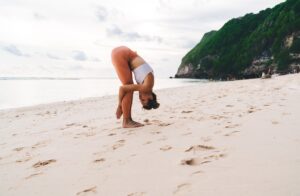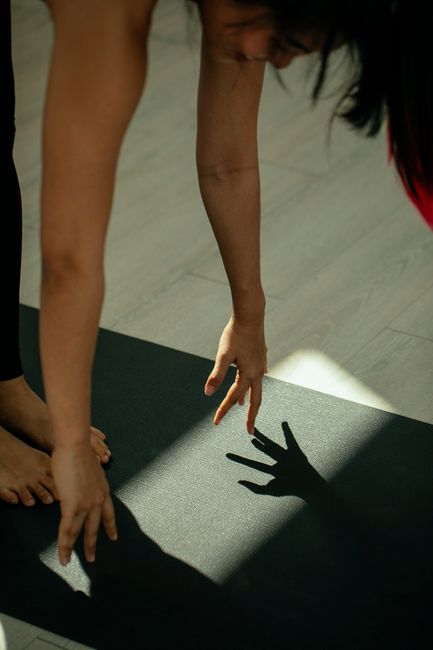
In short: big toe pose is a standing forward fold in which you hook the big toes with the first two fingers, lift into a long, concave back, then fold down along the legs. It stretches the hamstrings and calves and teaches you to fold from the hips. If you cannot reach the toes with a long back, bend the knees or loop a strap under the feet.
Big toe pose opens the Ashtanga standing sequence, so many Ashtanga students meet it in their first class. It is not, however, an easy pose for stiff hamstrings, which is why we class it as intermediate. Below we explain the name and a common mix-up, the technique, the precautions and what comes next.
The name, and the toe stand of hot yoga
The Sanskrit name is Pādāṅguṣṭhāsana: pāda is the foot and aṅguṣṭha the big toe. Light on Yoga describes it as standing and catching the big toes and rates it Three*. AshtangaYoga.info and Yoga Journal use the same name for the same fold.
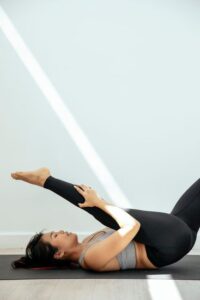
A very different posture shares almost the same name. The 26-posture hot yoga sequence calls its one-legged squat balanced on the ball of one foot “toe stand” and spells it Padangustasana. That pose has its own page, toe stand. Other relatives also include the big toe in the name, such as extended hand-to-big-toe pose (a standing balance) and reclining hand-to-big-toe pose (lying on the back).
Making big toe pose work
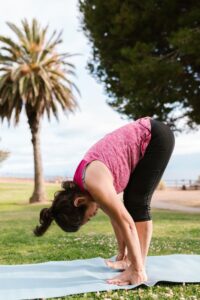
Stand with the feet parallel, about hip-width apart (Iyengar says a foot apart; AshtangaYoga.info about a hand-span). Hinge forward from the hips and hook each big toe with the index and middle fingers, thumb wrapped around from the inside. Then the important part: inhale, straighten the arms and lift the chest so the back becomes long and slightly concave, as Yoga Journal and Iyengar both describe. This stage stretches the hamstrings with the spine safe.
Exhale, bend the elbows out to the sides and fold the trunk down along the thighs. Yoga Journal’s advice is clear: if your hamstrings are short, keep the front of the body long rather than hunching into the fold. AshtangaYoga.info suggests bending the knees at first so the trunk can rest on the thighs, and straightening them gradually. Iyengar holds about 20 seconds; Ashtanga five breaths.
The work inside the fold
Big toe pose is more active than it looks. Yoga Journal’s instructions ask you to firm the front thigh muscles so the kneecaps lift, and to press the big toes down against your fingers while the fingers pull up. That small tug of war gives the arms something to work with. Fold forward with the torso and head moving as one unit, so the neck does not lead.
In the concave-back stage, use the breath in two directions. On each inhalation, lift the torso and the top of the breastbone; on each exhalation, lift the sitting bones and consciously relax the backs of the legs. The lower back hollows more or less depending on your flexibility, and the lower belly draws lightly in and up. Keep the forehead relaxed and do not lift the head so far that the back of the neck feels squeezed.
To come out, Yoga Journal releases the toes, brings the hands to the hips, lengthens the front of the body again and then rises on an inhalation, again with the torso and head as a single unit. Coming up this way, rather than rolling up quickly, is also kinder if you tend to feel light-headed.
Schools differ on what to do if the toes are out of reach. Yoga Journal prefers to keep the legs straight and loop a strap around the middle of each arch for a handhold. AshtangaYoga.info, as above, bends the knees at first and straightens them over time. Both aim at the same thing: a long front body instead of a rounded, hunched back. Try both and keep the one that lets you breathe easily.
Precautions in plain words
Yoga Journal says to avoid the pose with lower back or neck injuries. With a disc problem, Light on Yoga advises not taking the head toward the knees and staying with the concave-back stage under guidance. The head goes below the heart, so take care with glaucoma, uncontrolled blood pressure or dizziness, and come up slowly. With a hamstring injury, use a bent-knee fold.
Preparation and what comes next
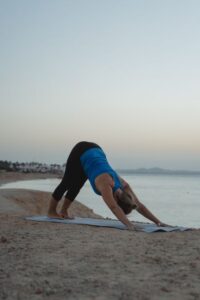
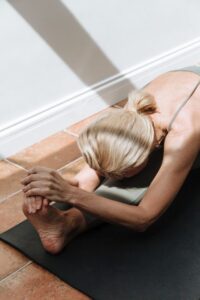
Yoga Journal lists reclining hand-to-big-toe pose, downward-facing dog, standing forward fold and seated forward bend as preparation. In the Ashtanga standing sequence it is followed straight away by hands under feet pose, then the triangles.
Where it is taught
Big toe pose is in Iyengar yoga and opens the Ashtanga standing sequence; it also appears in hatha and vinyasa classes.