In short: humble warrior is a warrior lunge in which you clasp the hands behind the back and bow the upper body down inside the front knee, with the clasped hands lifting toward the sky. It stretches the shoulders and chest while the legs keep working. Because the head goes below the heart and the shoulders are bound, it is an intermediate pose with real precautions.
The pose is a modern creation of flowing yoga classes, and its setup differs from teacher to teacher. Below we explain the name, the two common leg positions, how to bow safely, the precautions and how the pose prepares you for bound standing poses.
The name
Humble warrior (also called devotional warrior or bowing warrior) is a modern descriptive name. It does not appear among the warrior poses in Light on Yoga or in the Ashtanga series. You may hear the label Baddha Vīrabhadrāsana (“bound warrior”) in class; that is modern usage rather than an established traditional name, so we list it only as an alternative name. Teachers often frame the bow as a gesture of humility, the counterpart to the upright, assertive warriors.
Two setups, one bow
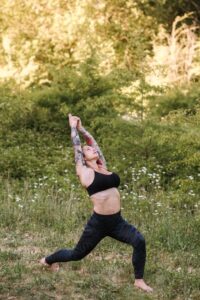
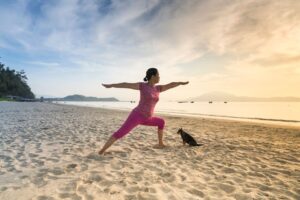
The legs vary by source. Yoga Journal builds it from warrior I: front knee bent, back heel down, hips turned toward the front. Yoga International keeps warrior II legs, with the hips more open to the side. Both work; choose the one your hips find steadier, and keep the front knee over the ankle in either case.
Clasp the hands behind the lower back, with the elbows bent or straight as your shoulders allow. Draw the shoulder blades together and widen across the collarbones, then hinge forward from the hips and let the torso move down inside the front leg. Yoga International suggests resting the shoulder on the front thigh for support, or, more deeply, bringing it inside the front knee and letting the head release toward the floor. Let the clasped hands lift away from the back without forcing them. Keep the legs strong and the neck relaxed. Yoga Journal’s sequence holds it for three breaths. To come out, press into the feet and lift the chest slowly before releasing the hands.
Building it in stages
It helps to treat humble warrior as two poses joined together. First comes an upright stage that Yoga Journal lists as a variation of warrior I: clasp the hands behind the back, stretch the knuckles away from you and lift the chest. Stay there for a breath or two and let the shoulders settle before you bow. If the upright clasp already strains the shoulders, the bow will strain them more, so use a strap or keep the hands on the hips.
The base matters as much as the bow. Yoga Journal notes that the front knee tends to drift inward in warrior I; firm the outer front thigh so the knee points straight ahead over the ankle and heel. If the back heel will not stay down or the back foot, ankle or knee hurts, take a shorter stance, raise the back heel on a folded blanket, or use the low lunge foot position with the back heel lifted. A steady base lets the upper body relax as it folds.
Common mistakes: dropping the head before the hips have hinged, so the back rounds and the neck strains; forcing the clasped hands over the head; and letting the front knee collapse inward as the torso comes down. Move slowly, and come up on an inhalation.
Precautions in plain words
The head goes below the heart, so come up slowly, and skip or shorten the bow if you have high or low blood pressure, glaucoma or another eye condition where head-down positions are advised against, or if you get dizzy. The bind loads the front of the shoulders: with a shoulder injury, hold a strap or towel between the hands instead of clasping, or keep the hands on the hips and only hinge part-way. With a knee or hip problem, follow the warrior cautions. In pregnancy the deep bow inside the knee is usually not comfortable; ask your teacher for an alternative.
Preparation and what comes next
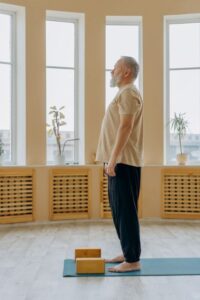
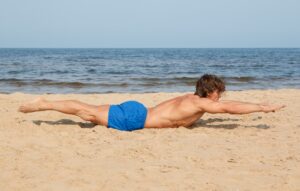
Prepare with warrior I or warrior II and a shoulder opener such as clasping the hands behind the back in mountain pose. Yoga International notes that humble warrior is good preparation for poses with the arms extended behind the body, such as locust and bow, and for bound standing poses such as bound side angle and bird of paradise.
Where it is taught
Humble warrior is part of modern vinyasa and power yoga classes and appears in many warrior flows. It is not part of the Iyengar or Ashtanga syllabus.