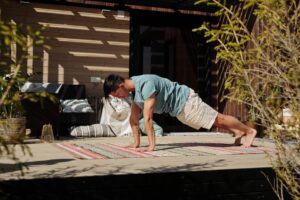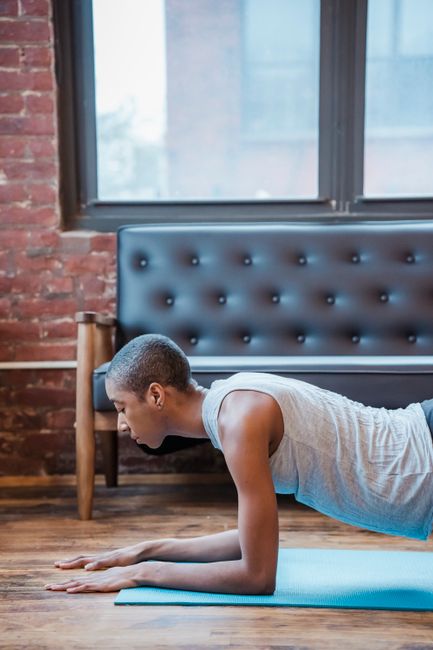
In short: plank is the top of a push-up: hands under the shoulders, arms straight, body in one straight line from the head to the heels, on the balls of the feet. It builds strength in the arms, shoulders, core and legs, and it is a link in most sun salutations. Lower the knees whenever the hips sag; a straight line on the knees is better than a sagging one on the toes.
Plank is simple to describe and hard to hold well. Most people either let the hips sink, which compresses the lower back, or lift them high, which turns the pose into a half downward dog. The work is in finding the line in between and keeping it while you breathe. Below we explain the setup, the knees-down and chair versions, and forearm plank, which has its own section.
About the name
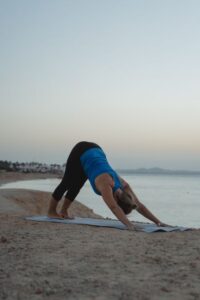
Plank is a modern descriptive name, and there is no single established Sanskrit name for it. Yoga Journal and Yoga International simply call it plank pose. On yoga websites you will see Phalakasana (from phalaka, a board) and Kumbhakasana; we list both as modern usage, because we have not found either in two of the lineage references we checked. The shape itself is old in the sun salutation: in the 12-position version taught by the Sivananda Yoga Vedanta Centres, position 5 brings the second leg back and supports the weight on the hands and toes, with the breath retained. The Bihar School’s version goes straight from the lunge to the mountain pose (downward dog) instead. Plank is also the starting point of chaturanga, the low push-up, which has its own page.
How to make it work
Come forward from downward dog until the shoulders are over the wrists and the heels over the balls of the feet. Hands shoulder-width, wrist creases parallel to the front of the mat, fingers spread and pressing down, a little more weight in the inner edges of the hands. Then build the line: press the floor away so the shoulder blades do not collapse together, lift the fronts of the thighs, lengthen the tailbone toward the heels and press back through the heels. Yoga Journal’s image is the lower belly as a tray supporting the lower back. Gaze at the floor just ahead of the hands so the back of the head lines up with the tailbone. Hold a few breaths at first and build up gradually; Yoga Journal suggests working toward a minute.
Precautions in plain words
Plank loads the wrists and shoulders. With wrist pain, carpal tunnel symptoms or arthritis in the hands, use forearm plank or the chair version; with a shoulder injury, ask a health professional first. If the lower back aches, the hips are sagging: lower the knees. In pregnancy, and after childbirth with abdominal separation (diastasis recti), long plank holds may not be appropriate; ask your health care provider. This page is general information, not individual advice.
Forearm Plank
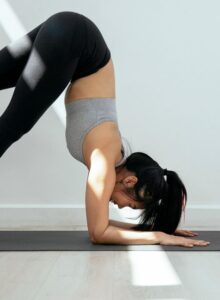
Forearm plank is the same straight line with the forearms on the floor instead of the hands, elbows under the shoulders and hands shoulder-width apart. Yoga Journal, which also calls it dolphin plank, describes it as an especially good option for beginners and for people with wrist pain, since the wrists carry no weight; the shoulders and core work at least as hard. Draw the elbows toward the midline, press the forearms down, step the feet back, lift the thighs and look straight down. Lower the knees if needed, or practise standing with the forearms on a wall. A strap looped above the elbows keeps the arms in place. Do not confuse it with dolphin pose, which has the same forearms but lifts the hips into an inverted V. Some schools give forearm plank a Sanskrit name such as Makara Adho Mukha Svanasana; we have not confirmed that and treat it as modern usage.
Preparation and what comes next
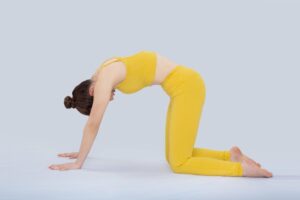
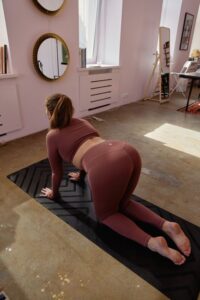
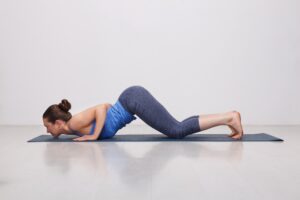
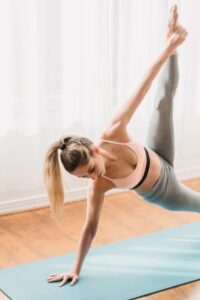
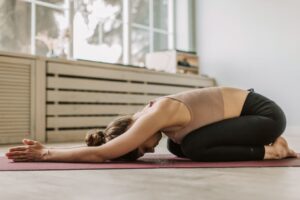
Warm up with tabletop, cat-cow and downward dog. From plank you can lower through chaturanga or to the knees, chest and chin in the eight-point salute, roll onto one hand into side plank, or press back to downward dog. Rest in child’s pose.
Where it is taught
Plank is part of the 12-position sun salutation and countless vinyasa transitions, so you will meet it in vinyasa, power, hatha and Sivananda classes. Browse more foundation and core poses in the pose library.