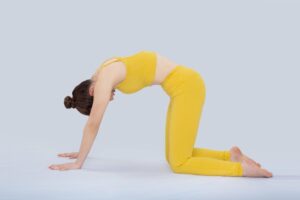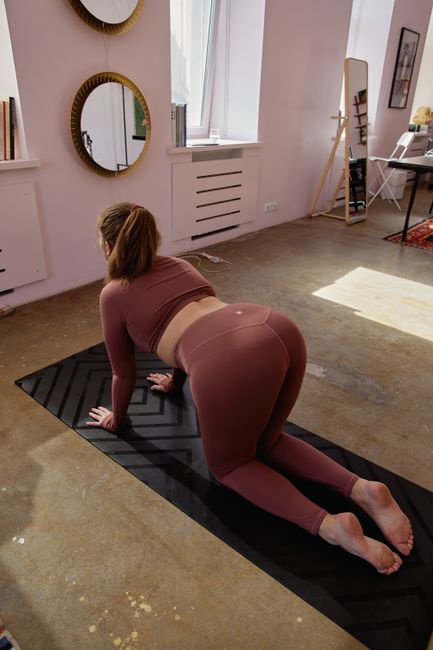
In short: tabletop is the hands-and-knees position: wrists under the shoulders, knees under the hips, the back flat like the top of a table and the neck long. It is the starting point for cat-cow, downward-facing dog, bird dog and many other poses, so setting it up well makes a lot of what follows easier on the wrists and knees.
Teachers say “come to tabletop” dozens of times a class, often without explaining it. It looks too simple to need instructions, yet most wrist complaints in yoga start here, with the weight sinking into the heels of the hands. A few details turn it from a waiting position into a stable, comfortable base.
About the name
Tabletop is a modern descriptive name; it is also called hands and knees, all fours or box pose. Yoga Journal and Yoga International both use “tabletop” as the starting position for cat and cow. You may see the Sanskrit-sounding name “Bharmanasana” online; we have not found it in the main lineage references and do not use it. In the Bihar School manual, the hands-and-knees position is simply the starting point of marjariasana, the cat stretch.
How to set it up
Place the hands shoulder-width apart with the wrists under the shoulders or slightly ahead of them, whichever is kinder to your wrists, and turn the wrist creases parallel to the front edge of the mat. Spread the fingers and press down through the knuckles, especially the base of the index finger, so the weight does not sink into the heel of the hand. Knees go hip-width apart, directly under the hips; the tops of the feet rest on the floor, or the toes tuck under if you are about to lift into downward dog. Yoga International’s cue for the spine: gaze just ahead of the hands so the back of the head lines up with the tailbone. Keep a little tone in the belly so the lower back does not sag.
Small changes, different jobs
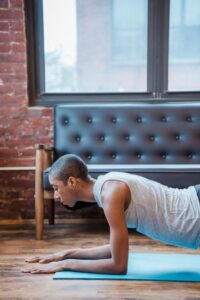
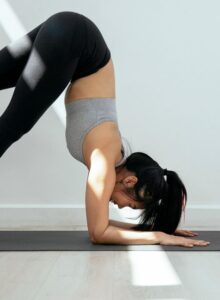
Tabletop is adjusted slightly depending on what comes next. For cat-cow, Yoga Journal places the hands a little ahead of the shoulders, which gives the spine room to arch and round. For a kneeling plank, Yoga International moves the knees back behind the hips rather than under them, so the body forms a straight line from knees to head. For dolphin, Yoga Journal suggests a tabletop on the forearms, elbows where the hands were, as a preparation. Knowing these small differences helps you follow a class without guessing.
Precautions in plain words
Tabletop is gentle, but it puts weight on the wrists and knees. Pad the knees with a folded blanket or double the mat if kneeling hurts. With sore wrists, carpal tunnel symptoms or arthritis in the hands, use fists, forearms on blocks, or the chair version below. If kneeling is not possible at all, many tabletop movements can be done standing with the hands on a wall or chair. This page is general information, not individual advice.
What comes from tabletop
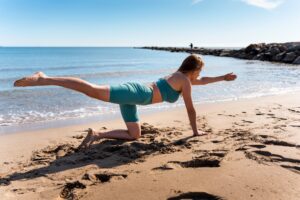
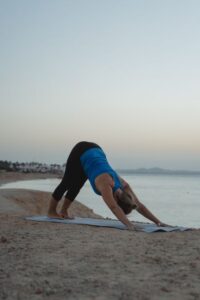
From tabletop you can round and arch into cat-cow, reach the opposite arm and leg into bird dog, swing a knee to the nose in tiger pose, tuck the toes and lift into downward-facing dog, step back into plank, lower the forearms for dolphin, or sit back into child’s pose. It is also where pigeon pose often begins.
Where it is taught
Everywhere: hatha, vinyasa, gentle and prenatal classes all use it. It is the first step in our morning yoga plan and in the list of beginner yoga poses. Browse the full pose library for more.