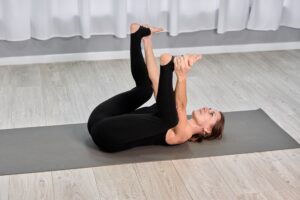
In short: Yoganidrasana, yoga sleep pose, is an advanced physical posture: you lie on your back with both legs placed behind the neck, ankles crossed, and the hands clasped behind the back. It is a deep forward fold and hip opener. It is not Yoga Nidra, the guided relaxation practice done lying still in corpse pose, even though the names sound alike.
Because the names are so close, people searching for a relaxing “yoga sleep” practice sometimes land on pictures of this pose, and the reverse. They have nothing in common physically. If you are looking for the guided rest practice, go to our guide to Yoga Nidra. If you want to know about the posture, read on, but note that it is one of the most demanding hip openers in the library.
Yoganidrasana and Yoga Nidra: two different things
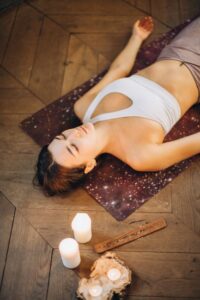
Yoga nidrā combines yoga and nidrā, sleep; āsana is posture. In Light on Yoga, B.K.S. Iyengar explains that yoganidra is a state between sleep and wakefulness and also the name for the sleep of Viṣṇu at the end of an age; the posture takes its name from that idea, with the legs forming the yogi’s pillow and the back his couch. Yoga Nidra as practised today is something else: a guided practice of relaxation and body awareness, done lying completely still, usually in corpse pose; our guide suggests starting with sessions of 15 to 20 minutes. It belongs to meditation and relaxation, not to the asana library, and anyone can do it. Yoganidrasana is an advanced asana that very few people practise.
How the posture is approached
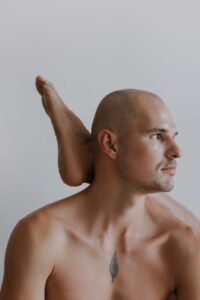
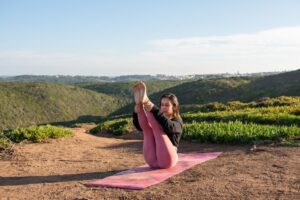
Light on Yoga describes it step by step: lying on the back, place one leg behind the neck as in one leg behind the head, then the second leg under the first, lock the ankles, and reach the arms behind the back to clasp the hands, holding 30 to 60 seconds. Iyengar insists on placing one leg at a time, not crossing the legs first, and on lifting the neck and shoulders so the shoulders do not get wedged under the legs. In the Ashtanga intermediate series, as documented by AshtangaYoga.info, both legs go behind the head together, the head lifts between the feet, the hands clasp behind the lower back, and you stay five breaths before rolling back and up. AshtangaYoga.info notes that lying on the back keeps the spine more stable than the upright version, so more of the stretch goes into the hips.
Its place in the Ashtanga intermediate series
In the intermediate series it follows both legs behind the head. According to AshtangaYoga.info, you float forward from downward dog, swing the straight legs through and lie back, lift both legs behind the head, clasp the hands behind the back and stay five breaths; then you roll backward over the shoulders and return to the vinyasa through chaturanga. The next pose in the series is the arm balance Tittibhasana. Seen in this context, yoga sleep pose is clearly a demanding stage of an advanced sequence, not a resting posture.
Precautions in plain words
Do not attempt Yoganidrasana with neck, back, sacroiliac, hip or knee problems, in pregnancy, or without long preparation. The legs must never push the head and neck forward; if they do, the hips are not ready. Learn it only with an experienced teacher, after one leg behind the head is comfortable on both sides. This page is general information, not individual advice.
Preparation and what comes next
Preparation runs through years of hip openers and forward bends: pigeon, happy baby, tortoise and reclining tortoise, whose reverse Iyengar says this pose is, and then one leg behind the head. The upright version with both legs behind the neck is Dwi Pada Sirsasana. Afterward, lie with the legs straight for a while, as Iyengar advises, and finish in corpse pose.
Where it is taught
Mainly in Ashtanga (intermediate series) and advanced Iyengar practice. For the guided relaxation practice with a similar name, see Yoga Nidra. Browse more poses in the pose library.