Both Legs Behind the Head (Dwi Pada Sirsasana): an advanced balance from the Ashtanga intermediate series

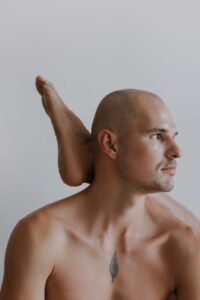
Dwi Pada Sirsasana places both legs behind the neck while balancing upright on the base of the spine: an advanced pose from Light on Yoga, the Bihar School and the Ashtanga intermediate series. Name, approach and strict precautions.

Not yet reviewed by a qualified teacher Names and shape checked against 3 sources

Sanskrit name
Dvi Pāda Śīrṣāsana द्विपादशीर्षासन (source)
Also called
Two Feet Behind the Head
Other spellings
Dwi Pada Sirsasana, Dvi Pada Sirsasana, Dvi Pada Shirshasana, Dwi Pada Sirasana
Pose family
Balancing, Hip opener and leg extension, Seated
Starting position
Seated
Movement
Balance, Hip external rotation
Difficulty
Advanced
Prerequisite skills
One leg behind the head comfortable on both sides; strong core and balance on the sitting bones; an experienced teacher.
Body areas
Core, Hamstrings, Hips, Neck, Spine
Props
Wall
Practised
Solo

Names in different traditions

TraditionName usedNote
Iyengar (Light on Yoga)Dwi Pāda ŚīrṣāsanaAsana 147, plates 392-394: balance on the seat near the tailbone, palms joined, 10 to 30 seconds; then lift on the hands.
Ashtanga (AshtangaYoga.info, intermediate series)Dvi Pāda ŚīrṣāsanaAfter Eka Pada Sirsasana; five breaths; flows into Yoga Nidrasana.
Bihar School of YogaDwi pada sirasana (the two-feet head pose)Stage 1 balance on the coccyx, stage 2 lift on the palms.

Step by step

Coming into the pose

  1. Only with a teacher and after full warm-up: sit, bend both knees and place the right leg behind the neck as in Eka Pada Sirsasana.
  2. On an exhale, take the left ankle, draw the left thigh up and back and place the left leg over the right; lock the feet by crossing the ankles.

In the pose

  1. Hands on the floor beside the hips, find the balance on the base of the spine; when steady, join the palms in front of the chest. Stay 10 to 30 seconds (Light on Yoga) or five breaths (Ashtanga).

Coming out

  1. Hands back to the floor; keeping the ankles crossed you may lift the body on the hands (stage 2). Then lower, uncross the ankles, release one leg at a time and stretch the legs out.

Breathing

Try to keep normal breathing (Light on Yoga); in the Ashtanga count, five breaths. If the breath becomes strained, come out.

Alignment cues

  • Chest and head lift against the legs; neck not pushed forward.
  • Ankles crossed securely behind the neck.
  • Balance on the base of the spine with the hands ready on the floor.

Common alignment errors

  • Attempting it before one leg behind the head is easy on both sides.
  • Collapsing the chest so the legs press the neck forward.
  • Falling backward: learn the balance with the back near a wall.

Modifications and easier variations

  • Practise yoga sleep pose lying down first if flexibility is the limit. none
  • Stay with one leg behind the head. none

Advanced variations

Props and chair adaptations

  • Lean the back against a wall while learning the balance (AshtangaYoga.info). wall
  • No chair version of this pose; a seated chair figure-four stretch works the outer hips very gently. chair

Precautions

  • Neck, back, sacroiliac, hip or knee problems: do not attempt.
  • Pregnancy and sciatica: not suitable.
  • Strained breathing or pressure on the neck: come out.

Learn it with a teacher: Learn only with an experienced teacher, after one leg behind the head is comfortable; not a pose to attempt from written instructions.

General information, not medical advice. Poses do not cure illness. If you are pregnant, injured or have a health condition, check with your doctor and tell your teacher before you practise.

In short: Dwi Pada Sirsasana is an advanced pose in which both legs are placed behind the neck, the ankles crossed, and you balance upright on the base of the spine with the palms joined in front of the chest. It combines an extreme hip opening with a balance on the tailbone. It is a pose for experienced practitioners working with a teacher, after one leg behind the head is comfortable on both sides.

We include this pose so that the library is complete and the name is explained correctly, not as an invitation to try it. The weight of two legs on the back of the neck is considerable, and falling backward is easy, as B.K.S. Iyengar points out in Light on Yoga.

The name and where it comes from

Dwi (also written dvi) means two, pāda foot or leg and śīrṣa head. The pose is described in Light on Yoga (1966), in the Bihar School’s Asana Pranayama Mudra Bandha (as dwi pada sirasana, the two-feet head pose) and in the Ashtanga intermediate series, where it comes between one leg behind the head and yoga sleep pose. Iyengar notes that it is very similar to yoga sleep pose, except that here the body is upright, while in yoga sleep pose the back rests on the floor.

How it is approached

The sources agree on the sequence: place one leg behind the neck exactly as in one leg behind the head, then bring the second leg over or under it and cross the ankles behind the neck. The hands rest on the floor beside the hips while you find the balance on the tailbone, then come together in front of the chest. Iyengar suggests staying 10 to 30 seconds; the Ashtanga count holds five breaths. Both Light on Yoga and the Bihar manual add a second stage in which the hands press down and lift the whole body, and Iyengar continues from there into the arm balance Tittibhasana. AshtangaYoga.info suggests leaning the back against a wall while learning the balance, or working on yoga sleep pose first if flexibility, rather than balance, is the limit.

Its place in the Ashtanga intermediate series

In the intermediate series as documented by AshtangaYoga.info, this pose is entered with a jump: from downward dog you float forward, lower the straight legs outside the arms with the pelvis lifted, rest the thighs high on the shoulders and then sit, placing first one leg and then the other behind the neck. It runs straight on into yoga sleep pose. The jump is a skill of its own; learning to place the legs from sitting comes first.

Precautions in plain words

Do not attempt this pose with any neck, back, sacroiliac, hip or knee problem, in pregnancy or with sciatica (the Bihar manual’s limitations for the one-leg version apply here too). The neck must not be forced forward by the legs, and the breath should stay steady; if it becomes strained, come out. Learn it only with an experienced teacher, after many months or years of preparation. This page is general information, not individual advice.

Preparation and what comes next

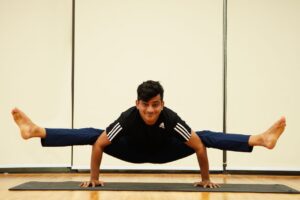
The direct preparation is one leg behind the head, built on years of hip openers such as pigeon, fire log and tortoise pose, and core strength from boat pose for the balance. In Ashtanga it flows into yoga sleep pose; in Light on Yoga the hands lift the body and the legs extend into firefly pose. Afterward, release the legs and rest with them straight in staff pose or lying down.

Where it is taught

Mainly in Ashtanga (intermediate series) and advanced Iyengar practice. Browse related hip openers in the pose library.
Preparatory poses

Follow-up poses and transitions

Counterposes

Related poses

More balancing poses

Frequently asked questions

What is the difference between Dwi Pada Sirsasana and Yoganidrasana?

The legs are similar. In Dwi Pada Sirsasana you balance upright on the base of the spine; in Yoganidrasana you lie on your back with the hands clasped behind it.

Where does this pose come in Ashtanga?

In the intermediate series, after one leg behind the head (Eka Pada Sirsasana) and before yoga sleep pose (Yoganidrasana).

Sources

  1. B.K.S. Iyengar, Light on Yoga (1966), asana 147 Dwi Pada Sirsasana, plates 392-394, Allen & Unwin (Internet Archive record) (accessed October 6, 2026)
  2. Dvi Pada Shirshasana: Zwei Füße hinter dem Kopf, Teil 1 (intermediate series), AshtangaYoga.info (accessed October 6, 2026)
  3. Swami Satyananda Saraswati, Asana Pranayama Mudra Bandha: Dwi pada sirasana (the two-feet head pose), Bihar School of Yoga (Internet Archive) (accessed October 6, 2026)

Facts checked on October 6, 2026