One Leg Behind the Head (Eka Pada Sirsasana): what it asks of the hips, and how it is learned

Eka Pada Sirsasana places one leg behind the neck while sitting tall, an advanced hip opener from Light on Yoga and the Ashtanga intermediate series. What it asks of the hips, how it is approached, and strict precautions.

Not yet reviewed by a qualified teacher Names and shape checked against 4 sources

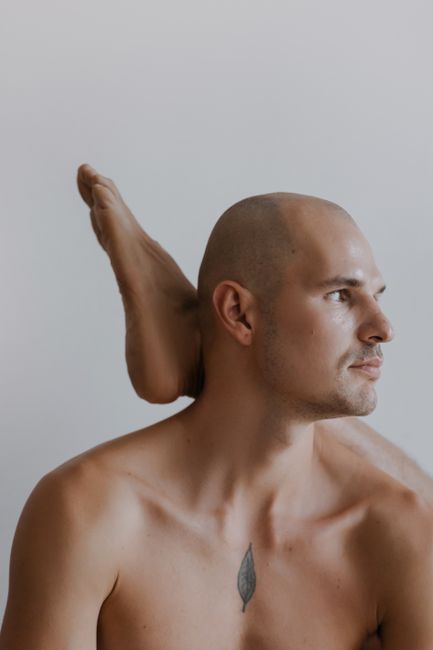
Artistic portrait featuring a bald man and a foot raised behind him on a white background.
Sanskrit name
Eka Pāda Śīrṣāsana एकपादशीर्षासन (source)
Also called
Foot-Behind-the-Head Pose, Leg Behind Head
Other spellings
Eka Pada Sirsasana, Eka Pada Shirshasana, Eka Pada Sirasana
Pose family
Hip opener and leg extension, Seated
Starting position
Seated
Movement
Forward fold, Hip external rotation
Difficulty
Advanced
Prerequisite skills
Long-standing, pain-free hip opening (pigeon, fire log, deep seated forward bends); the ability to cradle the shin at chest height while sitting tall; an experienced teacher.
Body areas
Hamstrings, Hips, Neck, Spine
Props
Blanket
Practised
Solo

Names in different traditions

TraditionName usedNote
Iyengar (Light on Yoga)Eka Pāda ŚīrṣāsanaAsana 135, plates 369-371: upright, palms joined, 15 to 60 seconds with deep breathing; start of the Eka Pada Sirsasana cycle.
Ashtanga (AshtangaYoga.info, intermediate series)Eka Pāda ŚīrṣāsanaLeg placed, then fold forward over the straight leg for five breaths; both sides.
Bihar School of YogaEka pada sirasana (the foot to head pose)Hands joined in front of the chest; not for pregnant women or people with sciatica.

Step by step

Coming into the pose

  1. Only after a thorough warm-up and with a teacher: sit with both legs straight. Bend the left knee and hold the left ankle with both hands.
  2. On an exhale draw the left thigh up and back, lean the trunk slightly forward and bring the back of the thigh behind the left shoulder.

In the pose

  1. Place the lower left leg across the back of the neck, lift the head and chest so the leg stays there, and join the palms in front of the chest. The right leg stays straight on the floor, toes pointing up.
  2. Stay with deep breathing: 15 to 60 seconds in Light on Yoga, or fold forward over the straight leg for five breaths in the Ashtanga version.

Coming out

  1. Hold the left ankle with both hands, lift the leg off the neck and lower it slowly; stretch the legs. Repeat on the right side for the same time.

Breathing

Deep, slow breathing in the final position (Light on Yoga; Bihar). In the Ashtanga count, exhale as you fold and stay five breaths. If the breath becomes strained, come out.

Alignment cues

  • The movement comes from the hip; the knee should feel nothing.
  • Head and chest lift against the leg; the neck is not pushed forward.
  • Straight leg active, back of the leg on the floor.
  • Ankle rests low on the back of the neck, foot pointed (AshtangaYoga.info).

Common alignment errors

  • Forcing the leg behind the head before the hip is ready.
  • Letting the leg push the head and neck forward.
  • Twisting the knee instead of rotating at the hip.
  • Collapsing the lower back.

Modifications and easier variations

  • Cradle the shin in the arms while sitting tall (seated leg cradle) and hold. none
  • Lying on the back, draw one foot toward the head with the knee wide, other leg on the floor. none

Advanced variations

Props and chair adaptations

  • Sit on a folded blanket to tilt the pelvis forward. blanket
  • Chair figure four: one ankle on the opposite knee, hinging forward, as a far gentler outer-hip stretch. chair

Precautions

  • Knee, hip, sacroiliac, lower-back or neck problems: do not attempt.
  • Pregnancy and sciatica: not recommended (Bihar School).
  • Never let the leg push the head forward.

Learn it with a teacher: Learn only with an experienced teacher, after a long period of hip-opening practice. Not a pose to attempt from written instructions.

General information, not medical advice. Poses do not cure illness. If you are pregnant, injured or have a health condition, check with your doctor and tell your teacher before you practise.

In short: Eka Pada Sirsasana, one leg behind the head, is an advanced seated pose: one leg stays straight on the floor while the other is drawn up and placed behind the back of the neck, the chest lifts and the palms join in front of the heart. It needs a great deal of outward rotation and flexion at the hip. It takes most practitioners a long time to reach, should never be forced, and is best learned with an experienced teacher.

This pose belongs to the advanced end of the library. We describe it so that the name, the shape and the precautions are clear, not as a pose to try from a page. The hip has to do almost all of the work; if it cannot, the strain moves to the knee, the lower back or the neck, which carries the weight of the leg.

The name, and two versions

Eka means one, pāda foot or leg and śīrṣa head. The same name and shape appear in Light on Yoga, where B.K.S. Iyengar describes the upright version with the palms joined and builds a whole cycle of further poses on it; in the Bihar School’s Asana Pranayama Mudra Bandha (as eka pada sirasana, the foot to head pose); and in the Ashtanga intermediate series. Note one difference in the Ashtanga version as documented by AshtangaYoga.info: after placing the leg, you fold forward over the straight leg and hold for five breaths. Do not confuse this pose with headstand, Sirsasana, which shares the word for head.

How it is approached

All the sources describe the same mechanism: holding the ankle, you draw the thigh up and back so the back of the thigh slides behind the shoulder, then lift the head and chest so the lower leg rests across the back of the neck. Iyengar warns that if the head is not held up, the leg slips; AshtangaYoga.info suggests settling the ankle in the groove beside the neck muscles and pointing the foot. Yoga Journal’s step-by-step approach, written by teacher Kathryn Budig, builds up through pigeon, a reclining thread-the-needle hold, cradling the shin in the arms while seated, and working the leg up the arm, as if putting on a backpack strap, before ever placing it behind the head. She stresses that there should be no knee pain at any stage and that forcing is the signal to stop.

The Eka Pada Sirsasana cycle

In Light on Yoga this pose opens a cycle of further postures that keep one leg behind the neck, among them Skandasana, a forward bend over the straight leg; Bhairavasana, lying back; and standing and balancing forms. Iyengar suggests doing the whole cycle with one leg, resting a minute or two, then repeating with the other leg, and he calls these poses strenuous ones that take long practice to master. The Bihar manual similarly adds a standing version, which it says should only be tried by those who can do the seated pose without difficulty.

Precautions in plain words

Do not attempt this pose with knee, hip, sacroiliac, lower-back or neck problems. The Bihar manual advises against it in pregnancy and with sciatica. The neck must never be pulled forward by the leg: if your chin is being pushed toward your chest, the hip is not ready. Learn it only under the guidance of an experienced teacher, after a long period of hip opening, and expect progress over years rather than weeks. This page is general information, not individual advice.

Preparation and what comes next

The usual preparation is a long series of hip openers: pigeon pose, reclining figure four, fire log and seated forward bends such as head-to-knee pose. Lying on the back with one leg behind the head is a gentler stage in many schools. In the Ashtanga intermediate series this pose is followed by both legs behind the head and yoga sleep pose. Afterward, stretch both legs out in staff pose.

Where it is taught

It is taught mainly in Ashtanga (intermediate series) and advanced Iyengar practice. Most general classes do not include it. Browse more hip openers in the pose library.
Preparatory poses

Follow-up poses and transitions

Counterposes

Related poses

More hip opener and leg extension poses

Frequently asked questions

Is putting your leg behind your head safe?

Only for people whose hips have been prepared over a long time, under an experienced teacher. Forced, it strains the knee, lower back and neck.

Which yoga series includes Eka Pada Sirsasana?

The Ashtanga intermediate series, where it is followed by Dwi Pada Sirsasana and Yoganidrasana. It is also in Light on Yoga and the Bihar School manual.

Is Eka Pada Sirsasana related to headstand?

Only by name: sirsa means head. Eka Pada Sirsasana is a seated hip opener, not an inversion.

Sources

  1. B.K.S. Iyengar, Light on Yoga (1966), asana 135 Eka Pada Sirsasana, plates 369-371, Allen & Unwin (Internet Archive record) (accessed October 6, 2026)
  2. Eka Pada Shirshasana: Ein Fuß hinter dem Kopf (intermediate series), AshtangaYoga.info (accessed October 6, 2026)
  3. Swami Satyananda Saraswati, Asana Pranayama Mudra Bandha: Eka pada sirasana (the foot to head pose), Bihar School of Yoga (Internet Archive) (accessed October 6, 2026)
  4. Kathryn Budig Challenge Pose: Foot-Behind-the-Head Pose, Eka Pada Sirsasana, Yoga Journal (accessed October 6, 2026)

Facts checked on October 6, 2026