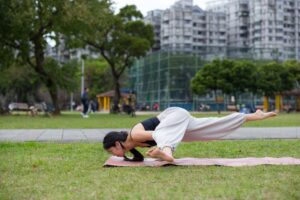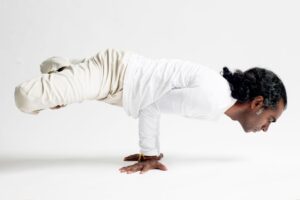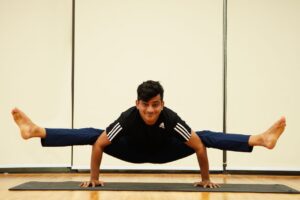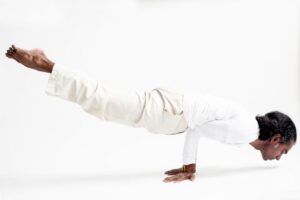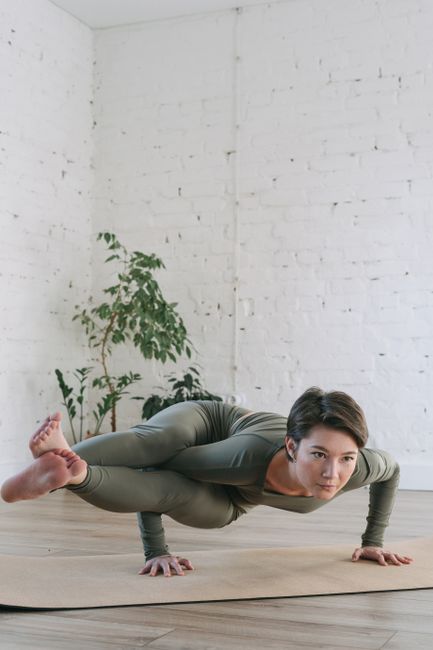
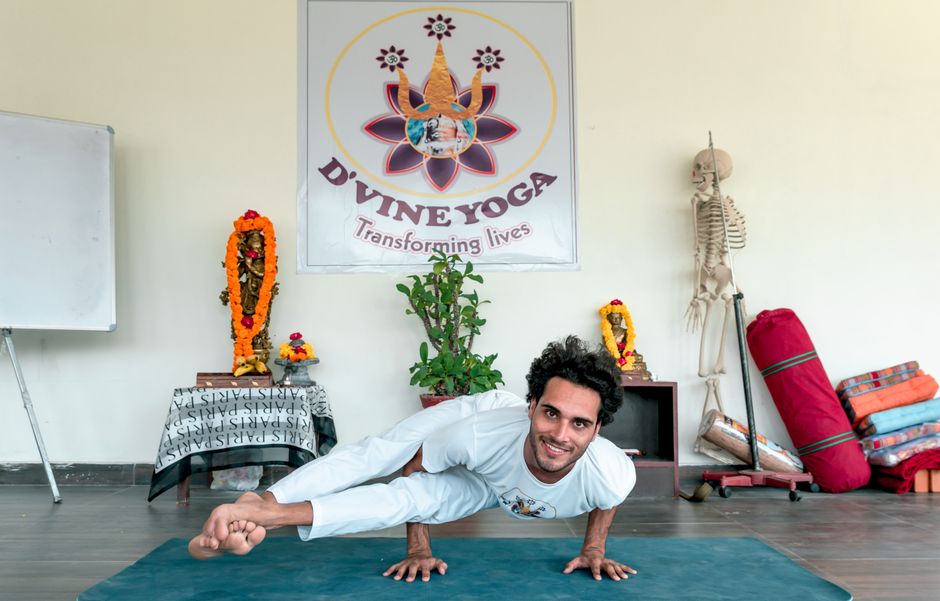
In short: eight-angle pose is an arm balance with a twist. One leg hooks over the upper arm near the shoulder, the other ankle crosses over it, and with the elbows bent the body tilts forward while both legs extend out to one side, squeezing the arm between the thighs. It is an advanced pose that needs core strength, open hamstrings and hips, and steady wrists.
The pose has one record on this site. You may also see it called Sage Astavakra’s pose or the pose dedicated to the sage Aṣṭāvakra; those names point here rather than to a separate page.
The name and the sage
Aṣṭāvakra means “eight bends”: aṣṭa is eight and vakra crooked or bent. AshtangaYoga.info retells the story from the Mahābhārata’s Book of the Forest: the unborn Aṣṭāvakra corrected his father’s Vedic recitation from the womb, and the angry father cursed him to be born with eight bends in his body. He became a celebrated sage, and the Aṣṭāvakra Gītā, a dialogue between Aṣṭāvakra and King Janaka, carries his name. The English “eight-angle pose” is a free rendering of the name, not a count of angles in the shape.
The Iyengar Yoga (UK) syllabus lists Aṣṭāvakrāsana at plates 342 and 343 of Light on Yoga. In Ashtanga it belongs to the third series as Aṣṭāvakrāsana A and B, entered from a tripod headstand and held for five breaths. Yoga Journal teaches a seated entry from staff pose, which is the version described in the steps here.
Making the pose work
The legs do the stabilising. Yoga Journal’s steps press the hooked leg firmly into the arm, cross the ankles and then squeeze the thighs together as the legs straighten; AshtangaYoga.info makes the same point, saying that the harder the legs press from above and below on the upper arm, the less strength the balance needs. Keep the elbows bent toward 90 degrees as in chaturanga, so the forearms stay vertical under the body. The bottom leg tends to sag, so squeeze it up against the arm. While learning, keep the torso more upright and lean forward only as the legs lift.
Yoga Journal recommends weeks or months of chaturanga with good alignment before attempting the pose, so that the upper back and core can carry the load instead of the shoulders, elbows and wrists. Blocks under the hands give more room to lift.
Precautions in plain words
Avoid this pose with any wrist, elbow or shoulder injury, as Yoga Journal advises, and with a recent hamstring or lower back injury. Warm up thoroughly first: hips, hamstrings, twists and wrists. Move in and out slowly rather than flopping down. In pregnancy, skip deep twisting arm balances unless your health care provider and an experienced teacher agree. This page is general information, not individual advice.
Preparation and what comes next
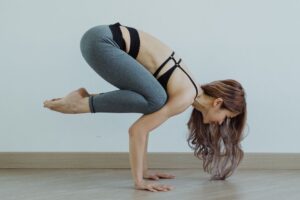
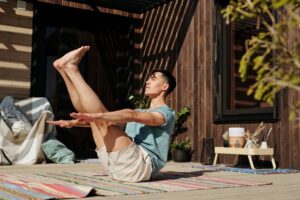
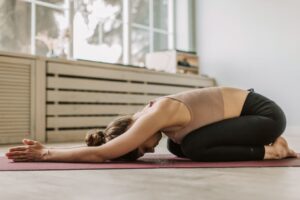
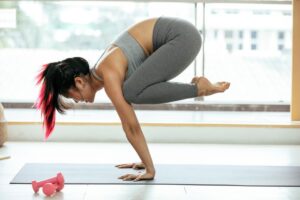
Yoga Journal lists chaturanga, extended side angle, lizard, crow, side crow, boat pose and seated forward bend as preparation. If your hamstrings are tight, side crow builds the same arm strength without straight legs. Afterwards, rest in child’s pose and stretch the wrists. Related arm balances include Sage Koundinya’s pose and shoulder-pressing pose.
A simple way to practise it. Treat eight-angle pose as a sequence of small wins. First, from staff pose, practise only hooking the leg over the shoulder and holding it there with the arm, breathing calmly. Then add the hands and lift the hips with the legs bent. Then cross the ankles and lift both legs with the torso upright, as Yoga Journal recommends while learning. Only when that hold is steady do you lean forward and straighten the legs. Repeat each stage on both sides and finish before the wrists or shoulders tire.
You will find eight-angle pose in Iyengar and Ashtanga (third series) practice and as a peak pose in vinyasa and power yoga.