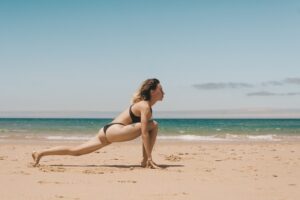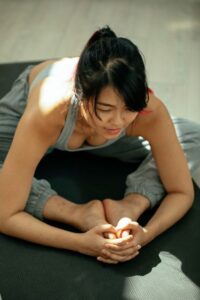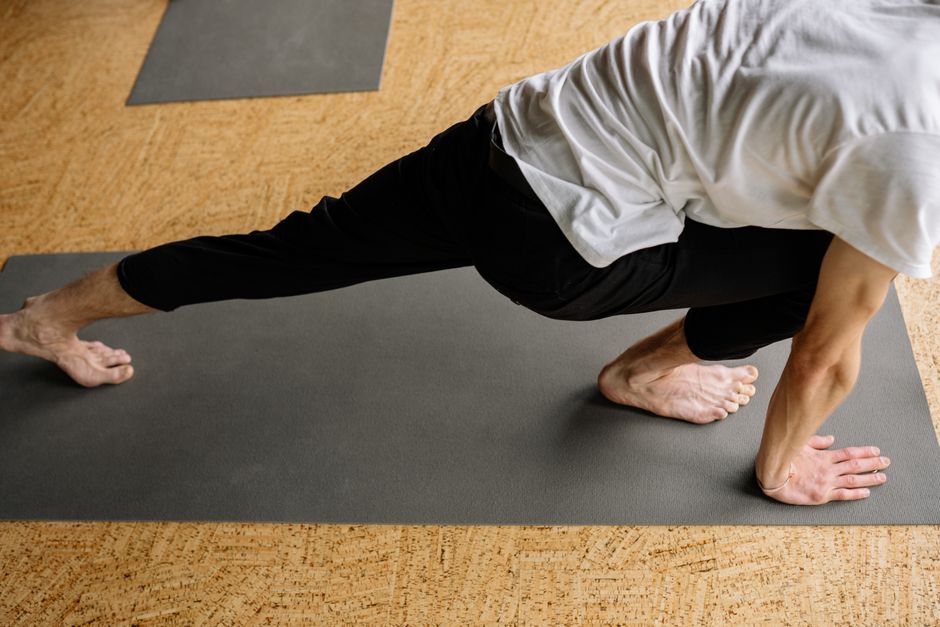
In short: lizard pose is a wide, low lunge with both hands, or both forearms, on the floor inside the front foot. It stretches the hip flexors of the back leg and the inner groin and outer hip of the front leg. Blocks under the forearms and the back knee on the floor make it accessible; lowering all the way to the forearms is optional, not the goal.
Lizard is one of the most common hip openers in flowing classes, often held for a few breaths after a lunge. People with tight hips tend to dread it, because the picture of the pose shows forearms on the floor. Yoga International’s guide to lizard makes the point well: with blocks or a bolster, the pose works for nearly every body, and the stretch is no less useful higher up.
About the name
Lizard is a modern descriptive name. Some modern sources, including a Yoga Journal sequence, give it the Sanskrit name Utthan Pristhasana. We do not use that as the established name: the Bihar School’s Asana Pranayama Mudra Bandha uses utthan prishthasana, translated there as “the lizard pose”, for a completely different movement, done lying on the belly with the forearms crossed and the hips lifting and lowering. The lunge taught in modern classes is not described in Light on Yoga or the Ashtanga series. In yin yoga, a similar low lunge held for minutes is called dragon; it has its own page.
How to make it work
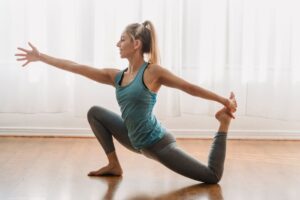
Start from a low lunge with the back knee down and slid back a little, so the weight is above the knee rather than on the kneecap. Bring both hands inside the front foot, then step that foot out toward the edge of the mat so there is room for the shoulders. Keep the front knee over the ankle and pointing the same way as the toes. Now choose the height: fingertips on the floor, hands on blocks, forearms on blocks, or forearms on the mat. Yoga International suggests drawing the breastbone forward and shifting the back hip slightly back, which keeps you from collapsing into the hip. If the front knee wants to fall inward, you are too low.
For a more active version, tuck the back toes and lift the back knee, pressing back through the heel; for a more restful one, keep the knee down and rest the forearms on a bolster. Stay for about five breaths in a flowing class, longer if you are supported and comfortable.
Precautions in plain words
Pad the back knee if kneeling is uncomfortable, and come up if the front knee or the groin feels sharp rather than stretched. With a hip injury, groin strain or recent knee surgery, check with a health professional before practising deep lunges. Taking weight on the hands or forearms can bother sore wrists or shoulders; blocks help. In pregnancy, a higher version with hands on blocks is usually more comfortable; follow your health care provider’s advice. This page is general information, not individual advice.
Preparation and what comes next
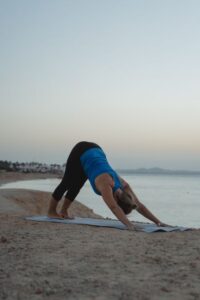
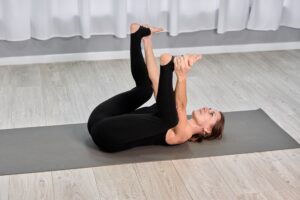
Warm up with downward-facing dog and low lunge. Yoga International also suggests half frog to open the front of the thigh, and happy baby on one side, which gives a similar hip shape lying on your back. From lizard, flowing classes often move to pigeon pose or to a half split. Afterward, child’s pose lets the hips settle.
Where it is taught
Lizard is a staple of vinyasa and power yoga, and a gentler supported version suits hatha classes. It appears in our yoga for flexibility plan. Browse more hip openers in the pose library.