Shoulder-Pressing Pose (Bhujapidasana): steps and precautions

Shoulder-pressing pose (Bhujapidasana) is an arm balance with the thighs resting high on the upper arms and the ankles crossed. Part of the Ashtanga primary series; an advanced pose.

Not yet reviewed by a qualified teacher Names and shape checked against 3 sources

Sanskrit name
Bhujapīḍāsana भुजपीडासन (source)
Pronunciation
bhoo-jah-pee-DAH-sah-nah (source)
Also called
Arm Pressure Pose, Shoulder Pressing Pose
Other spellings
Bhujapidasana, Bhuja Pidasana, Bhuja Pīḍāsana
Pose family
Arm balance
Starting position
Hands-supported
Movement
Balance, Strength hold
Taught in
Vinyasa Yoga: Flow, Breath and What to Expect
Difficulty
Advanced
Prerequisite skills
A deep squat with open hips, a forward fold with the shoulders able to slide behind the knees, and wrists that tolerate full body weight.
Body areas
Arms and wrists, Core, Hips, Shoulders
Props
Blanket, Block, Mat
Practised
Solo

Names in different traditions

TraditionName usedNote
Ashtanga vinyasa (Pattabhi Jois lineage)Bhuja PīḍāsanaPrimary series, before Kurmasana; feet crossed, then chin toward the floor for five breaths (AshtangaYoga.info).
Iyengar (Light on Yoga)BhujapīḍāsanaPlate 348, per the Iyengar Yoga (UK) I8 Teaching Syllabi.

Step by step

Coming into the pose

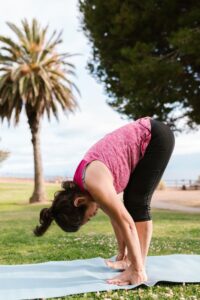
  1. Squat with the feet a little less than shoulder-width apart and the knees wide. Tilt the torso forward between the thighs and lift the hips until the thighs are nearly parallel to the floor.
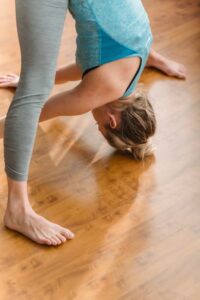
  2. Work the left upper arm and shoulder under the back of the left thigh, just above the knee, and place the left hand outside the left foot, fingers forward. Repeat on the right.

In the pose

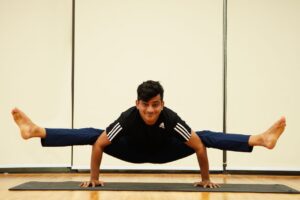
  1. Press the inner hands into the floor and rock the weight back off the feet onto the hands, straightening the arms so the feet lift.
  2. Squeeze the arms with the inner thighs, cross the right ankle over the left and look ahead. Hold for about 30 seconds (Yoga Journal) or five breaths (Ashtanga).

Coming out

  1. Bend the elbows and lower the feet with an exhale. Repeat with the other ankle on top.

Breathing

Exhale as you rock back and lift; breathe steadily in the pose. In the Ashtanga version the chin lowers on an exhalation and the head rises on an inhalation.

Alignment cues

  • Thighs as high on the upper arms as possible, just above the knees.
  • Lift by shifting the centre of gravity back, not by pushing.
  • Inner thighs squeeze the outer arms.
  • Ankles stay crossed at the ankle, not at the toes.

Common alignment errors

  • Thighs too low on the arms, so there is no shelf.
  • Jumping straight to firefly and skipping the pressing action.
  • In the Ashtanga version, dropping the head instead of lifting the feet back.

Modifications and easier variations

  • Count it a success if the feet lift at all; leave the ankles uncrossed. none

Advanced variations

Props and chair adaptations

  • Hands on blocks placed lengthwise behind the heels, fingers toward the feet, for extra lift (Yoga Journal). block
  • A folded blanket under the face for the chin-down version. blanket

Precautions

  • Shoulder, elbow, wrist or low back injuries: avoid (Yoga Journal).
  • Hip or groin injury: avoid the deep hip flexion.
  • Pregnancy: ask your health care provider before arm balances.

Learn it with a teacher: Learn the float-in and chin-to-floor Ashtanga version with an authorised or experienced teacher.

General information, not medical advice. Poses do not cure illness. If you are pregnant, injured or have a health condition, check with your doctor and tell your teacher before you practise.

In short: shoulder-pressing pose is an arm balance in which the backs of the thighs rest high on the upper arms, the ankles cross in front of you and the whole body is held on the hands. It relies on precise positioning and open hips more than raw strength, but it puts full weight on the wrists, so it is an advanced pose rather than a first arm balance.

The pose is known well beyond the Ashtanga primary series, where it is the first true arm balance, and it is a stepping stone to firefly and tortoise.

The name

Bhuja means arm or shoulder and pīḍa pressure or squeezing, so Bhujapīḍāsana is the pose of pressure on the arms. Yoga Journal calls it Shoulder-Pressing Pose and also Arm Pressure Pose. The Iyengar Yoga (UK) syllabus lists it at plate 348 of Light on Yoga, and AshtangaYoga.info describes it as the pose in which the thighs, laid sideways over the upper arms, transfer the whole body weight onto the arms while the chin hovers just above the floor.

Making the pose work

Get the shoulders as far under the backs of the thighs as you can, just above the knees, with the hands planted outside the feet. Then lift by shifting your weight back, not by pushing up: Yoga Journal’s steps describe rocking the weight off the feet onto the hands so the feet lift lightly as the arms straighten. Squeeze the outer arms with the inner thighs and cross the ankles. Yoga Journal holds the pose for about 30 seconds and then repeats with the other ankle on top.

In the Ashtanga primary series the pose is entered by floating forward from downward dog onto the hands and sliding the thighs onto the arms. AshtangaYoga.info gives two keys for that version: cross the feet at the ankles and lift the chest almost into a backbend, which gives enough height for the next step. Then, exhaling, the crossed feet point back between the arms and the elbows bend until the chin hovers over the floor for five breaths. Focus on lifting the feet back rather than lowering the head.

Precautions in plain words

Yoga Journal lists shoulder, elbow, wrist and low back injuries as contraindications. Warm up the wrists and hips first, and keep a blanket under the face for the chin-down version. The deep hip flexion can be uncomfortable with hip or groin injuries. In pregnancy, ask your health care provider before arm balances. This page is general information, not individual advice.

Preparation and what comes next

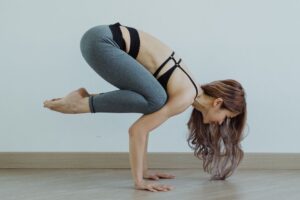
Prepare with garland pose, standing forward bend, wide-legged forward bend, crow and boat pose. Hands on blocks behind the heels give more room to lift. From shoulder-pressing pose the legs can straighten into firefly; in the Ashtanga primary series it is followed by tortoise. Yoga Journal adds that the pose builds toward crow and Sage Koundinya’s pose II. Afterwards, stretch the wrists and rest in child’s pose.

A simple way to practise it. Work toward the pose in stages. Spend a few breaths in garland pose, then in a wide forward bend with the shoulders working behind the knees. Next, with blocks behind the heels, place the hands and simply sit back until the feet feel light. When the feet lift, hold for a few breaths before crossing the ankles. Only when the lift is easy should you try the Ashtanga chin-down stage, and then with a blanket under the face. Practise both ankle crossings so both sides develop evenly.

You will find this pose in Ashtanga (primary series), Iyengar and vinyasa classes.

Preparatory poses

Follow-up poses and transitions

Counterposes

Related poses

More arm balance poses

Frequently asked questions

Is shoulder-pressing pose easier than crow?

Some people find it easier because the thighs sit high on the arms and you lift by leaning back, but it needs open hips and full weight on the wrists. Treat it as an advanced arm balance.

What does Bhujapidasana mean?

Bhuja means arm or shoulder and pida pressure, so it is the pose of pressure on the arms: the thighs press into the arms and the arms press back.

Where does it come in the Ashtanga primary series?

After boat pose (Navasana) and before tortoise (Kurmasana). It is held for five breaths, with the chin lowered toward the floor.

Sources

  1. Shoulder-Pressing Pose (Bhujapidasana), Yoga Journal (accessed October 6, 2026)
  2. Bhuja Pīḍāsana: pose with pressure on the arms, AshtangaYoga.info (Dr. Ronald Steiner) (accessed October 6, 2026)
  3. I8 Teaching Syllabi (asanas with Light on Yoga plate numbers), Iyengar Yoga (UK) (accessed October 6, 2026)

Facts checked on October 6, 2026