Reclining Tortoise (Supta Kurmasana): what it is and how it is approached

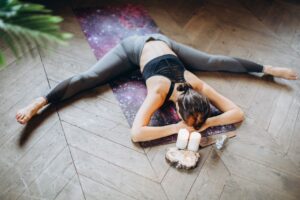
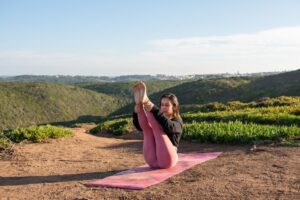
Reclining tortoise (Supta Kurmasana) is the bound version of tortoise pose: hands clasped behind the back, feet crossed behind the head, forehead on the floor. Advanced; learn with a teacher.

Not yet reviewed by a qualified teacher Names and shape checked against 5 sources

Sanskrit name
Supta Kūrmāsana सुप्त कूर्मासन (source)
Also called
Sleeping Tortoise, Supine Tortoise
Other spellings
Supta Kurmasana
Pose family
Forward bend, Hip opener and leg extension, Seated
Starting position
Seated
Movement
Forward fold, Hip external rotation
Difficulty
Advanced
Prerequisite skills
A comfortable tortoise pose; deep external hip rotation; experience with leg-behind-the-head preparation; healthy neck and back.
Body areas
Hamstrings, Hips, Neck, Shoulders, Spine
Props
Mat, Strap
Practised
Solo

Names in different traditions

TraditionName usedNote
Ashtanga vinyasa (Pattabhi Jois lineage)Supta KūrmāsanaPrimary series, directly after Kurmasana; feet placed behind the head while sitting upright, then fold and bind; five breaths (AshtangaYoga.info).
Iyengar (Light on Yoga)Supta KūrmāsanaAsana 134, plate 368, the final stage of Kurmasana (asana 133, plates 363-367): hands clasped behind the back, ankles interlocked, head between the feet, forehead on the floor; one to two minutes; change the crossing of the feet.

Step by step

Coming into the pose

  1. Ashtanga route: from tortoise pose, place the hands on the floor under the thighs and lift up. Balancing on the buttocks while sitting upright, place first the left foot and then the right foot behind the head.
  2. Easier option: if the feet do not go behind the head, leave them on the floor with the soles together.
  3. Light on Yoga route: from tortoise pose with the chest down, turn the palms up and move the arms back toward the hips; bend and lift the knees, lift the chest slightly and clasp the hands behind the back; bring the feet toward the head and interlock them at the ankles.

In the pose

  1. Exhale and lower forward so the pelvis and forehead rest on the floor. Reach the arms under the legs and clasp the hands behind the back.
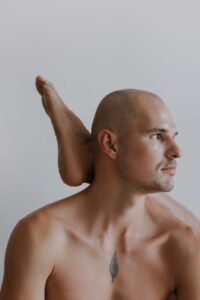
  2. Stay for five breaths (Ashtanga) or one to two minutes (Light on Yoga), breathing slowly. Over time the shins may rest on the back of the neck with the ankles crossed, the head between the feet.

Coming out

  1. At the end of the last exhalation release the hands, place them under the thighs, lift up on an inhalation and release the legs.

Breathing

Slow, steady breaths through the nose. The belly is compressed, so the breath moves into the back and sides of the ribs. If the breath becomes strained or held, come out.

Alignment cues

  • Place the feet behind the head while sitting upright, not while lying with the chin on the floor (AshtangaYoga.info).
  • Let the hips rotate outward; never force the legs with the hands or the neck.
  • Keep the neck long; the weight of the legs should not crank the head down.

Common alignment errors

  • Forcing the feet behind the head from the floor, straining the neck and lower back.
  • Attempting the pose before tortoise pose is comfortable.
  • Using a partner to push the body deeper.

Modifications and easier variations

  • Feet on the floor with the soles together, arms under the legs reaching back (AshtangaYoga.info alternative). none
  • Stay in tortoise pose with bent knees instead. none

Props and chair adaptations

  • Use a strap between the hands behind the back if they do not meet. strap

Precautions

  • Only with an experienced teacher and after tortoise pose is comfortable.
  • Avoid with neck, back, shoulder, hip or knee injuries, disc problems or sciatica.
  • Avoid during pregnancy.

Learn it with a teacher: Always learn this pose with an experienced teacher. It combines deep spinal flexion, strong hip rotation and load on the neck.

General information, not medical advice. Poses do not cure illness. If you are pregnant, injured or have a health condition, check with your doctor and tell your teacher before you practise.

In short: reclining tortoise is the bound, folded-up version of tortoise pose. From the deep forward bend of tortoise, the arms reach back under the legs and the hands clasp behind the back, while the feet cross behind the head and the forehead rests on the floor. It is one of the most demanding poses of the Ashtanga primary series, appears in B.K.S. Iyengar’s Light on Yoga as the final stage of tortoise pose, and should be learned with a teacher.

Despite “reclining” in the English name, you do not lie on your back: the body is folded forward, face down, wrapped around itself. The name comes from the Sanskrit supta, which can mean lying down or sleeping, so the pose is also called sleeping tortoise.

What the name means

Supta Kūrmāsana joins supta (sleeping, lying), kūrma (tortoise) and āsana (posture). It completes the image of tortoise pose: head and limbs drawn fully into the shell. It is a modern posture of the 20th-century Mysore lineages, practised in the Ashtanga primary series right after tortoise pose. Light on Yoga calls it “the sleeping tortoise pose” and presents it as the third and final stage of Kurmasana, the tortoise with head and limbs drawn under its shell. It should not be confused with Uttana Kurmasana in the Hatha Yoga Pradipika, a lotus-based shape lying on the back.

How the pose is approached

There are two common routes. In the Ashtanga method described by AshtangaYoga.info, you place the feet behind the head while sitting upright, balancing on the buttocks with the hands under the thighs, and only then lower forward until the forehead touches the floor, reaching the arms under the legs to clasp the hands behind the back. AshtangaYoga.info warns that trying to slide the feet behind the head while already lying with the chin on the floor puts heavy strain on the neck and pressure on the lower back. Its easier alternative is to leave the feet on the floor with the soles together. The other route, described in Light on Yoga (and in a Yoga Journal master class), works from tortoise pose: with the arms under the knees and the chest down, the palms turn up and the arms move back toward the hips; then you bend the knees, lift the chest a little, clasp the hands behind the back, bring the feet toward the head and cross them at the ankles, and on an exhale slip the head between the feet with the forehead on the floor. Iyengar asks you to change which foot is on top from one practice to the next so the legs develop evenly.

Either way, the hip joints rotate strongly outward and the whole spine flexes deeply, with the weight of the legs on the shoulders and neck. Do not try to reach the full shape by pulling or with a partner pushing. Ashtanga holds it for five breaths; Light on Yoga suggests one to two minutes once the pose is established, breathing normally.

Precautions in plain words

Learn this pose only with an experienced teacher and only after tortoise pose is comfortable. Avoid it with any neck, back, shoulder, hip or knee injury, disc problems or sciatica, and during pregnancy. Stop at any pain in the neck, lower back or knees. The soles-together version keeps much of the fold without the feet behind the head. This page is general information, not individual advice.

Preparation and what comes next

Prerequisites include a comfortable tortoise pose, deep hip openers and, for the feet behind the head, work on one leg behind the head. Yoga sleep pose (Yoganidrasana) is the same leg position lying on the back. In the Ashtanga primary series the next poses are embryo in the womb and rooster. Afterwards, rest the spine in a neutral position and open the front of the body.

How to know you are ready. Before working on the full pose, you should be able to stay comfortably in tortoise pose with the legs nearly straight and the chest close to the floor, and to sit upright with one leg placed behind the head without strain in the neck or lower back. If either of those still feels forced, the soles-together version is the right place to work. In a led Ashtanga class, the teacher normally decides when a student begins this posture.

You will meet reclining tortoise mainly in Ashtanga and Iyengar practice.
Preparatory poses

Follow-up poses and transitions

Counterposes

Related poses

More forward bend poses

Frequently asked questions

Do you lie on your back in reclining tortoise?

No. The body is folded forward, face down, with the hands clasped behind the back and the feet crossed behind the head. Supta here means sleeping or lying, not lying on the back.

Is there an easier version?

Yes: leave the feet on the floor with the soles together and reach the arms back under the legs, or stay in tortoise pose.

Can I learn it on my own?

No. Learn it with an experienced teacher; it loads the neck, back and hips heavily.

Sources

  1. Supta Kūrmāsana: Schlafende Schildkröte (Sleeping Tortoise), AshtangaYoga.info (Dr. Ronald Steiner) (accessed October 6, 2026)
  2. Slide Back Into Your Shell: Tortoise Pose (master class; Supta Kurmasana steps behind member wall), Yoga Journal (accessed October 6, 2026)
  3. Kurmasana or Tortoise Pose (archive, 1977): completed pose with hands clasped behind and head under crossed ankles, Yoga Journal (accessed October 6, 2026)
  4. B.K.S. Iyengar, Light on Yoga: asana 133 Kurmasana (plates 363-367) and asana 134 Supta Kurmasana (plate 368), Allen & Unwin (Internet Archive, Digital Library of India copy) (accessed October 6, 2026)
  5. Kurmasana: Supta Kurmasana variation (pointer only), Wikipedia (accessed October 6, 2026)

Facts checked on October 6, 2026