Rooster Pose (Kukkutasana): steps, the old text and upward rooster

Rooster pose (Kukkutasana) lifts a full lotus off the floor on straight arms threaded through the legs. A Hatha Yoga Pradipika posture in the Ashtanga primary series; an advanced pose. Upward rooster is a section.

Not yet reviewed by a qualified teacher Names and shape checked against 6 sources

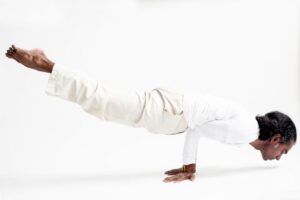
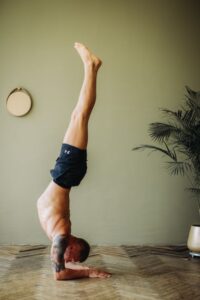
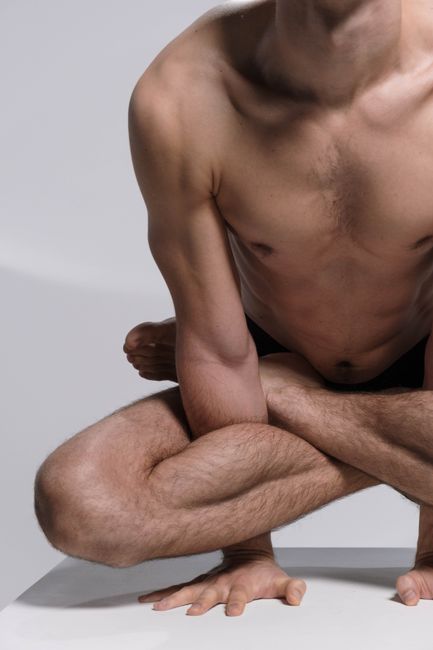
A shirtless man demonstrates a complex yoga pose, showcasing flexibility and muscular strength.
Sanskrit name
Kukkuṭāsana कुक्कुटासन (source)
Also called
Cock Pose, Upward Rooster
Other spellings
Kukkutasana, Kukutasana, Urdhva Kukkutasana
Pose family
Arm balance, Seated
Starting position
Hands-supported
Movement
Balance, Strength hold
Taught in
Hatha Yoga: The Historical Term and the Modern Class
Difficulty
Advanced
Prerequisite skills
A deep, pain-free full lotus held comfortably, scale pose, and wrists that tolerate full body weight.
Body areas
Arms and wrists, Core, Hips, Shoulders
Props
Block, Mat
Practised
Solo

Names in different traditions

TraditionName usedNote
Hatha Yoga Pradipika (15th century)KukkuṭāsanaLotus, hands carried under the thighs, body raised on the palms (Pancham Sinh 1914). Uttāna Kūrmāsana follows from it.
Ashtanga vinyasa (Pattabhi Jois lineage)KukkuṭāsanaPrimary series, after Garbha Piṇḍāsana; five breaths (AshtangaYoga.info). Ūrdhva Kukkuṭāsana A and B in the third series.
Iyengar (Light on Yoga)Kukkuṭāsana; Ūrdhva KukkuṭāsanaPlates 115 and 417–419 (Iyengar Yoga UK I8 Teaching Syllabi).

Step by step

Coming into the pose

  1. Sit in full lotus with the feet high in the hip creases.
  2. Slide one hand and forearm down through the gap between the thigh and calf, then the other, as far as the elbows if possible.
  3. Place the palms flat on the floor, fingers forward, shoulder-width apart.

In the pose

  1. Press down, straighten the arms and lift the folded body off the floor, drawing the knees toward the chest. Hold for five breaths (Ashtanga).

Coming out

  1. Lower the seat, draw the arms back out one at a time and release the lotus slowly into staff pose.

Breathing

Breathe steadily through the nose; the abdomen is compressed, so keep breaths smooth rather than deep. Optional abdominal exercises such as nauli belong with a teacher.

Alignment cues

  • Feet high in the hip creases to open space behind the knees.
  • Arms threaded as deep as possible before lifting.
  • Arms straight, shoulders down and wide.
  • Knees drawn up toward the chest.

Common alignment errors

  • Forcing the arms through a tight lotus and twisting the knees.
  • Lifting with bent, collapsing elbows.
  • Attempting it without a comfortable lotus.

Modifications and easier variations

  • Practise scale pose (lotus lifted with the hands beside the hips) instead. none
  • Thread the arms only to the wrists and press without lifting. none

Advanced variations

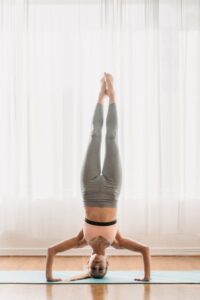
  • Upward rooster (Ūrdhva Kukkuṭāsana): lotus legs on the upper arms, from tripod headstand.
  • Uttāna Kūrmāsana (Hatha Yoga Pradipika): from rooster, grasp the neck and lie back.

Props and chair adaptations

  • Hands on blocks to give the arms more length. block

Precautions

  • Knee, ankle or hip injury: avoid; never force lotus.
  • Wrist or elbow problems: avoid.
  • Pregnancy: do not start this pose.

Learn it with a teacher: Learn rooster and especially upward rooster with an experienced teacher, after lotus is comfortable and stable.

General information, not medical advice. Poses do not cure illness. If you are pregnant, injured or have a health condition, check with your doctor and tell your teacher before you practise.

In short: rooster pose starts in lotus. The arms slide down through the gaps between the thighs and calves, the palms press into the floor, and the whole folded body lifts off the ground on straight arms. It depends on a deep, comfortable lotus, so it is an advanced pose and never a place to force the knees.

Rooster is one of the few arm balances described in a classical hatha text, and it remains part of the Ashtanga primary series and the Iyengar repertoire.

The name and the old text

Kukkuṭa means rooster or cock. Kukkuṭāsana is one of the fifteen postures of the 15th-century Hatha Yoga Pradipika. In Pancham Sinh’s 1914 translation, the yogi takes lotus, carries the hands under the thighs, and raises himself above the ground with the palms on the floor. The same text builds on it: from rooster, grasping the neck with the hands and lying back gives Uttāna Kūrmāsana, the upturned tortoise. The Iyengar Yoga (UK) syllabus lists Kukkuṭāsana at plate 115 of Light on Yoga, directly before Garbha Piṇḍāsana. AshtangaYoga.info describes the Ashtanga version as an arm balance in which the arms support the body downward through a lotus seat.

Making the pose work

Everything depends on how high and tight the lotus is. The higher the feet sit in the hip creases, the larger the gaps behind the knees and the further the arms can slide through. Thread one arm at a time, as far as the elbow if possible; a little moisture on the skin helps it slide, as AshtangaYoga.info notes for the related embryo in the womb pose. Then press the palms down, straighten the arms and lift, drawing the knees up toward the chest.

In the Ashtanga primary series, rooster follows embryo in the womb directly: after nine rolls on the back in the lotus-and-arms shape, the practitioner rolls up with some momentum, releases the hands from the face and presses them into the floor with straight arms. The pose is held for five breaths. AshtangaYoga.info mentions that some practitioners add an abdominal churning exercise (nauli) here, with the alternative of simply breathing calmly; that is a traditional add-on, not a requirement.

Precautions in plain words

Rooster combines full lotus with arms pressed between thighs and calves, which increases the twist at the knee if the lotus is not truly open. Never force lotus for this pose; knee pain is a stop sign. Avoid it with knee, ankle or hip injuries, and with wrist or elbow problems. Pregnancy is not the time to start it. Learn it with a teacher. This page is general information, not individual advice.

Upward Rooster (Urdhva Kukkutasana)

Upward rooster turns the idea around. Instead of threading the arms through the lotus, the folded lotus legs rest on the backs of the upper arms, high near the armpits, and the body balances on the hands with the arms straight. The Iyengar Yoga (UK) syllabus lists Ūrdhva Kukkuṭāsana at plates 417 to 419 of Light on Yoga, and in Ashtanga it belongs to the third series as versions A and B. AshtangaYoga.info’s description of version A starts in a tripod headstand: the legs fold into lotus in the air, lower until the shins reach the armpits, and then the arms straighten and the head lifts for five breaths. This is a very advanced pose that needs a steady tripod headstand, an easy lotus and direct teacher supervision.

Preparation and what comes next

Prepare with lotus held comfortably for several minutes, scale pose (the same lift without the arms threaded), and hip openers such as bound angle and fire log pose. In Ashtanga, rooster follows embryo in the womb and is followed by bound angle. After the pose, release the legs slowly and stretch them out in staff pose.

You will meet rooster in Ashtanga (primary series), Iyengar and traditional hatha practice.
Preparatory poses

Follow-up poses and transitions

Counterposes

Related poses

More arm balance poses

Frequently asked questions

Is rooster pose in the Hatha Yoga Pradipika?

Yes. Kukkutasana is one of its fifteen postures: in lotus, the hands go under the thighs and the body is raised on the palms.

What is the difference between rooster and upward rooster?

In rooster the arms thread through the lotus and the body lifts. In upward rooster the lotus legs rest on the backs of the upper arms near the armpits; it is usually entered from tripod headstand.

Can I do rooster without full lotus?

Not safely in its classic form. Work on scale pose and hip openers instead, and never force lotus.

Sources

  1. Hatha Yoga Pradipika, translated by Pancham Sinh (1914): Kukkutasana and Uttana Kurmasana, Internet Archive (accessed October 6, 2026)
  2. Kukkuṭāsana: Hahn (Rooster), AshtangaYoga.info (Dr. Ronald Steiner) (accessed October 6, 2026)
  3. Garbha Piṇḍāsana: Eingerollter Embryo (arm threading tips), AshtangaYoga.info (Dr. Ronald Steiner) (accessed October 6, 2026)
  4. Ūrdhva Kukkuṭāsana A: The Pose of the Upward Rooster, AshtangaYoga.info (Dr. Ronald Steiner) (accessed October 6, 2026)
  5. Scale Pose (Tolasana): Kukkutasana as a follow-up, Yoga Journal (accessed October 6, 2026)
  6. I8 Teaching Syllabi (asanas with Light on Yoga plate numbers), Iyengar Yoga (UK) (accessed October 6, 2026)

Facts checked on October 6, 2026