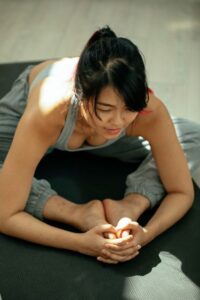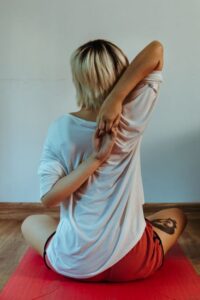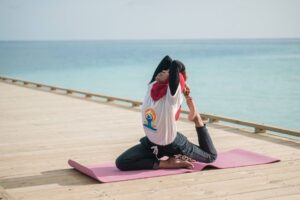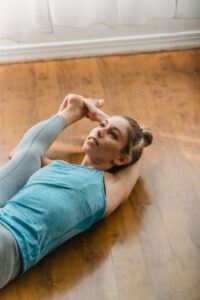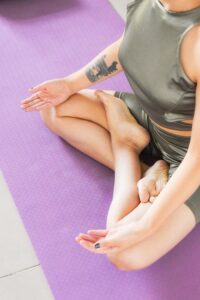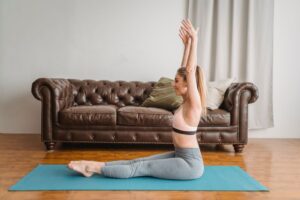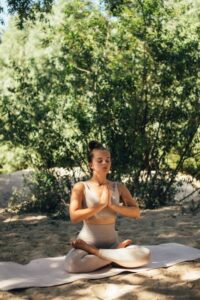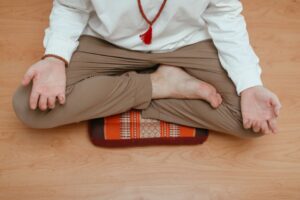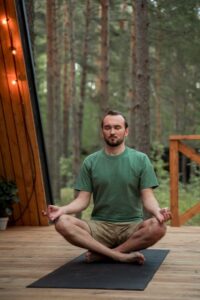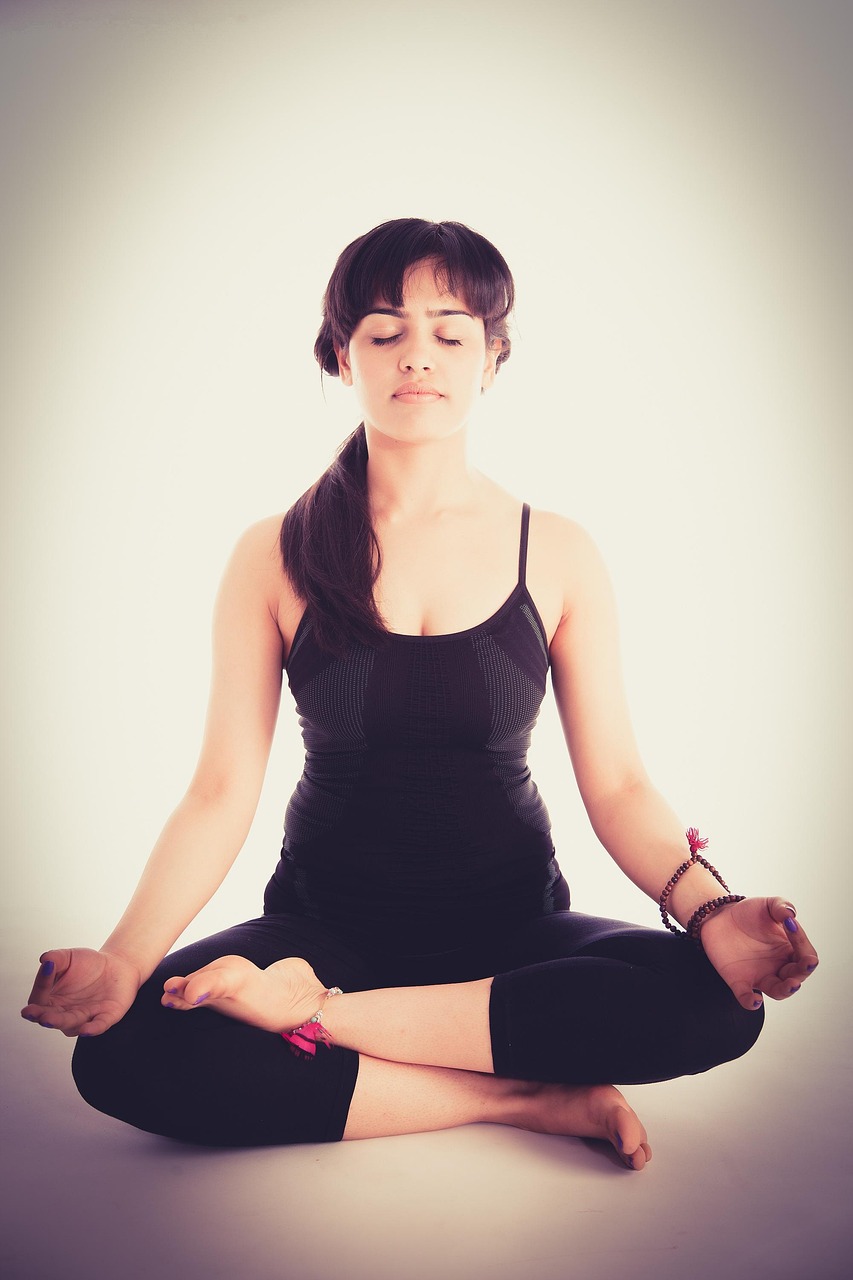
In short: half lotus is a cross-legged seat with one foot resting sole-up on the opposite thigh and the other foot on the floor under the opposite knee. It is a common meditation seat in its own right and the usual step before full lotus. The turning must come from the hip; any pain in the knee means stop.
Half lotus sits between easy pose and full lotus: it asks for real outward rotation in one hip at a time, which makes it a good way to learn how your hips move and to balance the two sides. Below we explain the name, the safest way to lift the foot, the precautions and what to practise around it.
The name
Ardha means half and padma lotus; Ardha Padmāsana is half of the lotus seat. The Bihar School’s Asana Pranayama Mudra Bandha lists it, with easy pose, among the simplified meditation seats for beginners, recommends it in preference to easy pose, and suggests alternating the legs to prepare for full lotus. Yoga Journal describes the same shape, one foot tucked into the opposite hip crease and the other foot under the opposite knee, and uses it as the gateway to full lotus. Half lotus also appears inside other poses, such as the half-bound lotus standing forward bend and the half-bound lotus seated forward bend.
Lifting the foot safely
Yoga Journal’s method is worth following exactly. Reach under the calf and hold the outside of the lower leg near the ankle. Flex the foot so it stays in line with the shin rather than curling inward, then lift the leg by rotating the shin and thigh outward together, and set the outer ankle on the opposite thigh near the groin, with the ankle bone supported by the thigh. The knee should move toward the floor because the hip turns, not because the ankle sickles or the knee twists. Then bring the other foot under the top knee.
A cushion or folded blanket under the hips helps the knees descend. If the top knee floats high, support it with a block and go back to gentler hip openers for a while. A gentler first stage, also from Yoga Journal, is to rest the ankle just above the opposite knee instead of in the hip crease. Change sides each time.
Why the hip has to do the work
The same Yoga Journal column explains the reasoning. The hips are deep joints held by some of the strongest ligaments and muscles in the body, so they change slowly. The knee is one of the weaker joints, and the ankle is also less stable than the hip. If the hip runs out of rotation, the force goes to the knee and ankle first. That is why the column asks you to keep both ankles flexed, so that you cannot see the soles of the feet, and to stabilize the knees and ankles while you free the hips.
Some practical points follow from this. Practice after standing poses, when the body is warm; the column notes that very stiff people may find the afternoon easier than the morning. Sit tall with the back, neck and head in a straight line, as the Bihar School describes. A folded blanket under the hips lets you lean forward a little on the fingertips; the column suggests staying for at least a minute (about 12 to 15 breaths) when you use half lotus as a hip opener. When the top knee rests close to the bottom foot, Yoga Journal suggests you are probably ready to try full lotus.
Precautions in plain words
Lotus-type seats are a known source of knee injury when forced. Yoga Journal’s teaching article on protecting the knees explains that when the hip stops rotating, pulling the foot higher or pushing the knee down levers the knee joint and can damage it. Never pull the foot up after the hip has stopped turning, and never let anyone push your knee down. Skip half lotus with a knee injury or knee surgery, or hip or ankle problems, and ask your doctor or physical therapist. The Bihar School advises against it with sciatica or sacral problems. Come out if the legs go numb. This page is general information, not individual advice.
Preparation and next poses
Prepare with bound angle, reclining figure four, cow face legs and pigeon pose. When half lotus is comfortable on both sides, full lotus may follow, but it is not a requirement for meditation. Related seats are easy pose, auspicious pose and accomplished pose.
Where it is used
Half lotus is used as a seat for breathing practices and meditation in hatha, Iyengar and Ashtanga teaching, and as a leg position inside many poses. See also our guide on how to meditate.