Accomplished Pose (Siddhasana): the classical meditation seat

Accomplished pose (Siddhasana) is a classical cross-legged meditation seat named in the Hatha Yoga Pradipika. How to arrange the heels, cushion and knee support, precautions and related seats.

Not yet reviewed by a qualified teacher Names and shape checked against 4 sources

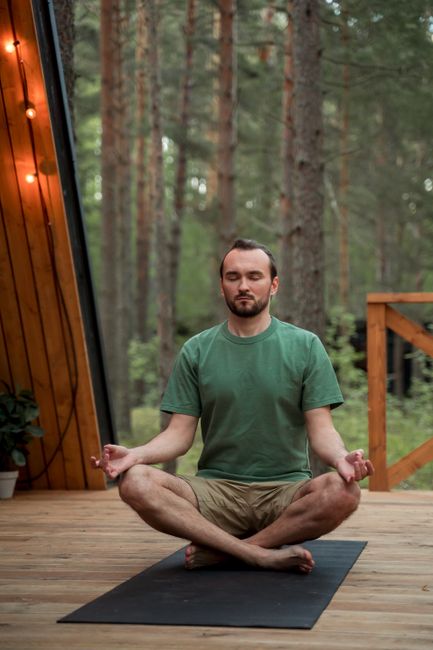
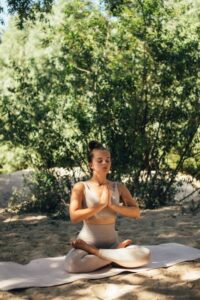
Serene yoga practice in a peaceful forest setting, emphasizing relaxation and mindfulness.
Sanskrit name
Siddhāsana सिद्धासन (source)
Also called
Perfect Pose, Siddha Yoni Asana (Bihar School female form)
Other spellings
Siddhasana
Pose family
Seated, Seated and meditation
Starting position
Seated
Movement
Hip external rotation
Taught in
Hatha Yoga: The Historical Term and the Modern Class
Difficulty
Intermediate
Prerequisite skills
Comfortable easy pose and bound angle pose; hips that rotate outward without knee strain.
Body areas
Feet and ankles, Hips, Spine
Props
Blanket, Block, Cushion
Practised
Solo

Names in different traditions

TraditionName usedNote
Hatha Yoga Pradipika (15th century)Siddhāsana (also called Vajrāsana, Muktāsana, Guptāsana)Chapter 1; first of the four most important postures.
Iyengar (Light on Yoga)SiddhāsanaAsana 39, plate 84.
Bihar School of YogaSiddhasana; Siddha Yoni Asana (female form)Asana Pranayama Mudra Bandha, meditation asanas.

Step by step

Coming into the pose

  1. Sit on a firm cushion or folded blanket with the legs stretched out in front.
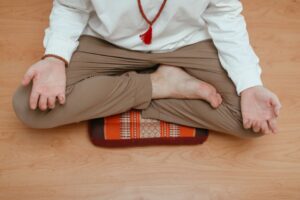
  2. Bend the left knee and draw the left heel in toward the perineum, the sole resting against the inner right thigh.
  3. Bend the right knee and place the right foot over the left ankle, the right heel close to the pubic bone.

In the pose

  1. Tuck the toes and outer edge of the right foot into the fold between the left thigh and calf. Let the knees rest toward the floor; do not sit on the heels.
  2. Lift the spine, neck and head in one line. Rest the backs of the hands on the knees, palms up, or in the lap. Gaze softly down or close the eyes.
  3. Stay as long as the position remains comfortable and steady.

Coming out

  1. Release the top foot, then the lower one, and stretch the legs out. Next time, place the right heel in first.

Breathing

Breathe quietly and naturally. Light on Yoga and the Bihar School recommend Siddhasana as a seat for pranayama and meditation; follow the instructions of the breathing practice you are doing.

Alignment cues

  • Hips raised on a cushion; knees toward the floor.
  • Lower heel in toward the centre of the pelvis; top heel in front of it, near the pubic bone.
  • Top toes tucked between the lower thigh and calf.
  • Rotation from the hips, not the knees.
  • Spine, neck and head upright and relaxed.

Common alignment errors

  • Forcing the feet into place while the knees lift high.
  • Sitting on the floor without height so the back rounds.
  • Staying through numbness or knee ache.
  • Always crossing the same way.

Modifications and easier variations

  • Place the top foot on the floor in front of the lower foot instead of tucking it (close to easy pose). none

Advanced variations

Props and chair adaptations

  • Sit higher on a firm cushion or folded blanket. cushion
  • Blocks or folded blankets under the knees. block
  • For meditation, sit upright toward the front of a chair, feet flat. chair

Precautions

  • Knee lifting high, aching or pinching: raise the seat or use easy pose.
  • Sciatica or sacral problems: avoid (Bihar School).
  • Numbness or tingling: come out and stretch the legs.
  • Knee or hip injury or replacement: ask your doctor or physical therapist.

Learn it with a teacher: Can be learned from clear instructions once easy pose is comfortable. A teacher can help with seat height and foot placement for long meditation sits.

General information, not medical advice. Poses do not cure illness. If you are pregnant, injured or have a health condition, check with your doctor and tell your teacher before you practise.

In short: accomplished pose is a classical cross-legged meditation seat. One heel is drawn in close to the body at the perineum, the other foot rests just in front of and above it, with the toes tucked between the opposite thigh and calf, and the spine sits upright. It asks for more hip rotation than easy pose but less than lotus. Sit on a cushion and never force the feet into place.

Siddhāsana is one of the oldest named postures, and it has always been a seat rather than a stretch: its purpose is to let you sit still, upright and alert for breathing practice and meditation. Many practitioners find it steadier than easy pose because the feet lock the legs in place. Below we explain the name and its history, how to arrange the seat, the precautions and related seats.

The name and the texts

Siddha can mean accomplished or perfected, and also an adept or sage; āsana means seat. The Hatha Yoga Pradipika, a 15th-century manual, names four postures as the most important, Siddha, Padma, Simha and Bhadra, and calls Siddhasana the most comfortable and excellent of them. It describes pressing the perineum with one heel and placing the other heel above the genitals, chin toward the chest and gaze between the eyebrows, and adds that some call this seat Vajrasana, Muktasana or Guptasana. The same text promises spiritual attainments from long practice; those are traditional claims, recorded here as what the text says, not as facts.

Modern manuals keep the shape. B.K.S. Iyengar’s Light on Yoga (1966) gives the same placement of the heels, with the sole of the top foot tucked between the thigh and calf of the lower leg and the body not resting on the heels, and recommends it for pranayama and meditation. The Bihar School’s Asana Pranayama Mudra Bandha describes Siddhāsana for men and a female form, Siddha Yoni Āsana, with the heel placed against the body in the same way. Note that the name Vajrasana is used today for a different, kneeling seat, thunderbolt pose.

Arranging the seat

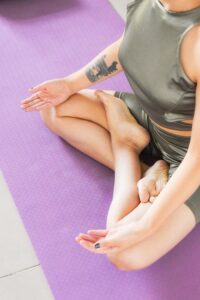
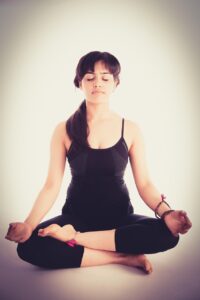
Raise the hips on a firm cushion or folded blanket first; both the Bihar manual and modern teachers note that a low cushion makes the pose easier to hold for long periods. Draw the first heel in toward the centre of the pelvis with the sole against the inner opposite thigh. Bring the second foot in front of it, ankle over ankle, heel close to the pubic bone, and slide the toes and outer edge of that foot into the fold between the opposite thigh and calf. The knees rest on or toward the floor. Lift the spine, let the hands rest on the knees and soften the face. Change which leg is on top each time you sit.
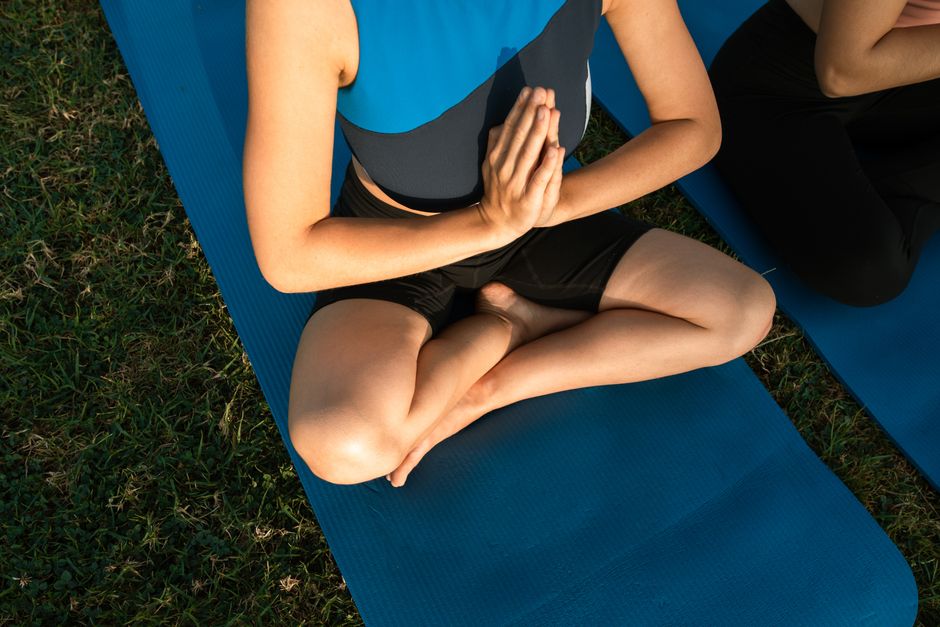
A woman sitting in a lotus yoga pose on a blue mat outdoors, hands in prayer.

Precautions in plain words

All the turning should come from the hips. If a knee lifts high, aches or pinches, raise the seat or return to easy pose. The Bihar School advises against Siddhasana with sciatica or sacral problems. Come out if the legs go numb or tingle, and stretch them before standing. People with knee or hip injuries, or after joint replacement, should ask their doctor or physical therapist before sitting in crossed-leg seats for long. This page is general information, not individual advice.

Preparation and related seats

Prepare with bound angle pose, easy pose and gentle hip openers such as reclining figure four. Closely related classical seats are auspicious pose, which tucks both feet between thigh and calf without the heel against the body, half lotus and lotus.

Where it is used

Accomplished pose is a seat for breathing practices and meditation in hatha, Iyengar and Bihar School teaching. Our guide on how to meditate covers posture for sitting practice.
Preparatory poses

Follow-up poses and transitions

Counterposes

Related poses

More seated poses

Frequently asked questions

What is the difference between Siddhasana and easy pose?

In easy pose the feet rest on the floor under the opposite knees. In Siddhasana one heel is drawn in against the body and the other foot sits in front of it, toes tucked between the opposite thigh and calf, which locks the legs more firmly.

Is Siddhasana easier than lotus?

For most people, yes: it needs less outward rotation of the hips and puts less strain on the knees. It is still more demanding than easy pose.

What does Siddhasana mean?

Siddha means accomplished, perfected or an adept; asana means seat. The Hatha Yoga Pradipika calls it the most excellent of the seated postures.

Sources

  1. B.K.S. Iyengar, Light on Yoga (1966), asana 39 Siddhasana, plate 84, Allen & Unwin (Internet Archive record) (accessed October 6, 2026)
  2. Swami Satyananda Saraswati, Asana Pranayama Mudra Bandha: Siddhasana and Siddha yoni asana, Bihar School of Yoga (Internet Archive) (accessed October 6, 2026)
  3. Hatha Yoga Pradipika, translated by Pancham Sinh (1914), chapter 1, Siddhasana, Internet Archive (accessed October 6, 2026)
  4. Hatha-Yoga-Pradipika, translated by Srinivasa Iyangar (Theosophical Publishing House, 3rd ed. 1949), chapter 1 verses 34-37, Internet Archive (accessed October 6, 2026)

Facts checked on October 6, 2026