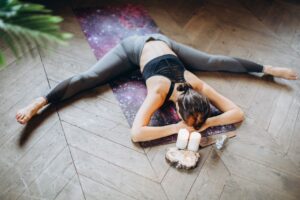
In short: wide-knee frog is a hip opener on all fours: the knees spread wide, the shins stay parallel with the feet flexed, and you lower onto the forearms with the hips roughly in line with the knees. It stretches the inner thighs and groin. Pad the knees well, keep the spine neutral, and slide the hips back toward the heels whenever the stretch is too strong.
In many classes this pose is simply called “frog”, which causes a lot of confusion, because the traditional frog pose (Bhekasana) is a completely different backbend done on the belly. We call this one wide-knee frog to keep them apart. It is a strong inner-thigh stretch and one of the more intense hip openers in a typical class, so it pays to set it up carefully.
About the name
Wide-knee frog is a modern descriptive name. Some studios and websites call it Mandukasana (maṇḍūka means frog), and Yoga International’s guide uses “frog pose, or mandukasana” for it. We do not present that as its established Sanskrit name: in Light on Yoga, Mandukasana is given as another name for Bhekasana, the prone backbend, and other Indian schools use Maṇḍūkāsana-based names for different kneeling postures. In yin yoga, a very similar shape held for several minutes is called frog and has its own page, because the instructions and intention differ.
How to make it work
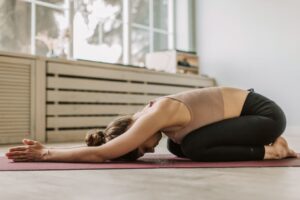
Begin in a wide-knee child’s pose, with a blanket under the knees or the mat folded over. Flex the feet so the inner edges of the feet rest on the floor and the soles face behind you, then walk the feet apart until the shins are parallel to each other. Walk the hands forward and come down onto the forearms, shoulders over the elbows. Yoga International’s key cue is a neutral spine, the back of the head in line with the tailbone; if the lower back sags, a block under the upper belly gives you something to lift away from. How far the hips come forward decides the intensity: hips in line with the knees is the full shape, hips further back toward the heels is gentler.
Stay for five to ten slow breaths in an active class. To come out, walk the hands back, bring the big toes together into wide child’s pose, and then walk the knees in.
Stages borrowed from yin
YinYoga.com describes three stages that are just as useful in an active class. Tadpole is a wide-knee child’s pose with the arms forward and the hips on the heels. Half frog lifts the hips in line with the knees but keeps the feet together. Whole frog separates the feet as wide as the knees, with the shins parallel. Move up a stage only when the one before is comfortable. YinYoga.com also suggests reaching one arm forward at a time, and resting the forehead rather than the chin if the neck is stiff.
Precautions in plain words
The knees carry weight on a hard surface, so padding is essential, and any pain inside the knee or a pinching at the front of the hip means you should bring the knees closer together or sit back. Groin strains, adductor injuries and hip replacements are reasons to skip or greatly reduce the pose; ask a health professional. Very mobile hips can sink into the joint: stay with some muscular effort rather than hanging. Pregnancy: avoid the belly-down version and follow your health care provider’s advice. This page is general information, not individual advice.
Preparation and what comes next
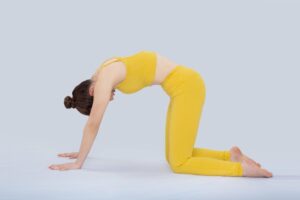
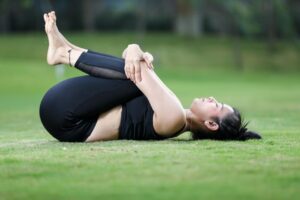
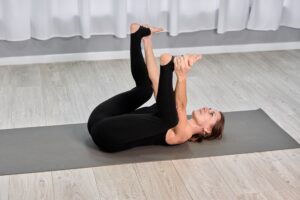
Cat-cow, bound angle and garland pose warm up the hips and inner thighs. Wide-legged forward bend and seated wide angle stretch the same area with the legs straight. Afterward, child’s pose with the knees together, or lying on your back with the knees hugged in, lets the hips settle.
Where it is taught
Wide-knee frog is common in vinyasa and hatha classes and in flexibility workshops; the long-held version is a staple of yin classes. Browse more hip openers in the pose library.