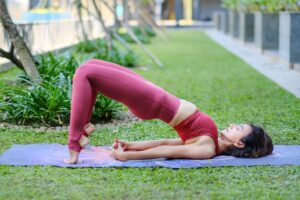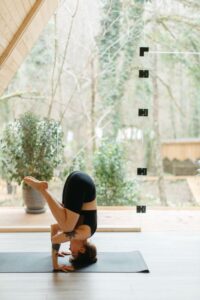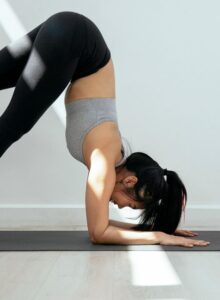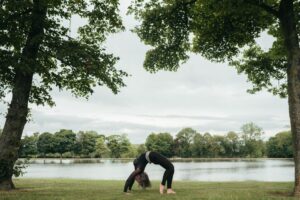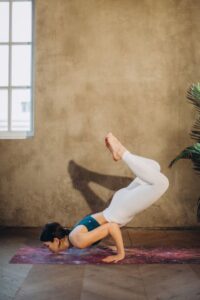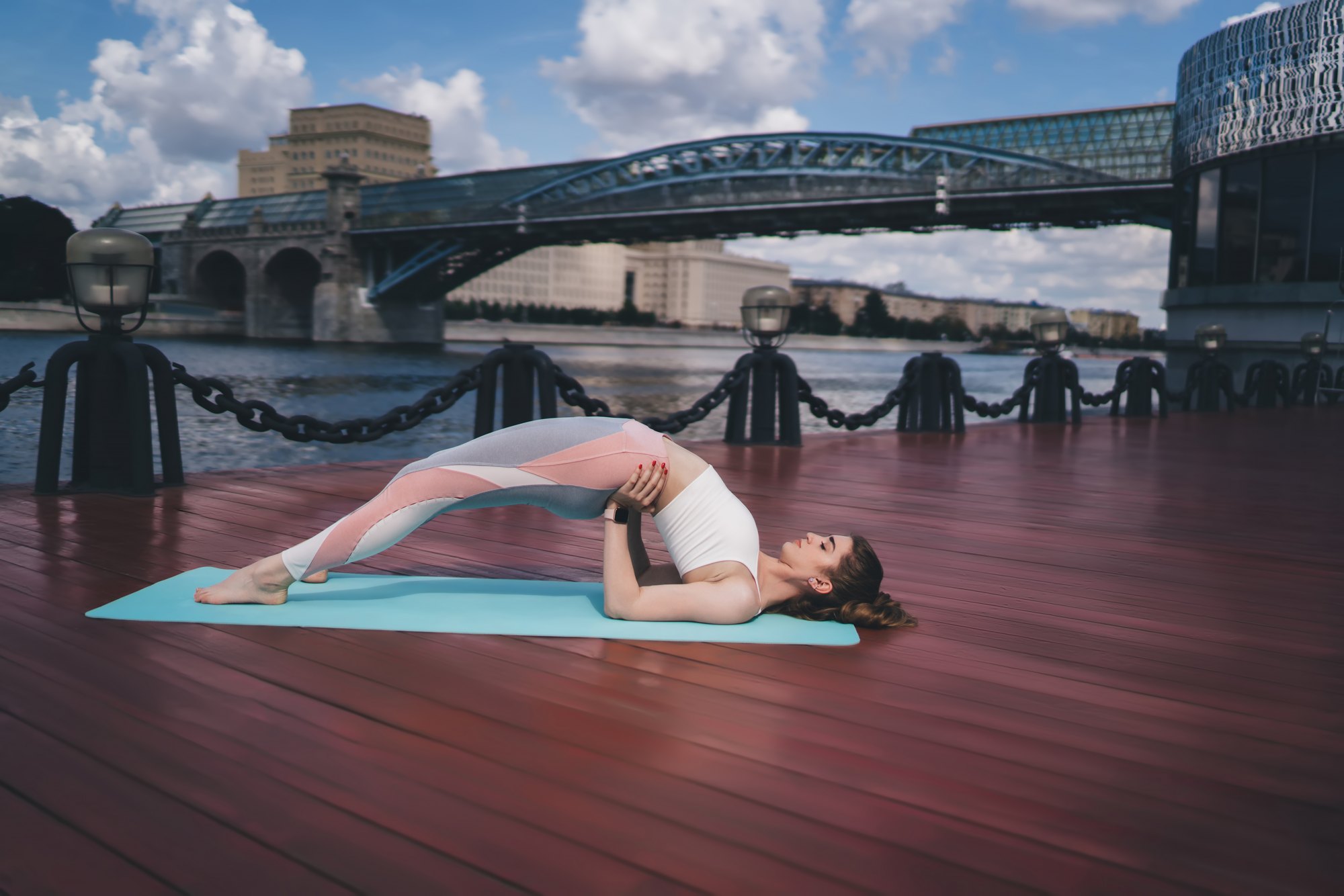
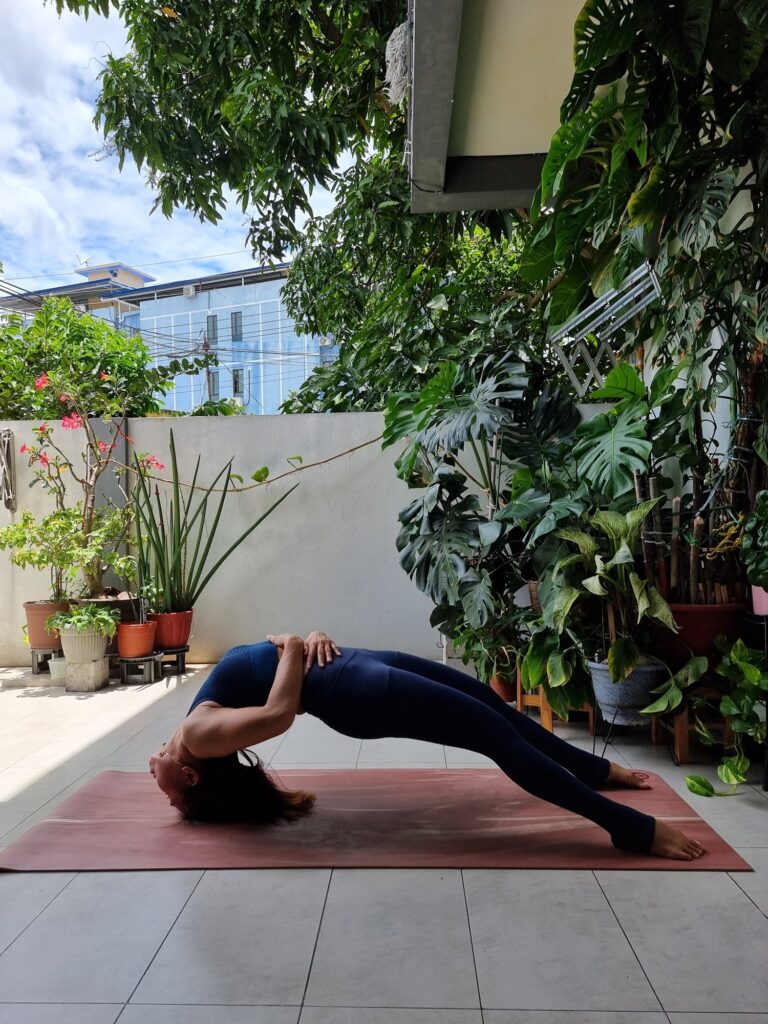
In short: two-legged inverted staff is an advanced backbend that is also part inversion: the head and forearms rest on the floor as in headstand, while the body arches up and back and the legs stretch out straight with the feet on the floor. It looks like wheel pose lowered onto the forearms. It needs a comfortable headstand and a wheel with straight arms. In Iyengar yoga it is also practised over a chair, a supported version that many students use for years.
This page explains the name, how the pose is built, the chair version, the precautions, one-legged inverted staff and where the pose is taught. The full floor pose should be learned with a teacher.
The name
Dvi Pāda Viparīta Daṇḍāsana (often spelled Dwi Pada) means two-footed (dvi pāda), inverted (viparīta) staff (daṇḍa). Iyengar explains that daṇḍa is also a word for the body and for prostration: where a devotee lies face-down before the Lord, the yogi “prostrates” in an inverted arch. It is unrelated to staff pose apart from the word, and different from Viparīta Karaṇī, an inversion.
How the pose is built
Light on Yoga gives a beginners’ route from the floor: lie on the back, set the hands and feet as for wheel, lift onto the crown of the head, then walk the legs out straight one at a time, place the forearms down one by one and interlock the fingers behind the head as in headstand. From there you lift the shoulders, chest and hips and press the heels into the floor. A friend pressing the elbows down, with the feet against a wall, helps the distance between head and feet. Advanced students drop the legs back from headstand instead. Iyengar holds for one to two minutes.
Yoga Journal’s step-by-step article puts bridge and wheel first and says you should be able to do wheel with straight arms and headstand without strain before trying it. In the pose, the elbows stay shoulder-width and directly under the shoulders, the chest keeps lifting and the shoulder blades move toward the tailbone so the neck is not compressed. Breathing is fast and short because the diaphragm is contracted.
The chair version (Iyengar)
In Iyengar classes the pose is often practised over a folding chair: you sit facing the chair back with the legs through it, lie back so the lower edge of the shoulder blades comes just off the front of the seat, hold the chair frame with the elbows on the seat beside the ribs, and press the elbows down to lift the chest, with the knees bent and the feet on the floor or later with the legs straight. The head may hang or rest on a bolster. Iyengar teachers describe the chair as something to press against, not a place to collapse, so the bend spreads through the upper back. It is the usual way to learn the shape and can be held for longer, but it is still a deep backbend: learn the set-up from a teacher.
Precautions in plain words
This pose combines a deep backbend with weight on the head and forearms. Avoid it with neck, shoulder or back injuries, high blood pressure, heart conditions, glaucoma or other eye pressure problems, during pregnancy and during menstruation if your tradition advises against inversions. Never let the weight collapse into the head and neck: if the chest cannot lift, use the chair version. Come out by walking the feet back in and lifting the head with control.
One-legged inverted staff (Eka Pāda Viparīta Daṇḍāsana)
From two-legged inverted staff, keep one leg straight on the floor and lift the other leg up vertically, hold about ten seconds, lower it and repeat with the other leg. This is Eka Pāda Viparīta Daṇḍāsana I in Light on Yoga, which also gives a much harder second version (II) in which you walk the feet in, hold one ankle with both hands and lift the other leg. Both are advanced variations, to be learned only once the two-legged pose is stable, and with a teacher.
Preparation and what comes next
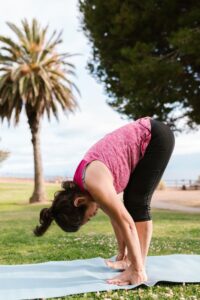
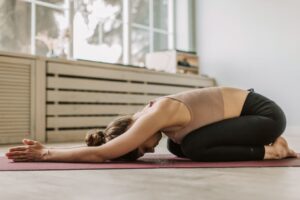
Build up with bridge, wheel with straight arms, headstand, dolphin for the shoulders and supported backbends over a bolster or chair. Iyengar names it, with Kapotasana, as essential before the most difficult backbends. Afterwards, rest in child’s pose or fold in a standing forward bend.
Where it is taught
Two-legged inverted staff is a key advanced backbend of Iyengar yoga (Light on Yoga), where the chair version is common in intermediate classes. It also appears in advanced vinyasa workshops.