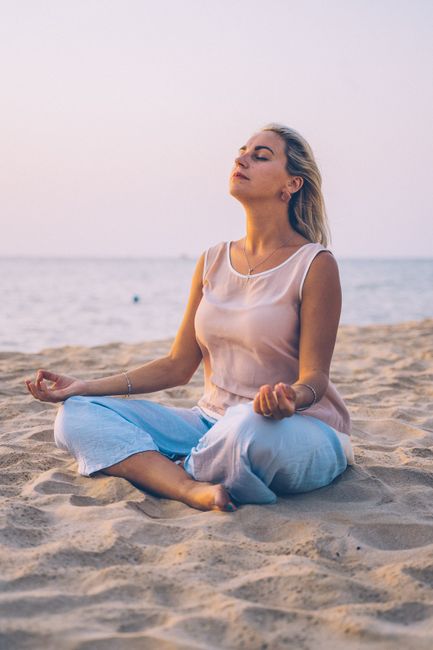
In short: this breathing pacer is a circle that grows as you breathe in and shrinks as you breathe out, with written cues, a countdown for each phase and a session timer. Pick box breathing, a longer exhale, coherent breathing at about 5.5 breaths a minute, 4-7-8 breathing or your own counts, and follow along for one to twenty minutes.
Press Start when you are ready
Time left 3:00
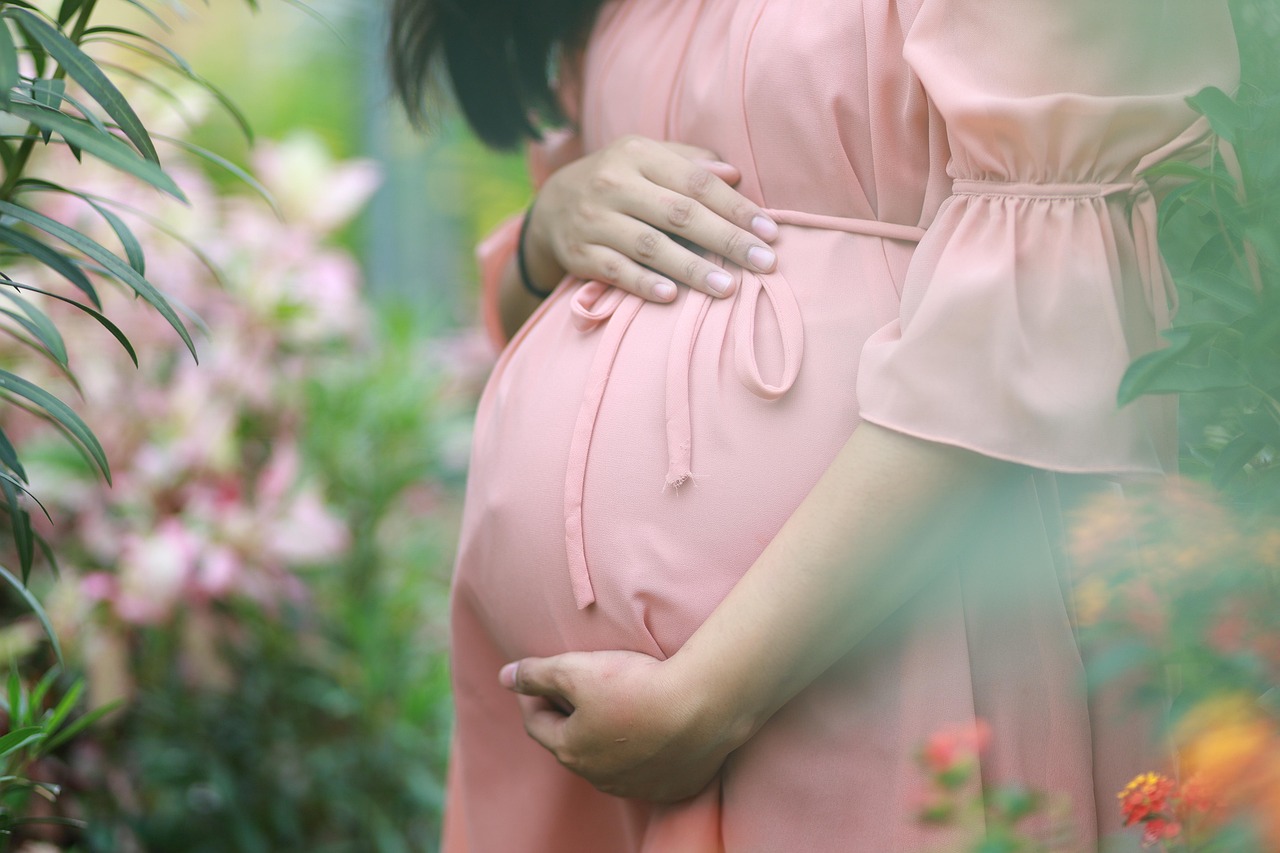
Go gently with breath holds. If you are pregnant, have a heart condition, high or low blood pressure, a lung condition such as asthma or COPD, or a history of panic attacks, skip the holds (choose the extended exhale or coherent breathing) and check with your doctor first. Breathe gently, never strain, and stop if you feel dizzy, short of breath or anxious.
How to use the breathing pacer
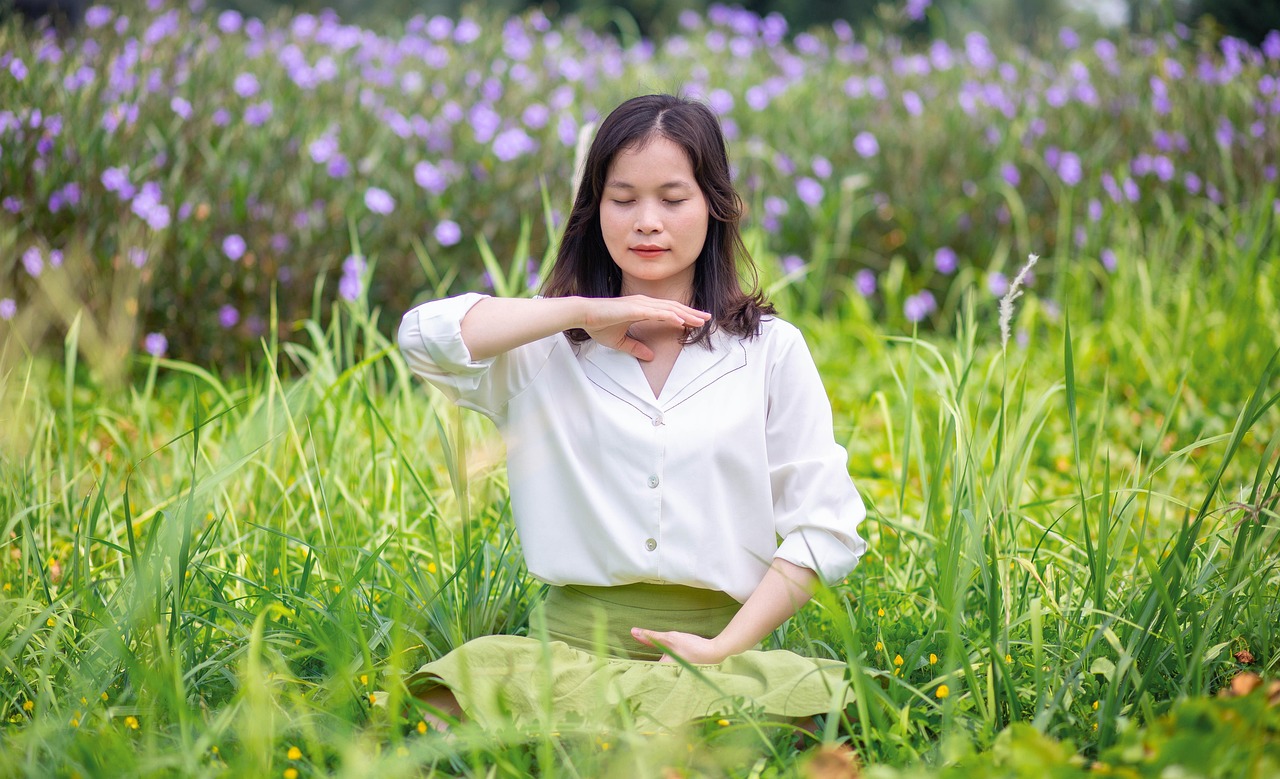
- Get comfortable. Sit upright in a chair or on a cushion, or lie down. Let your shoulders drop and breathe through your nose if that is easy for you.
- Choose a pattern. If you are new to breathing exercises, start with the extended exhale: it has no breath holds. The numbers are seconds.
- Set the session length. Three minutes is a good start. The pacer always finishes a full breath before it stops.
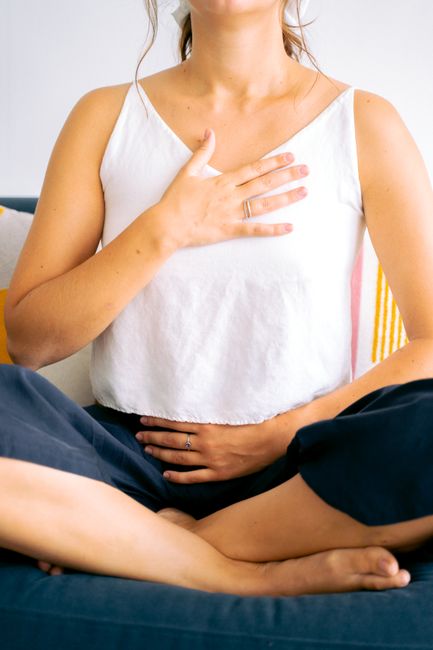
- Press Start and follow the circle. Breathe in as it grows, pause while it stays still, and breathe out as it shrinks. The number counts down the seconds left in each phase.
- Finish gently. When the session ends, let your breathing return to its own rhythm for a few breaths before you get up.
If moving shapes distract you or make you uneasy, tick “Text only” for large written cues and numbers instead. The pacer switches to text-only mode on its own when your device is set to reduce motion. If a count feels too long, choose “Custom counts” and shorten it: the right pace is one you can keep for several rounds without gasping or rushing the next breath.
The breathing patterns
| Pattern | Counts (seconds) | Breaths a minute | Breath holds |
|---|---|---|---|
| Extended exhale | In 4, out 6 | 6 | No |
| Coherent breathing | In 5.5, out 5.5 | About 5.5 | No |
| Box breathing | In 4, hold 4, out 4, hold 4 | About 4 | Yes, two |
| 4-7-8 breathing | In 4, hold 7, out 8 | About 3 | Yes, a long one |
Extended exhale. Breathing out for longer than you breathe in is a simple way to slow down. In a small 2023 Stanford study, a daily five-minute exhale-focused practice called cyclic sighing improved mood more than mindfulness meditation did.
Coherent breathing. Breathing at around five to six breaths a minute is what heart rate variability researchers call resonance breathing. In a 2014 review, Paul Lehrer and Richard Gevirtz explain that the rise and fall of the heart rate with each breath is largest at about six breaths a minute, refined in later research to about 5.5 breaths a minute, or one breath every 11 seconds. The exact rate varies a little from person to person.
Box breathing. Four equal sides: in, hold, out, hold. Cleveland Clinic teaches it with counts of four. Our box breathing guide explains where it comes from and how to choose your counts.
4-7-8 breathing. Popularized in 2015 by integrative medicine physician Andrew Weil and, as Cleveland Clinic notes, rooted in yogic breath practice. The long hold makes it the most demanding pattern here; Cleveland Clinic mentions that beginners may feel a little lightheaded at first.
What the research says, and what it doesn’t
Slow, paced breathing has been studied a lot, but the studies are mostly small and short. A 2018 systematic review of slow breathing (under ten breaths a minute) linked it with greater heart rate variability and with people feeling more relaxed and less anxious. A 2023 meta-analysis of 12 randomized trials found that breathwork had a small-to-medium effect on self-reported stress, with a moderate risk of bias in the studies. The U.S. National Center for Complementary and Integrative Health (NCCIH) reports that a 2019 review found slow breathing exercises led to a modest drop in blood pressure, while noting short follow-ups and a high risk of bias.
In plain terms: paced breathing is a reasonable, low-cost way to help you feel calmer, and no single pattern has been shown to be best. It does not treat any medical condition, and if you have high blood pressure, anxiety or another condition, keep following the treatment plan from your health care provider.
Cautions
- Skip the breath holds (choose the extended exhale or coherent breathing) and check with your doctor first if you are pregnant, have a heart condition, high or low blood pressure, a lung condition such as asthma or COPD, or a history of panic attacks.
- Never strain. Breathe gently, without forcing the air in or out. Stop and breathe normally if you feel dizzy, lightheaded, short of breath or anxious.
- Not while driving or doing anything that needs your full attention, and not in water.
- Forceful techniques are different. Rapid or forceful pranayama such as kapalabhati is not part of this tool and is best learned from a qualified teacher.
Keep exploring
Learn the foundations in our guides to yoga breathing, diaphragmatic (belly) breathing and pranayama, or try calming classical techniques such as alternate nostril breathing and humming bee breath. A few minutes of paced breathing is also a good way into a sitting practice: follow it with our meditation timer or our guide on how to meditate. To breathe with a teacher by your side, look at meditation retreats.
This tool is general information, not medical advice and not a medical device.
Frequently asked questions
Which breathing pattern should I start with?
Start with the extended exhale (in for 4 seconds, out for 6). It has no breath holds and the longer out-breath is easy to follow. Try box breathing or 4-7-8 later, and only if the holds feel comfortable.
What is coherent breathing?
Coherent or resonance breathing means breathing slowly and evenly at around five to six breaths a minute, for example 5.5 seconds in and 5.5 seconds out. Heart rate variability researchers use this pace because the rise and fall of the heart rate with each breath is largest at about this rate for most people.
How long should I practice?
Three to five minutes is plenty to begin with. Studies of breathing practices have often used about five minutes a day. You can build up to ten or twenty minutes if it feels good.
Is it safe to hold my breath?
Short, easy holds are fine for most healthy adults, but skip them if you are pregnant, have a heart, blood pressure or lung condition, or a history of panic attacks, and check with your doctor. Stop if you feel dizzy or uncomfortable.
Why does the pacer show text instead of a circle?
Your device is probably set to reduce motion, so the pacer starts in text-only mode. Untick "Text only" to see the animated circle.
Sources
- How Box Breathing Can Help You Destress, Cleveland Clinic (accessed October 6, 2026)
- 4-7-8 Breathing Method for Sleep and Relaxation, Cleveland Clinic (accessed October 6, 2026)
- Brief structured respiration practices enhance mood and reduce physiological arousal (Balban et al., 2023), Cell Reports Medicine / PubMed (accessed October 6, 2026)
- Heart rate variability biofeedback: how and why does it work? (Lehrer and Gevirtz, 2014), Frontiers in Psychology / PubMed (accessed October 6, 2026)
- How breath-control can change your life: a systematic review on psycho-physiological correlates of slow breathing (Zaccaro et al., 2018), Frontiers in Human Neuroscience / PubMed (accessed October 6, 2026)
- Effect of breathwork on stress and mental health: a meta-analysis of randomised-controlled trials (Fincham et al., 2023), Scientific Reports / PubMed (accessed October 6, 2026)
- Relaxation Techniques: What You Need To Know, National Center for Complementary and Integrative Health (NIH) (accessed October 6, 2026)
- Adverse events associated with yoga: a systematic review of published case reports and case series (Cramer et al., 2013), PLoS One / PubMed (accessed October 6, 2026)
Facts checked on October 6, 2026