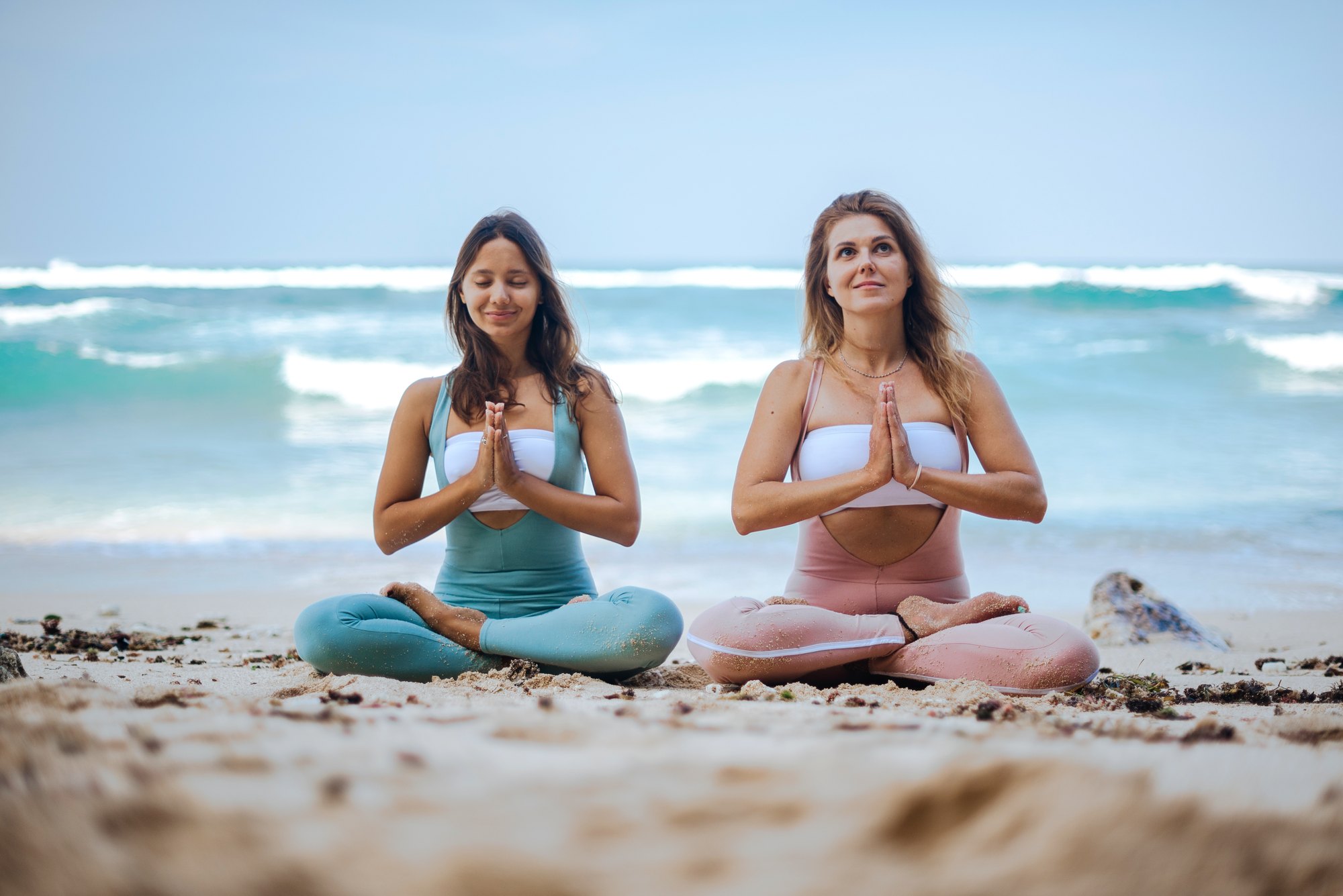
In short: namaste (नमस्ते) literally means “a bow to you.” It joins the Sanskrit namas, “bow, reverential salutation,” with te, “to you.” In India it is an everyday respectful greeting, often said with the palms pressed together; in yoga classes it is usually said at the end of practice.
Namaste meaning: the literal translation
The Monier-Williams Sanskrit dictionary defines namas as “bow, obeisance, reverential salutation, adoration (by gesture or word),” and traces it back to the Vedas. Te is a short form of “to you,” used for one person. Put together, namas te is “a bow to you” or “salutations to you.” The phrase namas te already appears in the Rig Veda and other early Sanskrit texts as an expression of reverence and homage.
You may also hear that namaste means “the divine in me honors the divine in you.” That is a modern, spiritual interpretation that draws on Hindu ideas about the self; it is meaningful to many people, but it is not the literal translation.
How namaste is used in India today
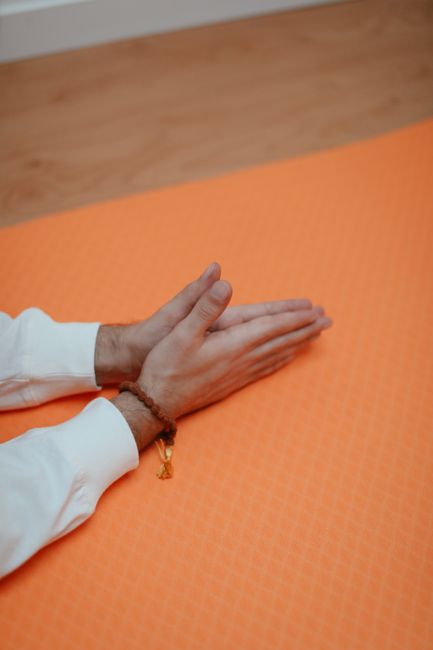
Namaste is an ordinary greeting, used for hello and goodbye at any time of day, and it is used across Hindu, Buddhist and Jain communities. It is usually said with a slight bow and the hands joined in front of the chest, a gesture called añjali mudrā; the gesture can also be made without words. A related form is namaskar (namaskāra). You can learn more about the hand gesture in our guide to mudras.
Namaste, namaskar and the sun salutation
The same root word turns up all over a yoga class once you know it. Monier-Williams lists namaskāra as “the exclamation ‘namas’,” that is, the act of saying namas: adoration or homage. That is the second half of Sūrya Namaskāra, the sun salutation. The name simply means a salutation to the sun.
In the Bihar School’s book Asana Pranayama Mudra Bandha, each position of the sun salutation is paired with a short mantra. The first is “Om Mitraya Namaha,” which uses the same word, namas, for “salutation.” Mitra means “friend” in Monier-Williams, and the dictionary also gives it as a name of the sun. So the mantra can be read as “salutations to the friend,” addressed to the sun. The first position itself is prayer pose (Praṇāmāsana), standing with the feet together and the palms joined in front of the chest: the namaste gesture, made with the whole body.
The joined hands: añjali
Monier-Williams defines añjali as “the open hands placed side by side and slightly hollowed,” like hands held out to receive food. The same entry gives the wider senses “reverence, salutation, benediction.” That is why the joined palms carry the meaning of respect even with no words. To make the gesture, bring the palms together in front of the chest, keep the shoulders soft and bow the head a little. In a yoga class nobody checks the details; a relaxed, sincere gesture is what matters.
Namaste in yoga classes
In many classes outside India, the teacher closes practice by bringing the hands together and saying “namaste,” and students reply the same way. Cambridge Dictionary records this second use: hands together at the center of the chest, “used in yoga.” It is a way of saying thank you and marking the end of practice, often after resting in savasana or a closing chant of Om or shanti.
Using namaste respectfully
- Use it as a real greeting, not a slogan or a joke.
- When traveling in India, a namaste with joined palms is a warm, polite way to greet people, especially elders. Our guide to yoga in India has more on local etiquette.
- In class, joining in is an invitation, not an obligation; a smile and a thank you are fine too.
- Because te means “to you,” namaste is said to someone. It works best face to face, as a greeting or a thank you, rather than as a caption or a brand name.
- You do not need to be Hindu, Buddhist or Jain to say it. It is a courtesy, and saying it with care is a small way of honoring where yoga comes from.
Find more class and Sanskrit terms in the yoga glossary, or read about the traditions behind them in yoga philosophy.